Smriti Irani Hails Vikram-1 Launch as Milestone for India's Private Space Sector

Synopsis
BJP leader Smriti Irani hailed the successful launch of Vikram-1 by Skyroot Aerospace on 18 July 2026 as a defining milestone for India's private space sector, crediting PM Modi's 2020 reforms that opened space to private players and established IN-SPACe as the regulatory body.
Key Takeaways
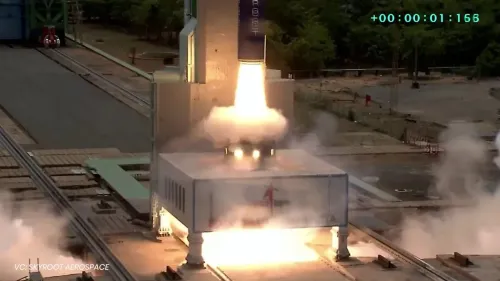
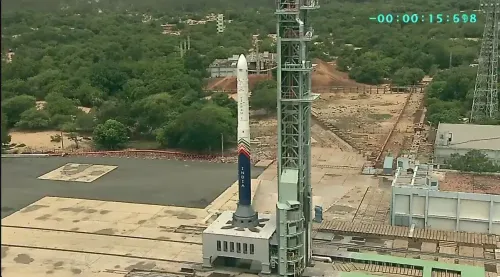
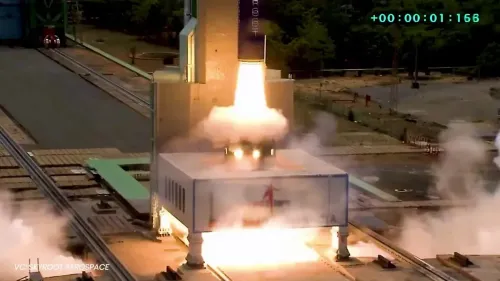
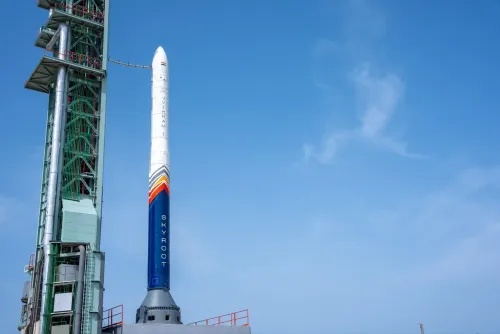
Smriti Irani congratulated Skyroot Aerospace on 18 July 2026 for the successful launch of Mission Aagaman .
Vikram-1 is described as India's first privately developed orbital launch vehicle, a step beyond earlier sub-orbital tests.
Skyroot Aerospace is a Hyderabad-based startup founded in 2018 , developing the Vikram series for small-satellite deployment.
The launch is a direct outcome of June 2020 government reforms that opened India's space sector to private companies and created IN-SPACe .
The milestone is expected to attract further investment into India's private space ecosystem and accelerate regulatory development under the Indian Space Policy framework.
Competing startups such as Agnikul Cosmos are also developing launch vehicles, signalling a broader shift in India's space landscape.
BJP leader and former Union Minister Smriti Irani on Saturday, 18 July 2026, congratulated Hyderabad-based Skyroot Aerospace on the successful launch of Mission Aagaman, calling it a defining milestone in India's space journey and crediting policy reforms under Prime Minister Narendra Modi for enabling the achievement.
Context
Irani described the event as 'a historic new journey into the cosmos,' pointing to the successful launch of Vikram-1 — billed as India's first privately developed orbital launch vehicle — as proof of the calibre and entrepreneurial spirit of Indian youth. She extended congratulations to the 'brilliant minds at Skyroot Aerospace' and expressed hope that the achievement would inspire a new generation of Indian innovators.
The mission, tagged #IndiaWithVikram1 on social media, marks the first time an Indian private company has attempted and, according to the post, achieved an orbital launch — a threshold that distinguishes orbital rockets from the sub-orbital test vehicles that preceded them.
Policy Backdrop
The launch is the most visible outcome so far of reforms the Modi government announced in June 2020, which opened India's space sector to private participation and established IN-SPACe (Indian National Space Promotion and Authorisation Centre) as a single-window regulator for non-government entities.
Before those reforms, launch vehicle development in India was the exclusive domain of the state-run Indian Space Research Organisation (ISRO). The policy shift aligned with the broader Atmanirbhar Bharat initiative, aiming to build indigenous capability while lowering costs and increasing launch frequency for domestic and international satellite customers.
Skyroot Aerospace, founded in 2018 and headquartered in Hyderabad, has developed the Vikram series of launch vehicles specifically targeting the small-satellite deployment market — one of the fastest-growing segments in global commercial space.
Stakeholders and Impact
The successful orbital launch, if confirmed by independent sources, would represent a landmark not just for Skyroot but for India's entire private space ecosystem. Other startups such as Agnikul Cosmos are also developing competing launch vehicles, and a successful Vikram-1 mission would validate the commercial model and likely attract further venture investment into the sector.
For young engineers and entrepreneurs across India, the mission carries symbolic weight: it demonstrates that private Indian companies can now compete in a domain previously accessible only to sovereign space agencies. Irani's post specifically underscored this dimension, linking the launch to youth innovation and the government's role in 'nurturing a thriving ecosystem for India's space ambitions.'
Internationally, the development positions India as an increasingly competitive player in the commercial launch market, where providers from the United States, Europe, and China have long dominated.
What's Next
The space community will closely watch the full mission data from Mission Aagaman to assess orbital insertion accuracy and payload deployment outcomes. Subsequent flights — and the pace at which Skyroot and peers can achieve commercial launch cadence — will determine whether India's private space sector can translate this milestone into a sustainable business.
Further policy notifications under the Indian Space Policy framework, including licensing norms and spectrum allocation for private operators, are also expected to shape the sector's trajectory in the months ahead. A successful Vikram-1 is likely to accelerate those regulatory conversations.
Point of View
Framing Vikram-1 not merely as a corporate achievement but as evidence of governance impact. By crediting 'visionary reforms under PM Modi,' she connects the space sector's liberalisation — a policy shift initiated in 2020 — directly to electoral messaging around youth empowerment and indigenous capability. The timing is significant: as India's private space sector matures, the ruling party has a strong incentive to claim credit for enabling the ecosystem. Irani's intervention also signals that space tech is now firmly part of the BJP's aspirational India story, likely to feature in future campaign communication.
NationPress
18 Jul 2026
Frequently Asked Questions
What is Vikram-1 and who built it?
Vikram-1 is India's first privately developed orbital launch vehicle, built by Skyroot Aerospace , a Hyderabad-based startup founded in 2018. It is designed to carry small satellites into orbit.
What is Mission Aagaman?
Mission Aagaman is the name given to the launch mission that carried the Vikram-1 rocket on its orbital flight on 18 July 2026 , marking a historic first for India's private space industry.
What reforms allowed private companies to build rockets in India?
In June 2020 , the Indian government opened the space sector to private participation and established IN-SPACe as a single-window regulator, ending the state monopoly previously held by ISRO.
Why did Smriti Irani comment on the Vikram-1 launch?
As a senior BJP leader and former Union Minister, Smriti Irani used the occasion to congratulate Skyroot Aerospace and highlight how government reforms under PM Narendra Modi have enabled private space innovation in India.
What comes next for India's private space sector after Vikram-1?
Analysts will watch Mission Aagaman's full orbital data, subsequent Skyroot flights, and progress by rivals like Agnikul Cosmos . Further policy notifications under the Indian Space Policy framework are also expected to shape the sector.