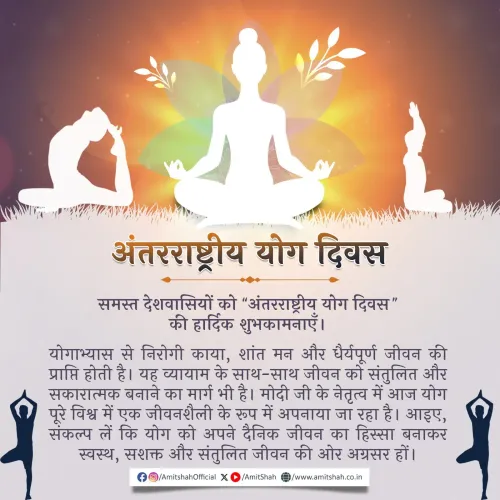
Smriti Irani Greets Nation on 12th International Yoga Day

Synopsis
BJP leader Smriti Irani marked the 12th International Day of Yoga on 21 June 2026 with a Bhagavad Gita verse and a call for citizens to make yoga a daily habit, reflecting India's decade-long effort to promote the practice as a global cultural contribution.
Key Takeaways
BJP leader Smriti Irani extended greetings on the 12th International Day of Yoga , observed on 21 June 2026 .
She opened her message with the Sanskrit verse 'समत्वम् योग उच्यते' from the Bhagavad Gita, meaning equanimity is yoga.
Irani described yoga as 'an unparalleled gift of India's ancient knowledge tradition' for a healthy and positive life.
The International Day of Yoga was established by the UN General Assembly via Resolution 69/131 in December 2014 , following PM Modi's proposal.
The day has been observed globally every 21 June since 2015 , with India using it as a platform for cultural diplomacy and public-health promotion.
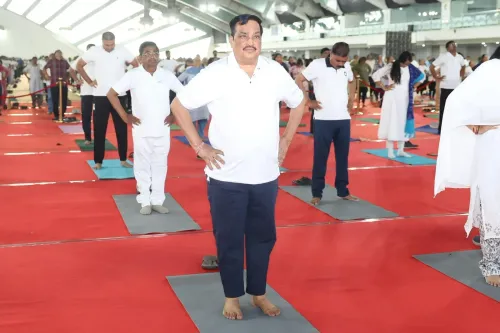
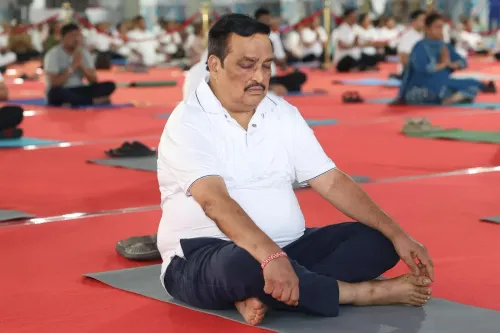
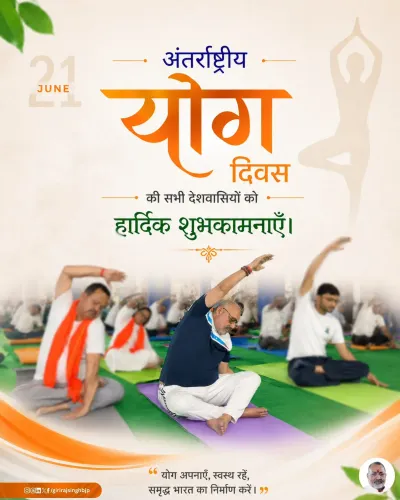
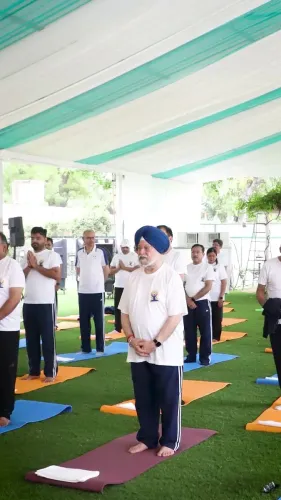
BJP leader Smriti Irani extended greetings to the nation on the occasion of the 12th International Day of Yoga on Sunday, 21 June 2026, invoking a verse from the Bhagavad Gita to underscore yoga's philosophy of equanimity and balance.
In her post on X, Irani opened with the Sanskrit verse 'सिद्ध्यसिद्ध्योः समो भूत्वा समत्वम् योग उच्यते' — meaning 'Equanimity in success and failure is called yoga' — drawing directly from the Gita's definition of the practice. She called yoga 'an unparalleled gift of India's ancient knowledge tradition' and urged citizens to make it an integral part of their daily routine for a 'healthy, disciplined, and positive life.'
Context
The International Day of Yoga is observed every year on 21 June, the summer solstice, which holds special significance across many cultures as the longest day of the year in the Northern Hemisphere. The day brings together millions of practitioners across the globe in public and private sessions dedicated to yoga asanas, pranayama, and meditation.
Irani's message reflects a broader cultural moment: the 12th edition of the observance marks over a decade of global institutional recognition for a practice that originated in the Indian subcontinent thousands of years ago.
Policy Backdrop
The International Day of Yoga was established after Prime Minister Narendra Modi proposed it at the United Nations General Assembly in September 2014. The UN adopted Resolution 69/131 in December 2014, with a record 177 co-sponsoring nations, declaring 21 June as the annual observance starting 2015.
Since its first edition, successive Indian governments have used the day as a vehicle for cultural diplomacy and soft power, framing yoga as a non-sectarian, universal contribution to global well-being. Ministries including AYUSH have integrated yoga promotion into public-health and wellness frameworks, including outreach through community health centres.
Stakeholders and Impact
The observance touches a wide cross-section of Indian society — from schoolchildren participating in mass yoga sessions to senior citizens enrolled in wellness programmes at government health centres. Internationally, yoga's recognition has grown into a multi-billion-dollar wellness industry, with India positioned as its spiritual and cultural home.
Political leaders across party lines routinely mark the day, but BJP leaders have been particularly prominent in anchoring it to India's civilisational identity and the Modi government's 'Vasudhaiva Kutumbakam' ('the world is one family') narrative on the global stage.
What's Next
Each successive Yoga Day tends to be accompanied by government directives for large-scale public events, including mass sessions at iconic national landmarks. Policymakers have also explored deeper integration of yoga modules into school curricula and Ayushman Bharat wellness centres, a trajectory that is expected to continue in the years ahead. As the observance enters its second decade, the focus is likely to shift from awareness to measurable health outcomes and institutionalised daily practice.
Point of View
She reinforces the BJP's consistent framing of yoga as inseparable from India's civilisational heritage rather than a mere fitness trend. The invocation of ancient scripture signals a cultural-identity dimension that goes beyond wellness. Over twelve years, the International Day of Yoga has become one of the most effective instruments of Indian soft power, and senior party leaders' public messaging on the occasion is calibrated to sustain that narrative. The emphasis on daily practice also aligns with the government's broader push to integrate traditional wellness systems into mainstream public health policy through the AYUSH framework.
NationPress
20 Sept 2026
Frequently Asked Questions
What is International Day of Yoga and when is it celebrated?
International Day of Yoga is a global observance held every year on 21 June , established by the United Nations General Assembly in December 2014 following a proposal by Prime Minister Narendra Modi . It promotes the physical, mental, and spiritual benefits of yoga.
What did Smriti Irani say on Yoga Day 2026?
Smriti Irani quoted the Bhagavad Gita verse meaning 'equanimity in success and failure is called yoga' and urged citizens to make yoga a daily habit for a healthy, disciplined, and positive life.
Which Bhagavad Gita verse did Smriti Irani quote on Yoga Day?
She quoted 'सिद्ध्यसिद्ध्योः समो भूत्वा समत्वम् योग उच्यते' , which translates to 'Remaining equal in success and failure — that equanimity is called yoga.'
How many countries co-sponsored the UN resolution on International Day of Yoga?
A record 177 nations co-sponsored UN Resolution 69/131 in December 2014 , making it one of the most widely supported resolutions in UN General Assembly history.
What is India's role in promoting International Day of Yoga?
India proposed the observance at the UN in 2014 and has since used it as a platform for cultural diplomacy and soft power, with the AYUSH Ministry integrating yoga into public-health and wellness programmes nationwide.