Smriti Irani Backs Women Entrepreneurs at SPARK Bootcamp
Synopsis
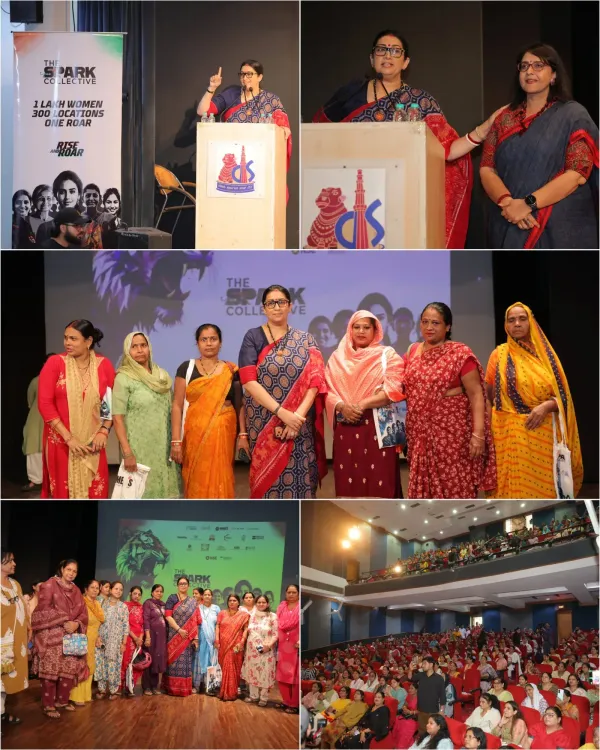
BJP leader Smriti Irani attended the SPARK Bootcamp in New Delhi on 12 July 2026, praising the participation of PM SVANidhi beneficiaries and announcing plans to take the entrepreneurship-training initiative to 300 cities across India.
Key Takeaways
Smriti Irani attended the SPARK Bootcamp in New Delhi on 12 July 2026 , describing the atmosphere as 'phenomenal.' The event included PM SVANidhi beneficiaries — street vendors who received collateral-free micro-credit under a scheme launched in June 2020 .
Discussions focused on breaking structural barriers, leveraging India's Digital Public Infrastructure (Aadhaar, UPI, ONDC), and scaling local businesses.
Irani announced that 300 cities are next in the SPARK rollout plan, framing it as a 'nationwide entrepreneurial revolution.' The bootcamp builds on existing credit programmes including PM SVANidhi and the Stand-Up India scheme (2016), adding networking and capacity-building layers.
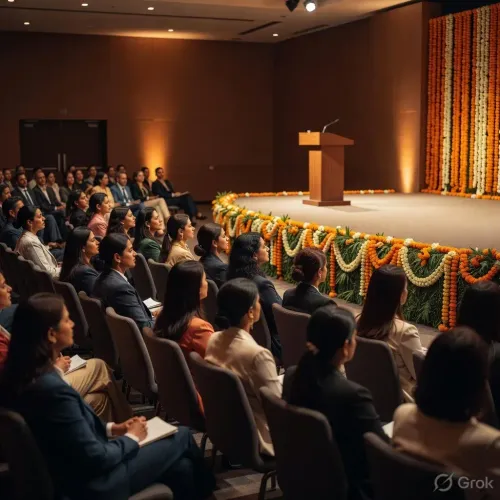
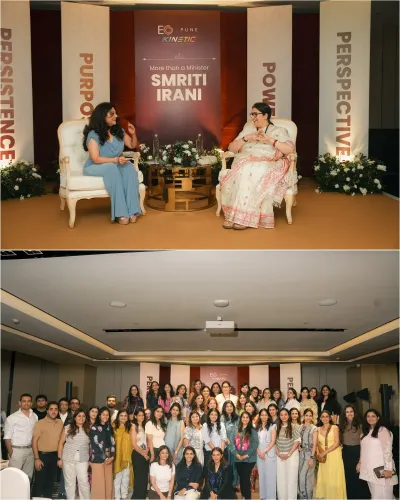
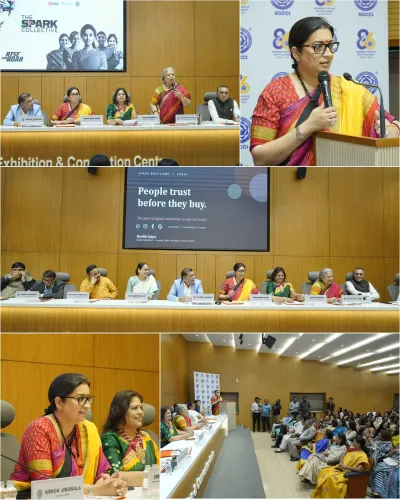
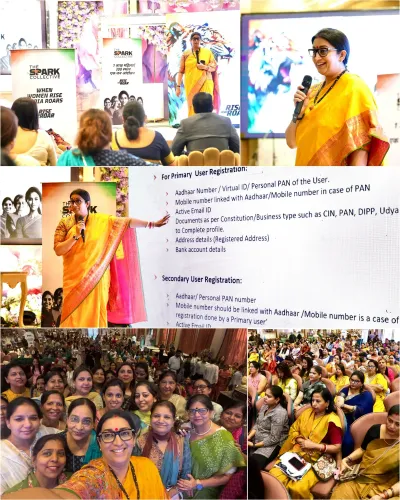
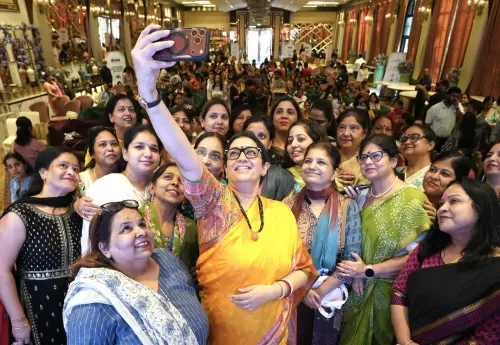
BJP leader Smriti Irani attended the SPARK Bootcamp in New Delhi on 12 July 2026, calling the energy at the event 'phenomenal' and highlighting the participation of women entrepreneurs including beneficiaries of the PM SVANidhi scheme. The event brought together women from diverse economic backgrounds for a day of learning, networking, and resource access focused on scaling local enterprises.
Context
Irani described the bootcamp as centred on 'breaking structural barriers, leveraging India's digital public infrastructure, and transforming local enterprises into national success stories.' Participants included PM SVANidhi beneficiaries — street vendors who received collateral-free micro-credit under a Central government scheme launched in June 2020 to help informal workers recover from COVID-19 disruptions. The convergence of credit-scheme recipients and entrepreneurship training at a single platform marks a visible step in linking welfare outreach with capacity-building.
Irani noted that discussions emphasised 'networks, knowledge exchange, and access to opportunities,' framing the bootcamp not as a one-off event but as the opening move of a larger national push. She announced that 300 cities are next on the rollout map, signalling an intent to replicate the model at scale across the country.
Policy Backdrop
The SPARK Bootcamp sits within a longer arc of government programming aimed at integrating informal-sector women into formal growth channels. The PM SVANidhi scheme, alongside the Stand-Up India initiative introduced in 2016 to facilitate bank loans for women and SC/ST entrepreneurs, form the credit backbone that events like this seek to complement with skills and networks.
India's Digital Public Infrastructure (DPI) stack — comprising Aadhaar, UPI, and ONDC — featured centrally in the bootcamp's discussions. The DPI layer is increasingly positioned by policymakers as the connective tissue that allows micro and small enterprises to access payments, identity verification, and open commerce networks without prohibitive upfront costs. This aligns with the broader Atmanirbhar Bharat framing that treats digital rails as enablers for domestic business expansion.
Stakeholders and Impact
The primary beneficiaries of the SPARK initiative are women micro-entrepreneurs and street vendors — segments that have historically faced structural exclusion from formal finance, digital commerce, and business networks. By pairing PM SVANidhi credit access with strategic networking sessions, the programme attempts to address not just capital gaps but the informational and relational deficits that keep small enterprises from scaling.
Successive administrations have layered capacity-building events onto existing credit programmes such as SVANidhi and Mudra to nudge micro-enterprises toward growth. A city-by-city bootcamp model, if executed at the stated scale of 300 cities, would represent one of the larger grassroots entrepreneurship drives targeting women in the informal economy in recent years.
What's Next
The announced expansion to 300 cities will be the key metric to watch. Any related policy announcements in the next Union Budget or parliamentary session on women-led MSMEs could provide the fiscal scaffolding for such a rollout. Irani's visible association with the initiative also signals continued political attention to women's economic empowerment as a campaign and governance theme ahead of upcoming electoral cycles.
Point of View
Not just a welfare narrative. By explicitly linking PM SVANidhi street vendors with digital public infrastructure and strategic networking, the initiative attempts to bridge the gap between credit access and actual business growth — a gap that has historically blunted the impact of standalone loan schemes. The 300-city expansion claim, if backed by budgetary allocation, would represent a meaningful scale-up; without it, it risks being read as aspirational rhetoric. The political calculus is clear: women micro-entrepreneurs are a large, mobilisable constituency, and capacity-building events offer both policy optics and grassroots outreach ahead of electoral cycles.
NationPress
11 Oct 2026
Frequently Asked Questions
What is the SPARK Bootcamp launched by Smriti Irani?
The SPARK Bootcamp is an entrepreneurship capacity-building event held in New Delhi on 12 July 2026, bringing together women entrepreneurs — including PM SVANidhi beneficiaries — for learning, networking, and access to resources aimed at scaling local businesses.
What is the PM SVANidhi scheme?
PM SVANidhi is a Central government scheme launched in June 2020 that provides collateral-free micro-credit to street vendors to help them restart livelihoods disrupted by the COVID-19 pandemic.
What is the 300-city plan announced at the SPARK Bootcamp?
Smriti Irani announced that the SPARK Bootcamp model will be expanded to 300 cities across India, with the stated goal of sparking a 'nationwide entrepreneurial revolution' among women micro-entrepreneurs.
How does India's Digital Public Infrastructure help women entrepreneurs?
India's DPI stack — comprising Aadhaar, UPI, and ONDC — enables women micro-entrepreneurs to access digital payments, identity verification, and open commerce networks at low cost, reducing barriers to formal business participation.
What other government schemes support women entrepreneurs in India?
Beyond PM SVANidhi, the Stand-Up India scheme (introduced in 2016) facilitates bank loans for women and SC/ST entrepreneurs, while the Mudra scheme provides micro-finance to small and micro enterprises across the country.