Smriti Irani warns against making age a new social divide

Synopsis
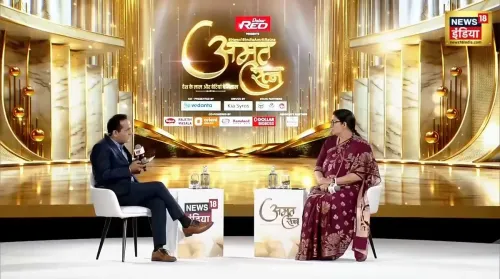
BJP leader Smriti Irani cautioned on 1 August 2026 against framing generational differences as a new social divide, arguing that India's Gen Z — including those serving in the armed forces, police, and paramilitary — demonstrates clear patriotism.
Key Takeaways
Smriti Irani , senior BJP leader and former Union Minister, posted a warning against generational stereotyping on 1 August 2026 .
She explicitly compared age-based division to India's historical fault lines along religion and caste .
Irani highlighted that Gen Z Indians serve in the country's border forces, police, and paramilitary units as proof of patriotism.
The post frames generational stereotyping as a threat to national cohesion, not merely a cultural debate.
Responses from opposition parties, youth groups, and veterans' organisations are expected to follow.
India's fault lines along religion and caste are old wounds — BJP leader Smriti Irani is warning the country not to carve a new one along generational lines. In a pointed message posted on Saturday, 1 August 2026, the former Union Minister pushed back against narratives that paint Gen Z as indifferent to the nation, invoking the young men and women standing guard at India's borders as evidence of the generation's patriotism.
The charge Irani is rebutting
The post reads: 'India has been divided before on religion and caste. Let us not create age as a new divide. Do not mistake India's Gen Z for a generation that does not value patriotism. Those serving at our borders, in our police forces, and in our paramilitary forces are also Gen Z.'
The argument is direct and structural. Irani is not merely defending young Indians — she is framing generational stereotyping as a form of social fragmentation, placing it in the same category as the communal and caste-based divisions that have historically destabilised Indian public life. That is a deliberate rhetorical escalation, and it signals that this debate has moved well beyond social-media commentary.
Gen Z in uniform: the counter-narrative
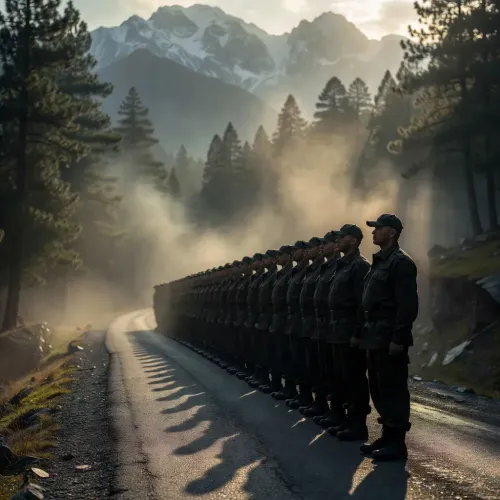
Irani's sharpest move is the pivot to the security services. India's armed forces, Central Armed Police Forces (CAPFs), and state police recruit heavily from the 18–25 age bracket — squarely within the demographic defined as Gen Z. By naming border troops, police personnel, and paramilitary soldiers, she grounds an abstract generational debate in concrete, verifiable service. It is hard to call a cohort unpatriotic when members of that cohort are posted at Siachen, the Line of Actual Control, and insurgency-affected districts.
Indian political discourse has long used the sacrifices of security personnel to anchor arguments about national character. Irani deploys that tradition here, but directs it specifically at defending a generation rather than a region or community — a notable shift in how the trope is used.
Why the 'age divide' framing matters now
Debates about Gen Z's values — their political engagement, their relationship with digital platforms, their attitudes toward institutions — have intensified across democracies worldwide. In India, that conversation intersects with questions about electoral behaviour, unemployment, and social media's role in shaping public opinion. Irani's intervention suggests that at least one senior BJP voice sees generational stereotyping as a politically significant and potentially divisive trend worth confronting publicly.
Responses from opposition parties, youth organisations, and veterans' associations are likely to follow — and will reveal how broadly this framing resonates beyond the BJP's own base.
India has survived divisions it was told it could not. Irani's message is that the next one is not inevitable — but only if it is named before it takes hold.
Point of View
She signals that the BJP sees electoral and social risk in narratives that alienate young voters. The invocation of Gen Z in uniform is tactically precise: it pre-empts the counter-argument before it can be made. Whether this becomes a sustained party line or remains a solo statement will determine its actual policy weight.
NationPress
2 Aug 2026
Frequently Asked Questions
What did Smriti Irani say about Gen Z and patriotism?
Smriti Irani posted on 1 August 2026 that India should not mistake Gen Z for a generation that lacks patriotism, pointing out that many young Indians serve in the country's border forces, police, and paramilitary units.
Why did Smriti Irani compare age division to caste and religion?
She used the comparison to argue that generational stereotyping — like historical divisions along caste and religion — risks fracturing national cohesion and should be actively resisted.
Is India's Gen Z represented in the armed forces?
Yes. India's armed forces, Central Armed Police Forces, and state police recruit heavily from the 18–25 age group, which falls within the Gen Z demographic.
What is the political significance of Irani's statement?
The statement positions a senior BJP leader against narratives that paint India's youngest voters as disengaged or unpatriotic, which carries electoral implications as Gen Z becomes an increasingly large share of the electorate.
Who is Smriti Irani?
Smriti Irani is a senior BJP leader and former Union Minister who held the portfolios of Women and Child Development and Minority Affairs, and is known as a prominent voice within the ruling party.