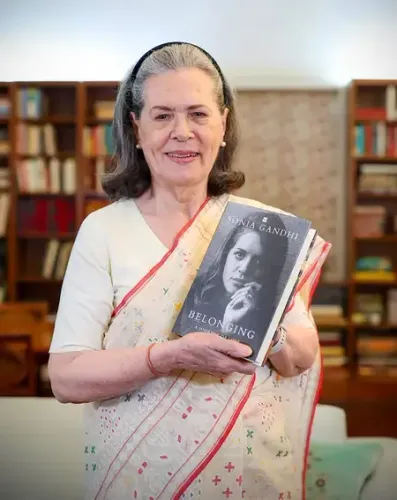
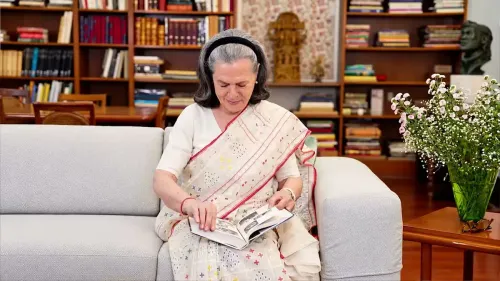
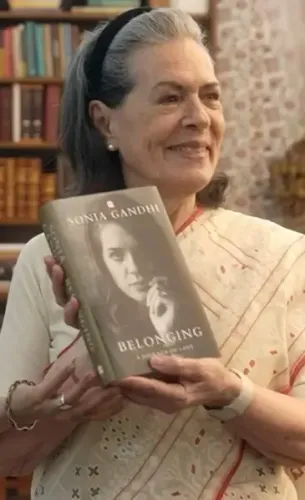
Sonia Gandhi's memoir: Clinton's wandering eye, Diana's 'Ciao Nonna' and Sarkozy's phone
Synopsis
Sonia Gandhi's new memoir is not a political treatise — it is a window into rooms most Indians never see. From Bill Clinton discreetly eyeing women at a Vajpayee reception to Princess Diana calling out 'Ciao Nonna' and Sarkozy texting Carla Bruni mid-banquet, 'Belonging: A Journey Of Love' is the most candid account of global power up close by any Indian political figure in recent memory.
Key Takeaways
Sonia Gandhi 's memoir Belonging: A Journey Of Love was released in November 2026 , featuring candid accounts of her encounters with world leaders.
She recalls Bill Clinton 's 2000 India visit, writing that despite the Monica Lewinsky scandal, she observed him 'surreptitiously sizing up' women at a reception hosted by PM Atal Bihari Vajpayee .
During Nicolas Sarkozy 's 2008 India visit, Gandhi writes he texted Carla Bruni throughout a state banquet and later spoke to PM Manmohan Singh in what she describes as 'a rather arrogant manner.' Princess Diana is remembered as the most captivating royal Gandhi met; she recalls Diana calling out 'Ciao Nonna!' to her Italian-speaking mother during the 1992 India visit.
Gandhi writes that she unintentionally handed Diana a note at a London hairdresser's with the misspelling 'Hye' instead of 'Hi' — describing it as her last meeting with the princess.
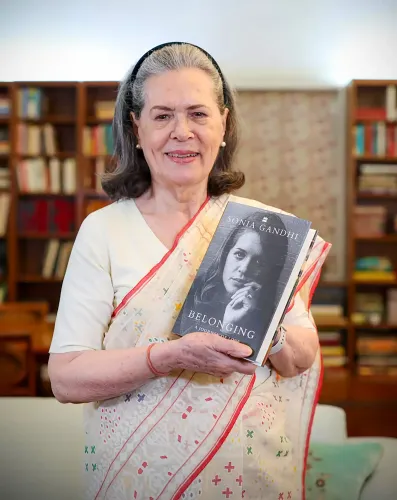
Congress Parliamentary Party (CPP) Chairperson Sonia Gandhi has pulled back the curtain on decades of high-stakes diplomatic encounters in her newly released memoir, Belonging: A Journey Of Love, offering candid personal recollections of former US President Bill Clinton, French President Nicolas Sarkozy, and the late Princess Diana. The book, released in November 2026, blends political memory with intimate social observation, making it one of the more unusually personal accounts by a major Indian political figure.
Clinton's 2000 India Visit: Kashmir, Confidence and 'Old Habits'
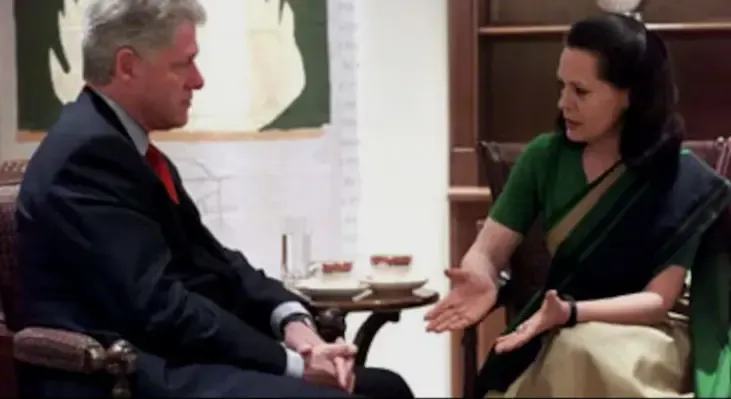
Gandhi recalls meeting Bill Clinton during his 2000 India visit, when the then US President was staying at the Sheraton hotel along with his daughter Chelsea and his delegation. She visited him accompanied by India's then External Affairs Minister and found him — in her words — 'friendly, informal, and exuding confidence.'
Clinton, she writes, was more interested in sharing his own assessments than in listening. "President Bill Clinton was staying at the Sheraton hotel with his daughter, Chelsea, and his delegation in 2000 when I called on him with our foreign minister. Friendly, informal, and exuding confidence, he appeared more keen to give us his own views and predictions about Kashmir — 'a nuclear flashpoint', in his words, 'one of the most dangerous places on earth' — than to pay attention to our point of view," Gandhi wrote.
Her sharpest observation, however, came at a reception hosted by then Prime Minister Atal Bihari Vajpayee in Clinton's honour. With the Monica Lewinsky scandal still fresh in public memory, Gandhi noted a telling pattern. "The Monica Lewinsky scandal had subsided a little by then, but old habits die hard; at the reception held by Prime Minister Vajpayee in his honour, I noticed him every now and then surreptitiously sizing up the more striking women present," she wrote.
Sarkozy in India: Cross-Examination, Carla and Arrogance at the Banquet
Gandhi's account of French President Nicolas Sarkozy's 2008 India visit is equally vivid. Sarkozy arrived without his then-partner Carla Bruni, reportedly having been advised against bringing her since the two were not yet married — a situation that could have been diplomatically awkward at official functions.
At the banquet, Gandhi recalls being quietly amused when the wife of Vice President Mohammad Ansari, seated next to Sarkozy, proceeded to quiz him good-naturedly about his relationship and wedding plans. "President Sarkozy seemed unperturbed by the cross-examination, even eager to share details of his love life, answering all her questions while continuously messaging his Carla on his phone," Gandhi wrote.
A subsequent encounter, at a private dinner hosted by then Prime Minister Manmohan Singh and his wife, saw the couple arrive together — now married. Gandhi describes Bruni's entrance with an elegance that commanded the room: "All eyes were on her as she glided into the room in an elegant long gown, graceful and slim, demure and blue-eyed." Yet she reserves a sharper note for Sarkozy himself, writing that he expounded his views to Singh "in what I felt was a rather arrogant manner, unmindful of the fact that he was talking to someone more senior, more experienced and more knowledgeable."
Princess Diana: The Taj Mahal, 'Ciao Nonna' and a Misspelled Note
Perhaps the most affectionate passages in the memoir concern Princess Diana. Gandhi describes Diana as the undisputed star of the British royal family — recalling first seeing her as a bride at the 1981 royal wedding, which she and her late husband, former Prime Minister Rajiv Gandhi, attended.
"The real star of that family had of course been Princess Diana: tall and slim, with large blue eyes, an enchanting smile, and a magnetic personality. I can never forget how ravishing she was as a bride when Rajiv and I attended their wedding in 1981. But when they came to India in 1992, it was evident that things were not going well in the marriage," Gandhi wrote.
During Diana's 1992 India visit — the same day the princess famously posed alone on a bench at the Taj Mahal, a moment Gandhi refers to as the 'love bench' — Gandhi found her appearing morose despite being immaculately dressed. A warm moment followed when Gandhi's daughter, Priyanka Gandhi, insisted that her visiting grandmother — who spoke only Italian — be introduced to Diana. Diana responded by greeting the older woman warmly in Italian, drawing laughter all around. As the royal couple departed, Diana turned back to call out: "Ciao, Nonna!"
Gandhi also narrates two lighter London encounters. At a dinner, Diana arrived in a black suit with a white collar and quipped: "I am feeling like a crow!" At a hairdresser's, Gandhi spotted Diana seated nearby and passed her a handwritten note — only to realise she had misspelled 'Hi' as 'Hye'. By the time she noticed, Diana had already tucked the note into her handbag. "How I wished I could have snatched back the note! But it was too late; she had already put it into her handbag," Gandhi recalled.
That chance salon meeting, Gandhi writes, was the last time she saw the princess. She closes that section with a note of empathy: "There was a lot of criticism of her at that time: She was spoilt and complaining; she had everything; why was she behaving as if she had been wronged? I must say I felt for her throughout, and still do."
What the Memoir Reveals
Beyond the anecdotes themselves, Belonging: A Journey Of Love marks a rare instance of a senior Indian political figure offering unguarded personal impressions of world leaders — from Clinton's body language to Sarkozy's perceived condescension toward Singh. The memoir is likely to draw both domestic and international attention, particularly for its Clinton and Diana passages, which are candid in a way seldom seen in Indian political writing.
Wider reaction to the book — including any formal responses from the figures or families mentioned — is awaited.
Point of View
And its candour carries both literary value and political risk. The Clinton passage in particular is striking: it names a serving former US President in a context that is personal rather than policy. What the memoir also inadvertently reveals is Gandhi's own vantage point — a first-row seat to decades of global power that she is now, apparently, willing to describe on her own terms. That alone makes this book significant beyond its anecdotes.
NationPress
10 Nov 2026
Frequently Asked Questions
What is Sonia Gandhi's memoir 'Belonging: A Journey Of Love' about?
It is a personal memoir by Congress Parliamentary Party Chairperson Sonia Gandhi that covers her decades in Indian political life and her encounters with global figures, including Bill Clinton, Nicolas Sarkozy, and Princess Diana. The book, released in November 2026, blends political memory with candid social observation.
What does Sonia Gandhi write about Bill Clinton in the memoir?
Gandhi recalls Clinton's 2000 India visit, describing him as confident and talkative but more interested in sharing his own views on Kashmir than hearing India's perspective. She also writes that at a reception hosted by PM Atal Bihari Vajpayee, she noticed him 'surreptitiously sizing up the more striking women present', adding pointedly that 'old habits die hard' — a reference to the Monica Lewinsky scandal.
What does Sonia Gandhi reveal about Princess Diana?
Gandhi describes Diana as the most captivating member of the British royal family, recalling their meetings over several years. During Diana's 1992 India visit, she recalls the princess warmly greeting Gandhi's Italian-speaking mother and calling out 'Ciao Nonna!' as she left. Gandhi also recounts a chance encounter at a London hairdresser's — which she describes as their last meeting — where she accidentally passed Diana a note with 'Hye' misspelled instead of 'Hi'.
What anecdote does Sonia Gandhi share about Nicolas Sarkozy?
Gandhi recalls Sarkozy's 2008 India visit, during which he arrived without then-partner Carla Bruni, reportedly on diplomatic advice since the two were unmarried. At a state banquet, Gandhi writes that Vice President Mohammad Ansari's wife quizzed Sarkozy about his wedding plans while he simultaneously texted Bruni on his phone. At a later dinner hosted by PM Manmohan Singh, Gandhi writes that the now-married Sarkozy spoke to Singh in what she describes as 'a rather arrogant manner.'
Why is Sonia Gandhi's memoir significant for Indian political literature?
Indian political memoirs typically avoid unguarded personal observation of foreign leaders. 'Belonging' is unusual in its candour — Gandhi names sitting and former heads of state in social and personal contexts, offering a first-person account of private moments that rarely surface in official diplomatic records. That willingness to speak plainly makes the book a notable departure from the genre's conventions.