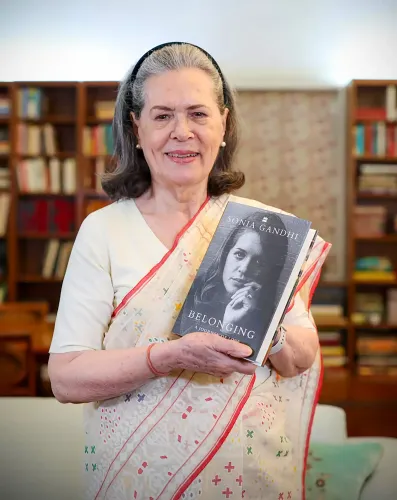
Sonia Gandhi's 1998 memoir: She sought Sitaram Kesri's blessings the day she became Congress chief
Synopsis
Sonia Gandhi's newly released memoir 'Belonging: A Journey of Love' adds an unexpected human footnote to one of the most contested transitions in Congress history: on the same day she was elected party chief in 1998, she walked straight from the CWC meeting to Sitaram Kesri's home, touched his feet, and left him in tears. The gesture offers a personal counterpoint to decades of controversy over how Kesri's exit from the Congress presidency was handled.
Key Takeaways
Sonia Gandhi reveals in her memoir 'Belonging: A Journey of Love' , released on 10 November 2026 , that she visited Sitaram Kesri 's home immediately after her election as Congress President.
Gandhi was elected Congress President by the Congress Working Committee (CWC) on 14 March 1998 , succeeding Kesri.
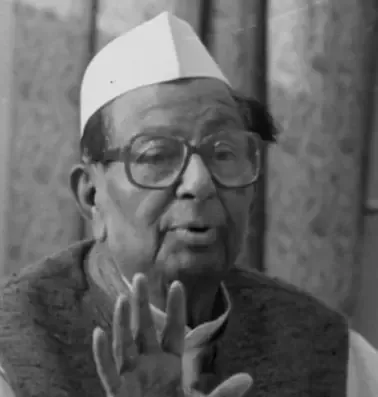
She wrote that she touched Kesri's feet as a mark of respect for elders, and that 'his eyes filled with tears, and he placed his hand on my head.' Sitaram Kesri served as Congress President from 1996 to 1998 , hailed from Bihar , and passed away in 2000 .
Gandhi's account provides a personal counterpoint to the widely documented controversy surrounding Kesri's removal from the Congress presidency.
Congress Parliamentary Chairperson Sonia Gandhi has revealed in her memoir 'Belonging: A Journey of Love' that immediately after being elected Congress President on 14 March 1998, she went directly from the Congress Working Committee (CWC) meeting to the residence of outgoing party chief Sitaram Kesri to seek his blessings — a gesture that reportedly left Kesri visibly moved.
What Sonia Gandhi Wrote
In her memoir, Gandhi recounts the deeply personal moment in her own words: 'Kesri ji, as I always addressed him, had been an active member of the Congress for more than six decades. Suddenly, the thought came to my mind, and I went straight from the meeting to his home. I greeted him and, following the traditional custom of showing respect to elders, touched his feet.'
She further wrote that Kesri was taken aback by her sudden, unannounced arrival. 'His eyes filled with tears, and he placed his hand on my head,' Gandhi noted, capturing a moment of quiet reconciliation between the two leaders at a highly charged political juncture.
The Political Context of March 1998
The transition of power at the Indian National Congress (Congress) in early 1998 was far from smooth by most accounts. Sitaram Kesri, who had served as Congress President since 1996, was asked to step down by the CWC amid mounting pressure following the party's poor performance under then Prime Minister P. V. Narasimha Rao in the 1996 general elections. Two short-lived governments came and went before the Bharatiya Janata Party (BJP) formed a coalition government with the support of 20 parties, led by then Prime Minister Atal Bihari Vajpayee.
It was against this backdrop that the CWC unanimously concluded a leadership change was necessary, paving the way for Gandhi's election as party chief. The events unfolded at the Congress headquarters at 24 Akbar Road, New Delhi, and have since become among the most controversial chapters in the party's modern history.
Sonia Gandhi's Account vs. the Established Narrative
Gandhi's memoir offers a strikingly different texture to the Kesri episode compared to the dominant political narrative, which has long described his removal as an abrupt and undignified ouster. Her account does not dispute that Kesri was asked to step down, but presents her own immediate response — seeking his blessings — as an act of personal respect that she felt compelled to extend, independent of the political circumstances.
This portrayal is notable given that Kesri's exit from the presidency has been cited by critics and historians as emblematic of internal Congress power struggles. Gandhi's version adds a layer of human detail that the institutional record does not capture.
About Sitaram Kesri and the Book
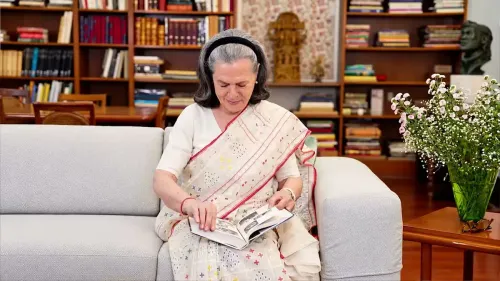
Sitaram Kesri, who hailed from Bihar, had been associated with the Congress for over six decades before his brief but eventful stint as party president from 1996 to 1998. He passed away in 2000. 'Belonging: A Journey of Love' was released on Tuesday, 10 November 2026, and traces significant personal and political milestones from Gandhi's life in India. The memoir is expected to offer a first-person perspective on several key moments in modern Congress history that have so far been filtered through political commentary.
Point of View
But it complicates the flat narrative. What is worth watching is what else the memoir reveals: first-person accounts from political insiders at this level are rare in India, and 'Belonging' could reopen settled debates about the Congress's internal democracy during a period that still shapes the party's present-day identity crisis.
NationPress
10 Nov 2026
Frequently Asked Questions
What does Sonia Gandhi's memoir 'Belonging: A Journey of Love' reveal about Sitaram Kesri?
The memoir reveals that immediately after being elected Congress President on 14 March 1998, Sonia Gandhi went directly to Sitaram Kesri's residence to seek his blessings by touching his feet. Kesri was reportedly surprised by the visit, and his eyes filled with tears as he placed his hand on her head.
When was Sonia Gandhi elected as Congress President?
Sonia Gandhi was elected Congress President by the Congress Working Committee (CWC) on 14 March 1998, succeeding Sitaram Kesri. The CWC had unanimously decided that a leadership change was necessary following the party's poor electoral performance.
Who was Sitaram Kesri and what happened to him?
Sitaram Kesri was a Congress leader from Bihar who served as the party's president from 1996 to 1998. He was asked to step down by the CWC in March 1998 to make way for Sonia Gandhi's election as party chief. He passed away in 2000.
When was 'Belonging: A Journey of Love' released?
Sonia Gandhi's memoir 'Belonging: A Journey of Love' was released on Tuesday, 10 November 2026. The book traces key personal and political events from her life, including the 1998 Congress leadership transition.
How does Sonia Gandhi's account differ from the mainstream narrative about Kesri's removal?
The mainstream narrative has described Kesri's exit as an abrupt and undignified political ouster. Gandhi's memoir does not dispute that he was asked to step down, but adds a personal dimension — her immediate visit to seek his blessings — that the institutional record did not capture, presenting the transition in a more conciliatory light.