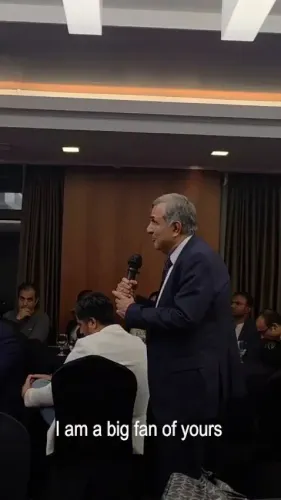
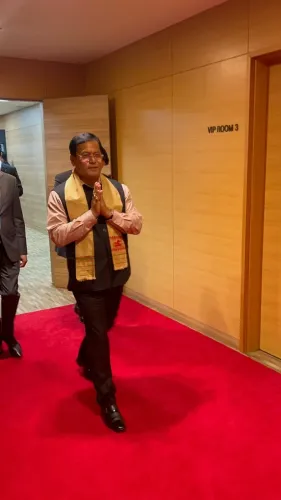
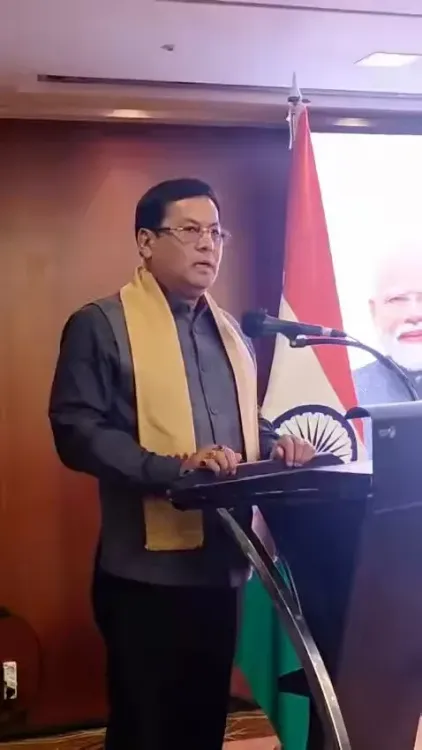
Sonowal addresses Indian shipbuilding community in Busan
Synopsis
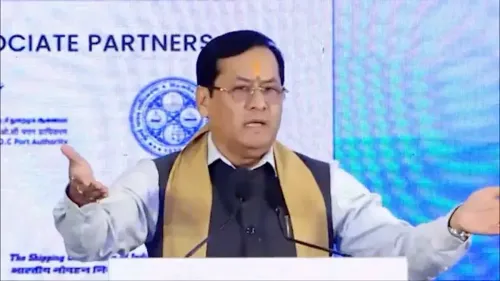
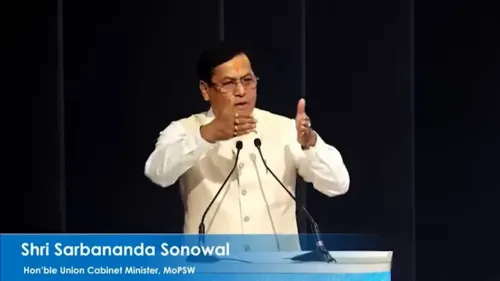
Union Minister Sarbananda Sonowal addressed the Indian shipbuilding community in Busan, South Korea, sharing his speech on X. The visit underscores India's push to grow its global shipbuilding share through engagement with South Korea, a world leader in the sector.
Key Takeaways
Minister Sarbananda Sonowal addressed the Indian shipbuilding community in Busan, South Korea on October 25, 2026 .
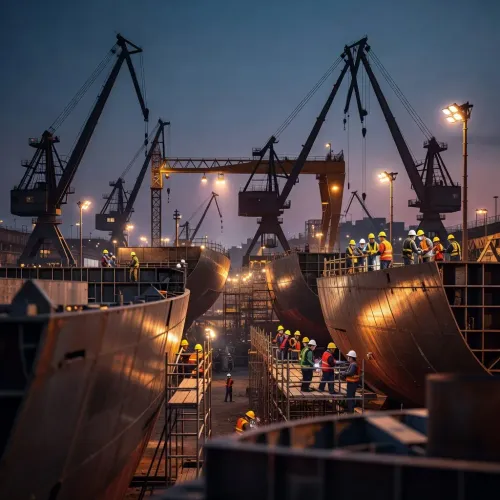
Busan is a leading global shipbuilding hub and home to some of the world's largest commercial vessel yards.
India's domestic shipbuilding push is anchored by the Sagarmala Programme , launched in 2015 .
South Korea is among the top two shipbuilding nations globally, making it a key potential technology partner for India.
The visit continues a pattern of high-level outreach by the Ministry of Ports, Shipping and Waterways to global maritime clusters.
Possible follow-up announcements on shipbuilding incentives or India-South Korea technology collaboration frameworks are being watched.
From the world's shipbuilding capital, Union Minister of Ports, Shipping and Waterways Sarbananda Sonowal on Sunday, October 25, 2026, addressed the Indian shipbuilding community in Busan, South Korea — a city whose drydocks and fabrication halls produce a significant share of the world's commercial vessels — sharing his speech on social media and urging followers to watch it.
Why Busan, and why now
Busan is no ordinary conference backdrop. Home to yards operated by industrial giants, the South Korean port city is a living textbook of what scaled, technology-intensive shipbuilding looks like. For Indian policymakers and industry players trying to build domestic capacity, a direct interaction here carries real signal value — it places India's ambitions in the same room as the world's benchmark.
South Korea has consistently ranked among the top two shipbuilding nations globally, commanding deep expertise in commercial vessel construction, LNG carriers, and naval auxiliaries — precisely the segments where India is seeking to grow its footprint.
Make in India meets the global maritime cluster
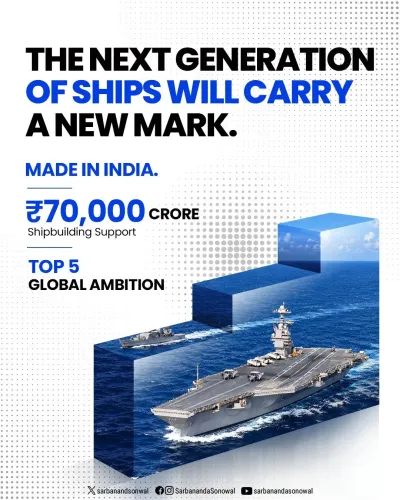
India's push to expand its shipbuilding share has been anchored institutionally in the Sagarmala Programme, launched in 2015, which set out to modernise ports and stimulate domestic shipbuilding and repair capacity. Despite the policy architecture, India's slice of the global orderbook has remained modest — making outreach to hubs like Busan a critical piece of the catch-up strategy.
Minister Sonowal's visit continues a pattern of high-level diplomatic and industry engagement by the Ministry of Ports, Shipping and Waterways, targeting technology partnerships, investment, and market intelligence from leading maritime nations. For Indian shipbuilders present in Busan, the interaction represents a direct line to both government intent and global best practice in a single room.
What follows the Busan conversation
Analysts tracking the ministry's engagement calendar will be watching for concrete follow-through — whether the Busan interaction translates into a bilateral technology-collaboration framework with South Korean partners, or fresh incentive announcements for domestic yards under the Make in India umbrella. High-level ministerial presence at a global shipbuilding hub rarely stays purely ceremonial.
India's maritime ambitions need more than policy documents — they need the kind of industrial know-how that Busan has spent decades accumulating. Sonowal's speech is a opening move; the real test is what gets signed, funded, and built next.
Point of View
Lending credibility to Make in India goals in the maritime sector. Engaging Indian industry players on South Korean soil signals that the ministry is moving beyond domestic policy proclamations toward active global knowledge transfer. The interaction also carries electoral and economic messaging: shipbuilding is a high-employment, high-value sector that Modi's industrial push has repeatedly cited as an underexploited strength. The real measure of success will come in whether bilateral frameworks and tangible yard investments follow this high-profile ministerial visit.
NationPress
25 Oct 2026
Frequently Asked Questions
Why did Sonowal visit Busan, South Korea?
Union Minister Sarbananda Sonowal visited Busan to interact with the Indian shipbuilding community. Busan is one of the world's foremost shipbuilding centres, and the visit is part of India's outreach to major maritime nations to build technology partnerships and grow domestic shipbuilding capacity.
What is the Sagarmala Programme?
The Sagarmala Programme is a flagship Indian government initiative launched in 2015 under the Ministry of Ports, Shipping and Waterways. It aims to modernise ports, develop coastal economic zones, and boost domestic shipbuilding and ship-repair capacity.
What is India's current position in global shipbuilding?
India holds a relatively small share of the global shipbuilding orderbook despite having a long coastline and policy ambitions. The government has been working to increase this share through Make in India initiatives, infrastructure investment, and outreach to leading shipbuilding nations like South Korea.
Why is South Korea important for India's shipbuilding ambitions?
South Korea is consistently among the world's top two shipbuilding nations, with deep expertise in commercial vessels, LNG carriers, and naval auxiliaries. For India, a partnership with South Korean industry offers access to technology, training, and global best practices that could accelerate domestic capacity building.
What could follow Sonowal's interaction in Busan?
Observers are watching for possible announcements on shipbuilding incentive schemes or formal India-South Korea technology collaboration frameworks. High-level ministerial engagement at global industry hubs often precedes structured bilateral or investment agreements.