Sonowal: Cabinet clears ₹10,000 Cr container scheme
Synopsis
The Cabinet chaired by PM Narendra Modi has approved the Container Manufacturing Promotion Scheme with a ₹10,000 crore outlay through FY 2039–40. Union Minister Sarbananda Sonowal called it a 'historic decision' to build a self-reliant, globally competitive container manufacturing ecosystem in India.
Key Takeaways
The Container Manufacturing Promotion Scheme (CMPS) was approved by the Union Cabinet chaired by PM Narendra Modi on October 28, 2026 .
The scheme carries a budgetary outlay of ₹10,000 crore and is valid through FY 2039–40 .
It aims to build a domestic, Aatmanirbhar and globally competitive container manufacturing industry in India.
The move directly addresses India's dependence on imported containers, predominantly sourced from China .
CMPS aligns with the Atmanirbhar Bharat initiative (2020) and the Sagarmala Project (2015) for port-led development.
Key stakeholders — including container manufacturers, shipping firms, and exporters — will await implementation guidelines and fund-disbursement timelines.
India is betting big on building its own steel boxes — and the Cabinet just put ₹10,000 crore behind that bet. Union Minister of Ports, Shipping and Waterways Sarbananda Sonowal announced on Wednesday, October 28, 2026, that the Cabinet chaired by Prime Minister Narendra Modi has approved the Container Manufacturing Promotion Scheme (CMPS), a first-of-its-kind programme designed to birth a domestic container manufacturing industry from near-scratch.
What CMPS actually does — and why it matters now
The scheme carries a budgetary outlay of ₹10,000 crore and runs through FY 2039–40, giving manufacturers a long, stable policy horizon to plan capital investment. Sonowal called it 'a historic decision' and framed it as a cornerstone of an Aatmanirbhar (self-reliant) and 'globally competitive container manufacturing ecosystem in India.'
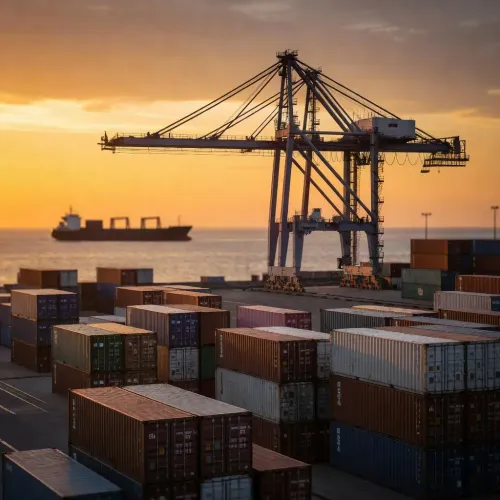
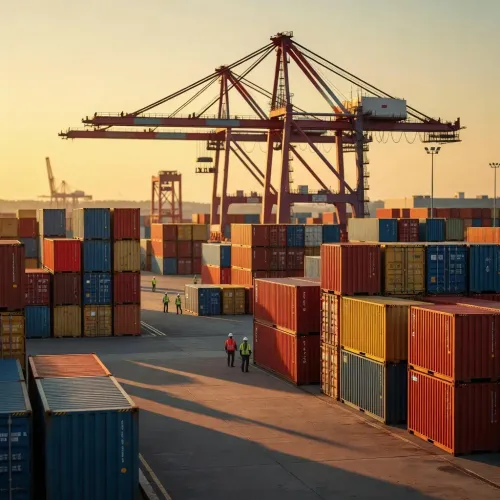
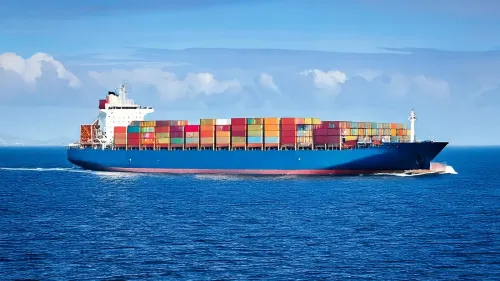
The strategic logic is hard to miss. Shipping containers — the ubiquitous steel units that move roughly 90 per cent of global trade — have historically been dominated by Chinese manufacturers, leaving India's booming export sector dependent on an import it can barely influence. Every supply-chain disruption, from pandemic port closures to freight-rate spikes, has exposed that vulnerability. CMPS is the government's structural answer.
The policy lineage: from Sagarmala to Aatmanirbhar to CMPS
This announcement does not arrive in a vacuum. The Sagarmala Project, launched in 2015, set the foundation for port-led development and maritime infrastructure investment across India's coastline. The Atmanirbhar Bharat initiative, announced in May 2020, then elevated 'domestic manufacturing in strategic sectors' to a core national priority. CMPS is the maritime sector's most direct translation of that political and economic mandate into rupees and a legal framework.
Together, the schemes trace a clear arc: build the ports, deepen the waterways, and now — manufacture the containers that actually move through them. The Ports Ministry is, in effect, trying to close the full logistics loop inside India's own borders.
Who stands to gain — and what to watch next
The immediate beneficiaries are domestic container manufacturers, shipping companies, and exporters — the last group being the most consequential politically and economically. Indian exporters have long complained that container shortages and imported-unit costs eat into their price competitiveness on global markets. A domestic supply base, if it scales, changes that arithmetic.
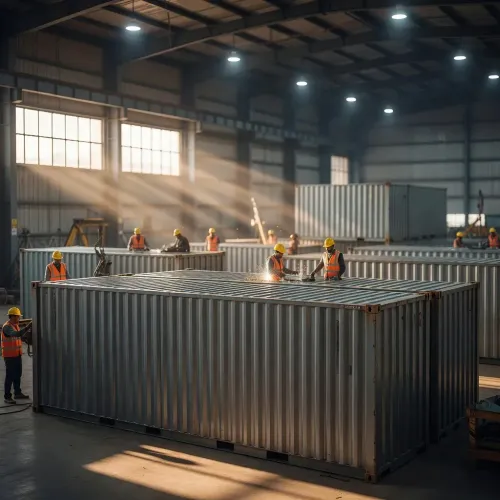
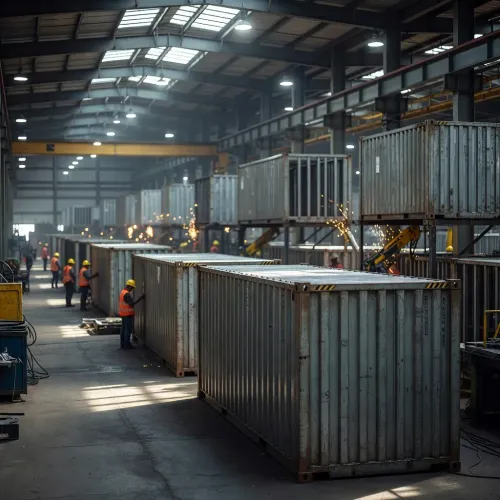
What the industry will now scrutinise: the implementation guidelines, the production-linked or capital-subsidy structure of the ₹10,000 crore disbursement, and the timelines for the first greenfield manufacturing facilities to break ground. The FY 2039–40 horizon is ambitious but deliberate — container plants require multi-year construction and certification cycles before a single unit rolls out.
India once watched global container prices quadruple overnight during a supply crunch and had no domestic lever to pull. With CMPS, the government has at least drawn the blueprint for one.
Point of View
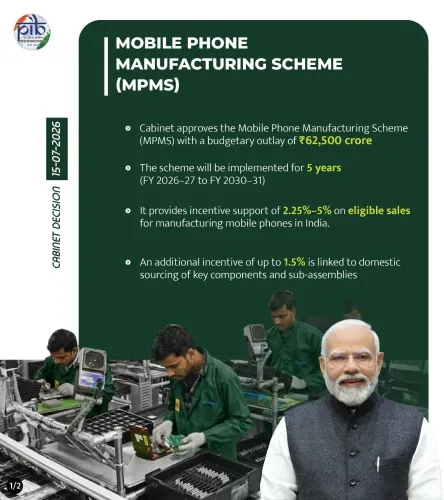
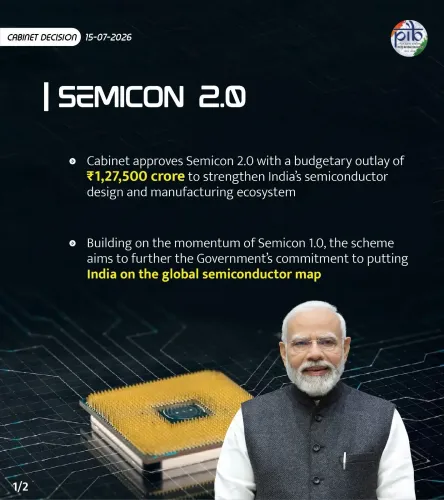
Signalling that the Modi government is moving beyond port infrastructure to tackle the supply-chain inputs that flow through those ports. Structurally, it mirrors the production-linked logic deployed in electronics and semiconductors — a long-runway, high-outlay commitment designed to attract serious capital. The China-dependence subtext is unmistakable: container supply shocks of the early 2020s gave New Delhi a political and economic argument for domestic capacity that is now being converted into policy. The 2039–40 timeline is realistic for industrial gestation but also exposes the scheme to multiple election cycles — making durable implementation the real test.
NationPress
28 Oct 2026
Frequently Asked Questions
What is the Container Manufacturing Promotion Scheme (CMPS)?
The CMPS is a newly approved government scheme with a ₹10,000 crore budgetary outlay, running through FY 2039–40, aimed at building a domestic and globally competitive container manufacturing industry in India to reduce reliance on imported containers.
Who approved the CMPS and when?
The Union Cabinet, chaired by Prime Minister Narendra Modi, approved the scheme on October 28, 2026. The announcement was made by Union Minister of Ports, Shipping and Waterways Sarbananda Sonowal.
Why does India need a domestic container manufacturing scheme?
India has long depended on imported containers — largely from China — to service its export-import trade. Supply-chain disruptions and freight-rate spikes have repeatedly exposed this vulnerability, making domestic production a strategic and economic priority.
How does CMPS connect to Atmanirbhar Bharat?
CMPS directly embodies the Atmanirbhar Bharat initiative announced in May 2020, which set self-reliance in strategic manufacturing sectors as a national goal. Containers, as a critical logistics input, fall squarely within that mandate.
What should the industry watch for after the CMPS announcement?
Industry stakeholders will closely track the release of implementation guidelines, the structure of fund disbursement (whether production-linked or capital-subsidy based), and the timelines for new container manufacturing facilities to become operational.