Sonowal: India holds World #1 rank in ship recycling
Synopsis
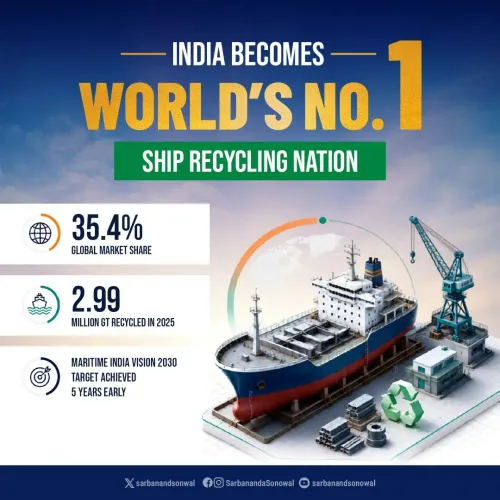
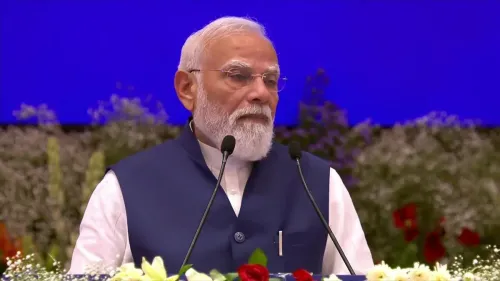
Union Minister Sarbananda Sonowal announced that India ranks World #1 in ship recycling with a claimed 35.4% global share in 2025, crediting PM Modi's maritime leadership and the country's Sagarmala and Hong Kong Convention commitments.
Key Takeaways
Union Minister Sarbananda Sonowal announced on October 18, 2026 that India holds the World #1 rank in ship recycling.
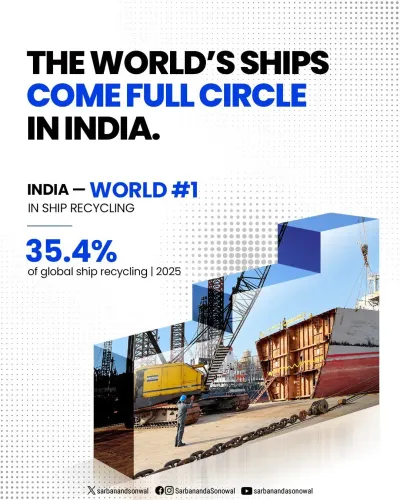
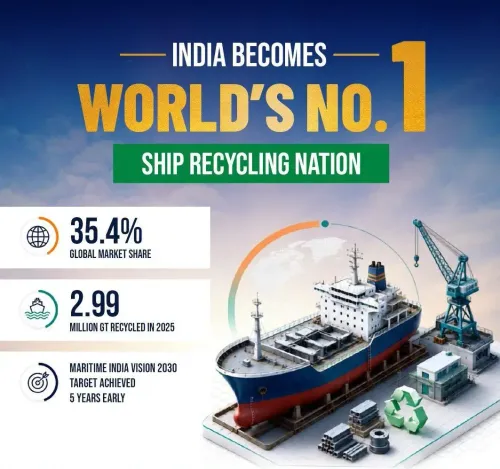
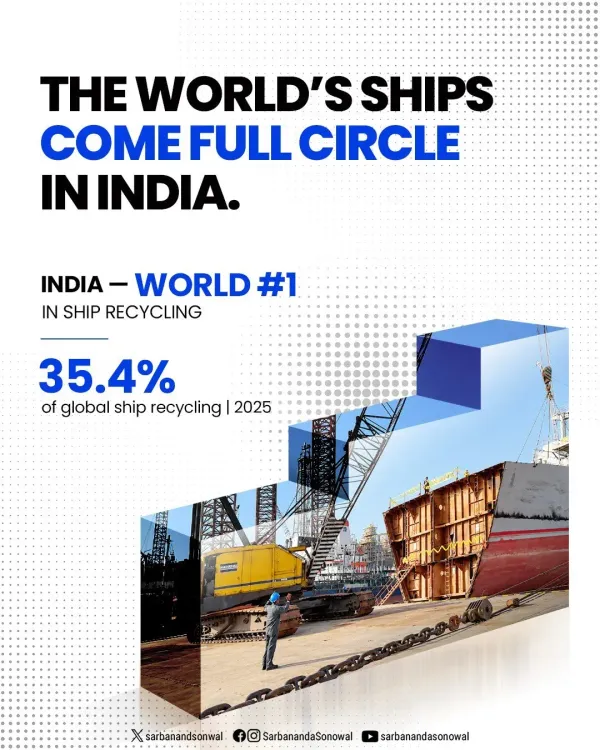
India is claimed to handle 35.4% of global ship recycling as of 2025 , according to the minister's post.
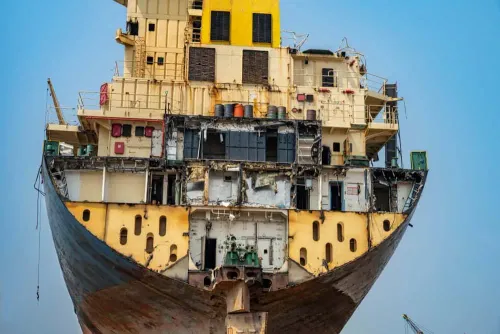
Alang, Gujarat remains the centrepiece of India's ship-breaking capacity, housing one of the world's largest dismantling yards.
India acceded to the Hong Kong International Convention for safe and environmentally sound ship recycling in 2019 .
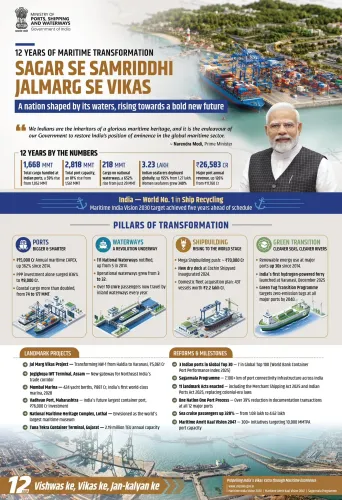
The Sagarmala Project , launched in 2015 , provided the policy framework linking port modernisation to ship recycling growth.
Infrastructure upgrades at recycling yards and new targets under the Maritime India Vision framework remain the key benchmarks ahead.
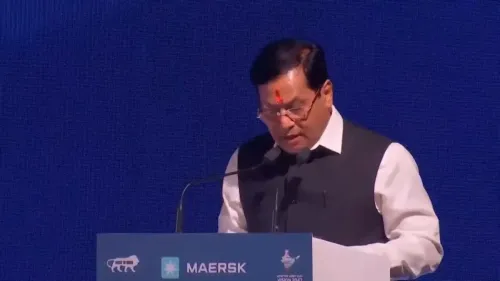
India now commands the top spot in global ship recycling — handling a claimed 35.4% of worldwide ship recycling volume in 2025 — and Union Minister of Ports, Shipping and Waterways Sarbananda Sonowal used the milestone on Sunday, October 18, 2026, to frame it as proof that the country is actively steering the global maritime economy toward a sustainable future.
Alang at the centre of India's recycling dominance
The story behind the statistic runs through one address: Alang, Gujarat. For decades, this coastal town has housed the world's largest ship-breaking yard, a sprawling industrial kilometre-strip where end-of-life vessels from every ocean arrive to be dismantled. The scale is staggering — tens of thousands of workers, hundreds of plots, and a supply chain that feeds everything from structural steel to second-hand machinery into the domestic economy.
India's dominance here is not accidental. The combination of a large, specialised workforce, competitive operating costs, and enormous yard capacity has kept Alang ahead of rivals in Bangladesh, Pakistan, and Turkey for years. What has changed more recently is the policy architecture around it.
From Sagarmala to the Hong Kong Convention
The current government's maritime push traces back to 2015, when the Sagarmala Project was launched to modernise ports, promote coastal shipping, and build out shipbuilding and recycling infrastructure. That framework gave Alang-style operations a formal policy home — and a pipeline of investment.
Then, in 2019, India acceded to the Hong Kong International Convention for the Safe and Environmentally Sound Recycling of Ships, signalling that the goal was not just volume but cleaner, safer recycling. The convention sets standards for hazardous material management, worker safety, and environmental controls — areas where large yards have been under international scrutiny. Sonowal's framing of a 'sustainable future' sits squarely in that context.
What the number means — and what still needs watching
A 35.4% global share makes India not just a participant in ship recycling but the market's defining player. For an industry that processes thousands of gross tonnes of steel annually, that translates into significant foreign exchange earnings, employment, and raw-material supply for domestic steel producers.
The next test is whether infrastructure upgrades at recycling yards keep pace with the Hong Kong Convention's requirements — and whether India can set new targets under the Maritime India Vision framework that lock in both the economic lead and the environmental compliance bar simultaneously. The rank is held. The harder work is holding it on the world's terms.
Point of View
Loosely regulated ship-breaking hub toward a compliant, globally competitive recycling economy aligned with the Hong Kong Convention. The political calculus is also regional — Gujarat's Alang constituency benefits directly, and maritime industrial policy has become a recurring BJP calling card in coastal states. The outstanding question is whether infrastructure investments at the yard level are matching the rhetorical ambition, a gap that international shipping regulators and environmental groups continue to watch closely.
NationPress
18 Oct 2026
Frequently Asked Questions
Is India really ranked number one in ship recycling in the world?
Union Minister Sarbananda Sonowal claimed on October 18, 2026 that India holds the World #1 rank in ship recycling, handling 35.4% of global volumes in 2025. India has been among the top ship-recycling nations for over a decade, with the Alang yard in Gujarat as its main hub, though the specific 35.4% figure for 2025 requires independent verification.
Where is India's main ship recycling yard located?
India's primary ship recycling operations are concentrated at Alang in Gujarat , which is one of the largest ship-breaking yards in the world and employs tens of thousands of workers.
What is the Hong Kong Convention and has India signed it?
The Hong Kong International Convention for the Safe and Environmentally Sound Recycling of Ships sets global standards for worker safety, hazardous material management, and environmental controls in ship dismantling. India acceded to the convention in 2019.
What is the Sagarmala Project and how does it relate to ship recycling?
The Sagarmala Project, launched in 2015, is India's flagship maritime infrastructure programme aimed at modernising ports, promoting coastal shipping, and supporting shipbuilding and recycling. It provided the policy and investment framework within which India's ship recycling sector expanded.
What is Maritime India Vision and what are its ship recycling goals?
Maritime India Vision is a long-term policy framework for India's maritime sector covering ports, shipping, waterways, and recycling. It is expected to set fresh targets for sustainable recycling practices and infrastructure upgrades at yards like Alang in coming years.