Sonowal Marks World Day Against Child Labour
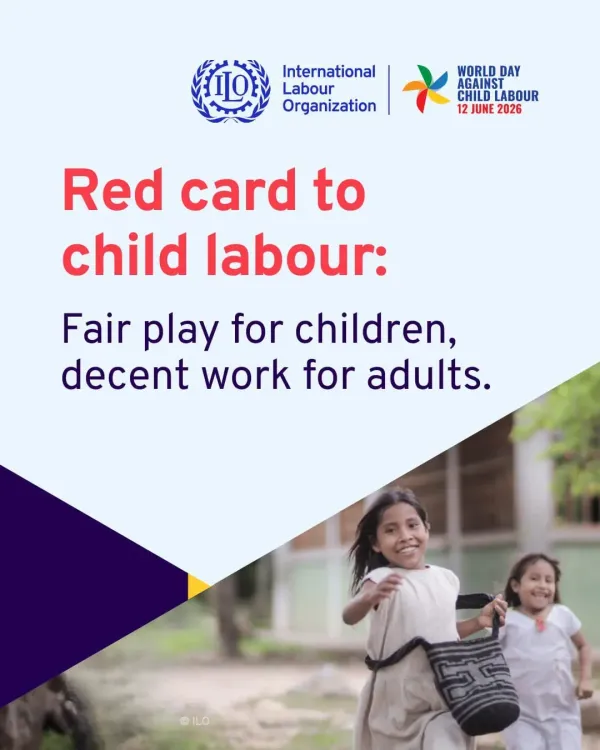
Synopsis
On World Day Against Child Labour, Union Minister Sarbananda Sonowal called for a collective pledge to protect children's innocence and secure their right to schools and playgrounds, echoing India's four-decade legislative drive against child exploitation.
Key Takeaways
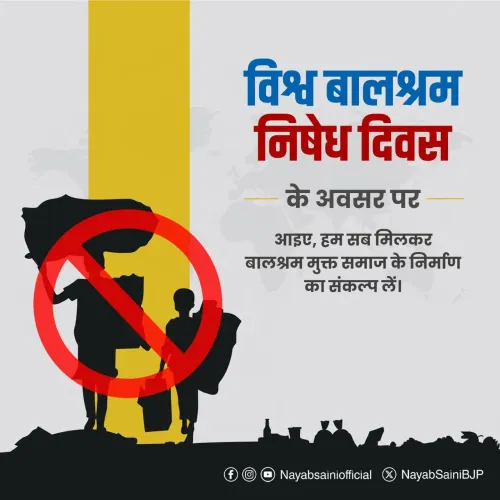
World Day Against Child Labour is observed on 12 June every year, designated by the ILO to promote global action against child exploitation.
Union Minister Sarbananda Sonowal urged citizens to pledge protection of children's right to education and play on 12 June 2026 .
The Child Labour (Prohibition and Regulation) Amendment Act, 2016 bans employment of children below 14 years across all sectors in India.
India ratified ILO Conventions 138 and 182 in 2017 , aligning with core international child labour standards.
The National Child Labour Project , running since 1988 , withdraws children from work and mainstreams them into formal education.
India's child labour elimination framework is tied to SDG Target 8.7 , with enforcement responsibility resting primarily with state governments.
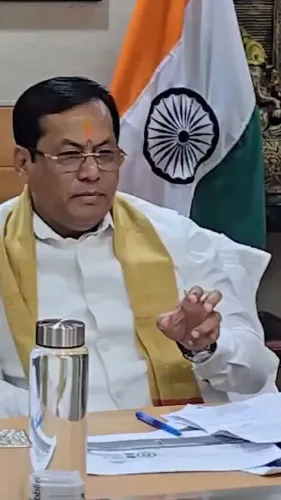
Union Ports and Shipping Minister Sarbananda Sonowal on Friday, 12 June 2026, marked World Day Against Child Labour by calling on citizens to collectively pledge protection of children's innocence and their right to education and play.
Context
World Day Against Child Labour is observed every year on 12 June under the aegis of the International Labour Organization (ILO) to galvanise global action against the exploitation of children in workplaces. Sonowal's post, shared on the occasion, stated: 'Schools and playgrounds are the true places for children to build their destinies,' urging a collective pledge to 'protect their innocence and give them the wings to realise their dreams.'
The message aligns with a long-standing national and international consensus that access to education is the most effective tool for eliminating child labour. The Right of Children to Free and Compulsory Education Act, 2009, established a legal entitlement to schooling for every child between six and fourteen years, forming the legislative backbone of India's child labour eradication efforts.
Policy Backdrop
India has progressively strengthened its legal framework against child labour over four decades. The Child Labour (Prohibition and Regulation) Amendment Act, 2016, extended the ban on employing children to all occupations and sectors for those below the age of 14 years, while introducing stricter penalties for violations.
A landmark step came in 2017, when India ratified ILO Convention 182 on the worst forms of child labour and ILO Convention 138 on minimum age, completing its alignment with core international standards. The National Child Labour Project (NCLP), a central scheme operational since 1988 under the Ministry of Labour and Employment, continues to withdraw children from hazardous work and mainstream them into formal education through special training centres.
These efforts are also anchored to Sustainable Development Goal (SDG) Target 8.7, which calls for the end of child labour in all its forms by 2025 — a deadline that has kept legislative and programmatic pressure high.
Stakeholders and Impact
The most directly affected are children in informal sector households, where economic vulnerability often drives families to send children to work rather than school. Enforcement of child labour laws rests primarily with state governments, while the Centre funds model projects and sets the legislative floor.
Civil society organisations, district administrations, and school systems all play a role in identifying and rehabilitating working children. Awareness campaigns on days such as 12 June are considered important tools for shifting social norms alongside legal prohibition.
What's Next
Observers will watch for the next Periodic Labour Force Survey release, which is expected to contain updated child labour estimates, providing a clearer picture of whether India's legal and programmatic interventions are translating into measurable reduction on the ground.
Any follow-up legislative or budgetary proposals in the monsoon session of Parliament related to child welfare, education access, or labour enforcement will also be closely tracked by policy analysts and child rights advocates.
Point of View
Reinforcing the government's alignment with international labour standards it formally adopted by ratifying ILO Conventions in 2017. While the minister's current portfolio — ports and shipping — does not directly intersect with child welfare policy, such cross-portfolio messaging is common in Indian political communication and signals a whole-of-government posture on social issues. The emphasis on schools and playgrounds as spaces of destiny echoes the Right to Education Act's foundational promise, suggesting the government continues to position education access as its primary anti-child-labour instrument. The broader policy challenge, however, remains enforcement at the state level and translating legal prohibition into verifiable ground-level outcomes.
NationPress
26 Oct 2026
Frequently Asked Questions
When is World Day Against Child Labour observed?
World Day Against Child Labour is observed every year on 12 June , a date designated by the International Labour Organization (ILO) to promote global action against child labour in all its forms.
What is India's law against child labour?
The Child Labour (Prohibition and Regulation) Amendment Act, 2016 prohibits the employment of children below 14 years in all occupations and sectors, with limited exceptions for family-based work, and prescribes stricter penalties for violations.
Has India ratified ILO conventions on child labour?
Yes. India ratified ILO Convention 182 on the worst forms of child labour and ILO Convention 138 on minimum age in 2017 , completing its alignment with core international child labour standards.
What is the National Child Labour Project?
The National Child Labour Project (NCLP) is a central government scheme run by the Ministry of Labour and Employment since 1988 . It withdraws children from hazardous work and mainstreams them into formal education through special training centres.
What did Sarbananda Sonowal say on World Child Labour Day 2026?
On 12 June 2026 , Sarbananda Sonowal posted that 'schools and playgrounds are the true places for children to build their destinies,' calling for a collective pledge to protect children's innocence and give them 'the wings to realise their dreams.'