Sonowal: Smart Ports Must Be Cyber-Secure Ports
Synopsis
Ports Minister Sarbananda Sonowal has declared that a smart port must be a cyber-secure port, calling cybersecurity integral to India's AI-driven maritime modernisation under PM Modi's SAGAR vision first launched in 2015.
Key Takeaways
Union Minister Sarbananda Sonowal stated on August 6, 2026 that cybersecurity must be built into every new port system adopting AI and automation.
He anchored the position in PM Narendra Modi's SAGAR vision — Security and Growth for All in the Region — announced in 2015 during a visit to Mauritius .
Sonowal's formulation frames cyber resilience as a foundational design requirement, not an add-on, for smart port infrastructure.
India's port modernisation push under SAGAR integrates economic growth with maritime security objectives across the Indian Ocean region.
The rollout of cybersecurity standards in ongoing port projects and AI tool integration under existing schemes are the key developments to watch.
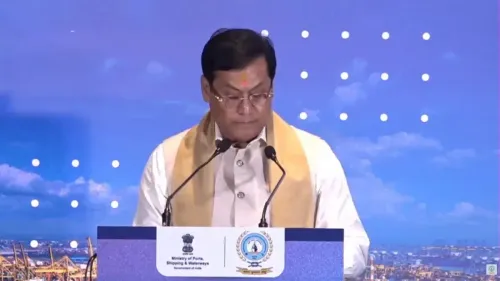
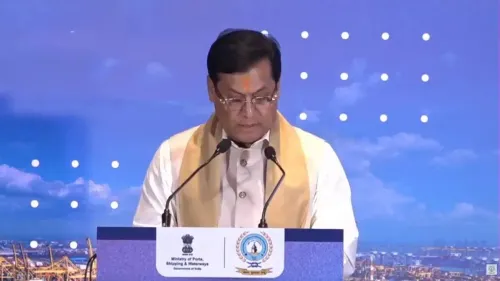
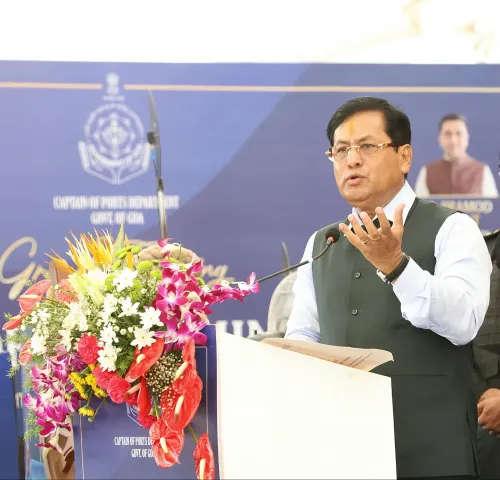
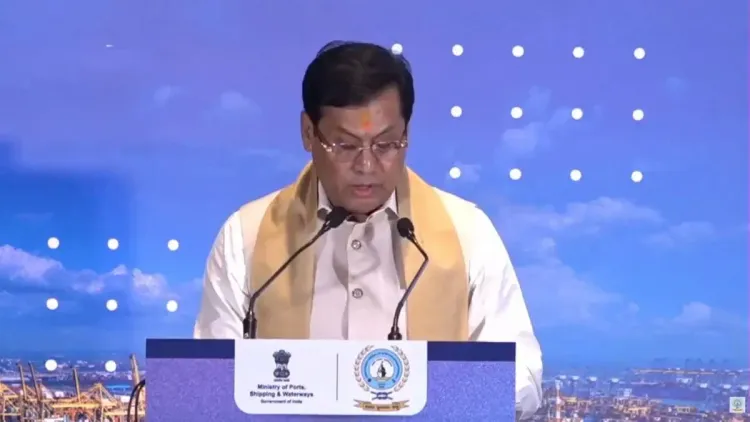
India's maritime ambitions are scaling fast — and so are the risks that come with them. Union Minister of Ports, Shipping and Waterways Sarbananda Sonowal on Thursday, August 6, 2026, drew a direct line between port modernisation and cybersecurity, framing digital resilience as non-negotiable for the country's next generation of smart ports.
Posting on X, Sonowal stated: 'A smart port must fundamentally be a cyber-secure port.' He added that as India adopts AI and automation across its maritime infrastructure, cybersecurity is being built into every new system from the ground up — not bolted on as an afterthought.
SAGAR at the Core: Modi's 2015 Vision Meets 2026 Realities
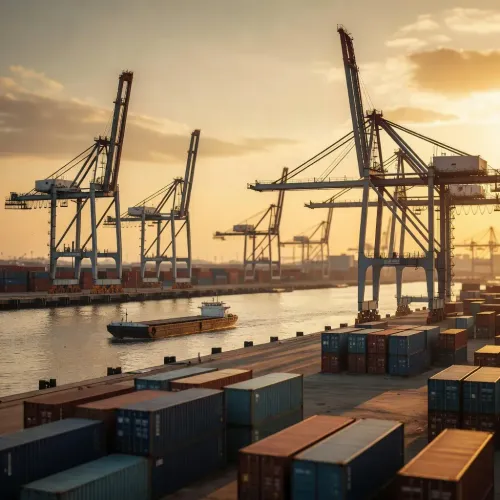
Sonowal anchored his remarks in Prime Minister Narendra Modi's SAGAR vision — an acronym for 'Security and Growth for All in the Region' — first articulated by Modi during a 2015 visit to Mauritius. The framework was designed to knit together maritime security and regional economic growth across the Indian Ocean, treating the two not as competing priorities but as inseparable ones. More than a decade on, that philosophy is being tested against a new threat landscape. Ports are no longer just physical chokepoints — they are data-intensive nodes running logistics software, automated cranes, vessel-tracking systems, and increasingly, AI-driven operations. Each layer of digital capability is also a potential attack surface.Why Cyber Resilience Is Now a Port Infrastructure Question
Sonowal's framing is pointed: cybersecurity is not a separate IT concern but a foundational design requirement for modern port infrastructure. The logic tracks with global trends — major port disruptions from cyberattacks in recent years have demonstrated how a single breach can freeze cargo movement, compromise customs systems, and ripple across supply chains. India's port modernisation drive, pursued under the SAGAR framework, has accelerated investment in digital systems. The minister's statement signals that cybersecurity standards are being positioned as integral to that rollout — not optional compliance layers added after commissioning. The convergence of AI, automation, and maritime security policy is the space to watch. How those standards are defined, who sets them, and how they are enforced across both public port trusts and private terminal operators will determine whether the ambition holds. A smart port that gets breached is not smart at all. That is the bar Sonowal has set — and the sector will be measured against it.Point of View
Not leave it to individual operators. By invoking the SAGAR framework, the ministry is connecting a decade-old strategic vision to a very contemporary threat: the vulnerability of digitised critical infrastructure. The move also reflects a broader pattern in Indian infrastructure policy, where security and economic utility are increasingly co-designed rather than sequenced. Watch whether this translates into mandatory cybersecurity benchmarks in port concession agreements and public procurement — that is where intent becomes enforcement.
NationPress
6 Aug 2026
Frequently Asked Questions
What is the SAGAR vision and who announced it?
SAGAR stands for 'Security and Growth for All in the Region.' It was announced by Prime Minister Narendra Modi in 2015 during a visit to Mauritius , and frames India's maritime strategy around linking regional security with economic development across the Indian Ocean.
What did Sarbananda Sonowal say about smart ports and cybersecurity?
Sonowal stated that 'a smart port must fundamentally be a cyber-secure port,' arguing that as India adopts AI and automation in maritime infrastructure, cybersecurity must be an integral part of every new system — not an afterthought.
Why is cybersecurity important for Indian ports?
Modern ports run on digital systems — logistics software, automated equipment, vessel-tracking, and AI-driven operations. Each layer is a potential target for cyberattacks that can disrupt cargo movement, customs systems, and broader supply chains.
What is India's current port modernisation policy?
India's port modernisation is pursued under the SAGAR framework, which integrates economic growth objectives with maritime security goals. The government has been investing in digital upgrades across port infrastructure, with cybersecurity now being flagged as a core design requirement.
Who is Sarbananda Sonowal?
Sarbananda Sonowal is India's Union Minister of Ports, Shipping and Waterways, a senior BJP leader, and a former Chief Minister of Assam.