Hemant Soren meets UNICEF child journalists on World Children's Day
Synopsis
On World Children's Day, Jharkhand CM Hemant Soren sat down with 10 UNICEF child journalists in Ranchi who grilled him on child marriage, school dropouts and menstrual hygiene — signalling a rare, direct accountability moment between a sitting chief minister and young citizens advocating for their own rights.
Key Takeaways
Jharkhand CM Hemant Soren met 10 UNICEF junior reporters in Ranchi on 20 November 2026 , World Children's Day.
Children raised issues including child marriage , child labour , school dropouts, menstrual hygiene and climate change.
Soren reaffirmed the Chief Minister's Excellence Schools initiative to improve government school standards.
The government is developing panchayat-level playgrounds and district libraries to support children's overall development.
UNICEF Jharkhand Chief Dr Kaninika Mitra called for children to be treated as partners, not just beneficiaries, in policy decisions.
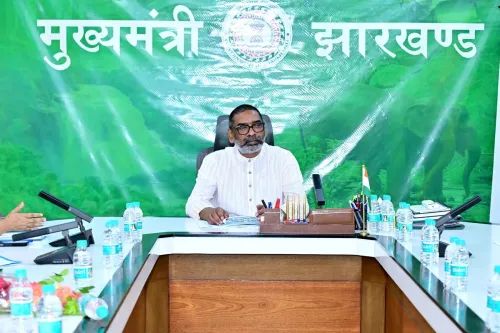
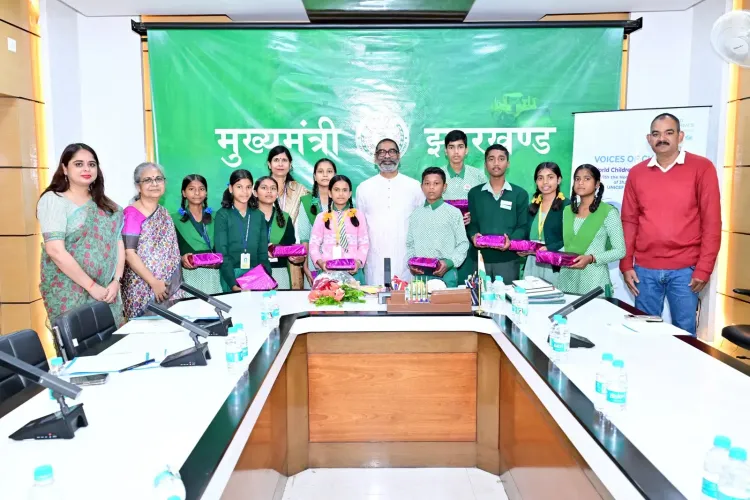
Jharkhand Chief Minister Hemant Soren on Friday, 20 November 2026, met 10 junior reporters associated with UNICEF at his residential office on Kanke Road, Ranchi, on the occasion of World Children's Day, reaffirming that children's voices, ideas and aspirations must be heard and acted upon.
Key Developments
During the interaction, the young journalists — drawn from government schools in Kanke, Ormanjhi, Ratu and Ranchi — raised a range of concerns including child marriage, child labour, school dropouts, menstrual hygiene, non-communicable diseases, healthy eating habits and climate change. They also questioned the Chief Minister directly about their educational aspirations and future prospects.
Soren said he was impressed by the clarity and confidence with which the children articulated their rights and social challenges. 'The awareness and confidence of the child journalists have impressed me. The clarity with which children are speaking about their rights and social issues is encouraging,' he said, adding that every child's voice deserved to be heard and that their ideas and dreams mattered.
What the Government Said
The Chief Minister stated that the state government was continuously working to improve school education quality through the Chief Minister's Excellence Schools initiative, which aims to raise standards in government schools. He also said the issue of freeing teachers from non-academic duties would be reviewed and appropriate solutions worked out.
On sports, Soren said the government was providing sports equipment and developing playgrounds at the panchayat level to encourage children with an interest in athletics. Libraries are also being constructed across districts to promote reading and learning, he added.
Child Marriage and Menstrual Hygiene
Addressing the issue of child marriage directly, Soren underscored that it was a punishable offence under the law and could seriously harm children's futures. He appealed to communities not to arrange marriages before the legally prescribed age. On menstrual hygiene, he highlighted ongoing awareness campaigns in schools and confirmed that sanitary pads were being made available to girls and women. Officials have reportedly been instructed to visit schools in their areas and interact directly with students to understand ground-level concerns.
UNICEF's Message
UNICEF Jharkhand Chief Dr Kaninika Mitra said children should not be seen merely as beneficiaries of government schemes but as partners in decisions that affect their own lives. She emphasised that the child journalist programme offered children a platform to express their views and develop leadership skills.
Aastha Alang, UNICEF's Communication, Advocacy and Partnership Specialist, noted that challenges such as poverty, geographical conditions and gender inequality continued to hinder children's development, and stressed that their needs must be prioritised for a better future. Representatives of NBJK also attended the programme.
As Jharkhand prepares its next budget cycle, the commitments made on World Children's Day will be watched closely by child-rights advocates to see whether they translate into measurable policy outcomes.
Point of View
But what makes this interaction notable is the specificity of the agenda — child marriage, menstrual hygiene and teacher accountability are real policy fault lines in Jharkhand, a state with among the highest child marriage rates in India. The Chief Minister's commitment to review non-academic duties for teachers is a telling admission that the system is falling short. The harder question is whether these pledges, made in the presence of UNICEF cameras, will be tracked with any rigour. Without accountability mechanisms, the optics of a sitting CM listening to 10-year-olds risk becoming an annual ritual rather than a governance signal.
NationPress
20 Nov 2026
Frequently Asked Questions
Why did Hemant Soren meet UNICEF child journalists on 20 November 2026?
Jharkhand Chief Minister Hemant Soren met 10 junior reporters associated with UNICEF on World Children's Day to hear their concerns about child rights, education and social issues. The interaction was held at his residential office on Kanke Road in Ranchi.
What issues did the child journalists raise with CM Soren?
The young reporters raised concerns about child marriage, child labour, school dropouts, menstrual hygiene, non-communicable diseases among children, healthy eating and climate change. They also questioned the Chief Minister about their educational aspirations and future prospects.
What is the Chief Minister's Excellence Schools initiative in Jharkhand?
It is a state government programme aimed at improving the quality of education in government schools across Jharkhand by raising academic standards and infrastructure. CM Soren referenced it during the World Children's Day interaction as a key effort to give every child equal learning opportunities.
What did UNICEF Jharkhand say about children's role in policy?
UNICEF Jharkhand Chief Dr Kaninika Mitra said children should be treated as partners in decisions that affect their lives, not merely as beneficiaries of government schemes. She highlighted the child journalist programme as a tool to build leadership skills and give children a platform to voice their views.
What steps is the Jharkhand government taking on menstrual hygiene?
The state government is conducting awareness campaigns in schools and making sanitary pads available to girls and women. CM Soren confirmed these measures during his interaction with UNICEF child journalists on 20 November 2026.