Spiritual leaders condemn Swara Bhasker's remarks on Jauhar in 'Padmaavat'
Synopsis
Swara Bhasker's public remarks questioning the Jauhar sequence in 'Padmaavat' — and what it communicates to rape survivors — have drawn a sharp rebuke from multiple spiritual leaders, who called her comments condemnable and questioned whether Bollywood personalities should be regarded as social role models at all. The episode has reopened a fault line between feminist readings of historical cinema and traditional religious interpretations of Jauhar as an act of honour.
Key Takeaways
Multiple spiritual leaders publicly criticised actress Swara Bhasker on 4 September over her remarks on the Jauhar sequence in 'Padmaavat' .
Sitaram Das Ji Maharaj of Saket Bhawan Temple called her remarks 'highly condemnable', saying they reflected a 'regressive mindset.' Bhasker had questioned whether the film's depiction of 800 women committing Jauhar sent a harmful message to rape survivors .
Mahamandaleshwar Yatindranand Giri of Juna Akhara argued Bollywood figures should not be treated as social icons or role models.
Mahant Raju Das Ji Maharaj warned that repeated derogatory remarks against Sanatan Dharma would not be tolerated.
The controversy echoes the intense debate that surrounded 'Padmaavat' 's original release in 2018 .
Several prominent spiritual leaders on Friday, 4 September publicly criticised actress Swara Bhasker over her comments questioning the portrayal of Jauhar in director Sanjay Leela Bhansali's film 'Padmaavat', calling her remarks an affront to the sacrifice and dignity of the women associated with the tradition. The backlash emerged after Bhasker revealed she had written a letter to Bhansali following the film's release, expressing concern about the message the Jauhar sequence conveyed to women and survivors of sexual violence.
What Swara Bhasker Said
At a recent event in New Delhi, Bhasker described watching the film's Jauhar sequence — depicting around 800 women committing collective self-immolation — and said it troubled her deeply. 'I'm watching this and it shows all these 800 women committing Jauhar. Watching it, I was thinking that — God forbid, I was a rape survivor — what is this film telling me? I would feel like a coward. That I didn't kill myself to save my honour. Is that what you want to tell women in a society like ours where I feel like there's anyway a rape epidemic. Is that what we want to tell our survivors that you don't deserve to live? That if you had actually been brave and honourable women, you would have killed yourself? Are we saying that rape is the end of a woman's life?' she said.
Spiritual Leaders Respond
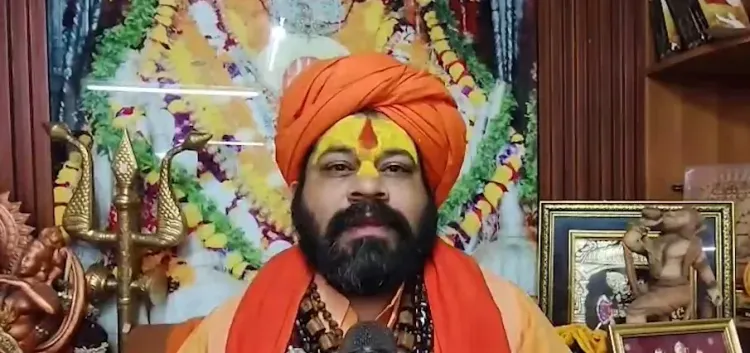
Sitaram Das Ji Maharaj, Mahant of Saket Bhawan Temple, called Bhasker's remarks 'highly condemnable', saying that questioning the penance, dedication and sacrifice of those brave women reflected 'a very regressive mindset towards society and her own family.' He added that such statements brought disrepute only to the person making them, and that the country belonged to women of valour, devotion and sacrifice.
Mahamandaleshwar Yatindranand Giri of the Juna Akhara argued that Bollywood personalities should not be regarded as social icons or role models, noting that entertainment has existed since ancient times — from theatrical performances to television and cinema — and that neither film personalities nor their statements could be considered an ideal for society.
Arya Sant Varun Das Ji Maharaj contended that those who did not understand the dignity of women or the values of Indian womanhood could not comprehend the concept of Jauhar or the sacrifices of women who, in his words, 'fought with swords.'
Sharper Personal Criticism
Mahant Deveshacharya Ji Maharaj, successor to Mahant Nritya Gopal Das, directed his criticism at Bhasker's film roles and language, suggesting her ideology could be judged by the characters she has portrayed on screen. Mahant Raju Das Ji Maharaj framed Jauhar as a representation of culture, the dignity of women and 'the chastity of our mothers and sisters', and warned that repeated derogatory remarks against Sanatan Dharma would not be tolerated.
Other Voices
Katha Vachak Aniruddhacharya described women such as Padmavati as symbols of purity and sacrifice — referred to as Sati — arguing that their stories conveyed the principle that character is worth more than life itself. Bhasker has not publicly responded to the religious leaders' statements as of the time of reporting.
Context and Background
'Padmaavat', released in 2018, was itself the subject of intense controversy before and after its release, with protests over its portrayal of the Rajput queen Padmavati. The film's climactic Jauhar sequence has remained a flashpoint in debates around historical representation, gender, and the politics of honour. Bhasker's renewed remarks have reignited that conversation, drawing a sharp divide between those who view Jauhar as a symbol of feminine courage and those who argue its cinematic glorification sends a harmful message to survivors of sexual violence.
Point of View
While a female actor frames the same sequence as potentially harmful to rape survivors, reveals a deep and unresolved tension in how India negotiates gender, history and cinematic representation. What is striking is that both sides claim to be defending women — yet reach diametrically opposite conclusions. Mainstream coverage has focused on the outrage; less examined is the fact that Bhasker's original concern was about messaging to survivors of sexual violence, a public health question that deserves engagement on its own terms rather than dismissal as an attack on culture.
NationPress
4 Sept 2026
Frequently Asked Questions
What did Swara Bhasker say about Jauhar in 'Padmaavat'?
Bhasker said she found the film's Jauhar sequence — depicting around 800 women committing collective self-immolation — deeply troubling, arguing it could make rape survivors feel like 'cowards' for not ending their own lives to protect their honour. She revealed she had written a letter to director Sanjay Leela Bhansali expressing these concerns after the film's release.
Why did spiritual leaders criticise Swara Bhasker?
Several spiritual leaders said Bhasker's remarks disrespected the sacrifice, penance and bravery of women who performed Jauhar, calling her comments 'highly condemnable.' Some also argued that Bollywood personalities should not be regarded as social icons whose statements carry moral authority.
Who are the spiritual leaders who spoke out?
The leaders who criticised Bhasker include Sitaram Das Ji Maharaj of Saket Bhawan Temple, Mahamandaleshwar Yatindranand Giri of Juna Akhara, Arya Sant Varun Das Ji Maharaj, Mahant Deveshacharya Ji Maharaj, Katha Vachak Aniruddhacharya, and Mahant Raju Das Ji Maharaj.
What is Jauhar and why is it controversial?
Jauhar refers to the historical practice of collective self-immolation by Rajput women, typically to avoid capture by invading forces. It has long been a subject of debate — venerated by some as an act of supreme honour and courage, and criticised by others as a practice that glorifies women's deaths in the name of chastity. Its depiction in 'Padmaavat' reignited this debate when the film released in 2018.
Has Swara Bhasker responded to the spiritual leaders' criticism?
As of the time of reporting, Swara Bhasker had not publicly responded to the statements made by the spiritual leaders criticising her remarks on the Jauhar sequence in 'Padmaavat'.