Sri Sri Ravi Shankar at New York summit: 'No peace, no prosperity'
Synopsis
At one of New York's most high-profile global development forums, Sri Sri Ravi Shankar reframed the prosperity debate — arguing that mindset, corruption, and inner peace are as central to economic progress as technology or capital. His rural India-to-Africa entrepreneurship model and sharp AI quip gave the session its most memorable moments.
Key Takeaways
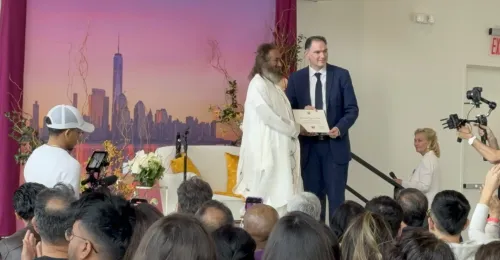
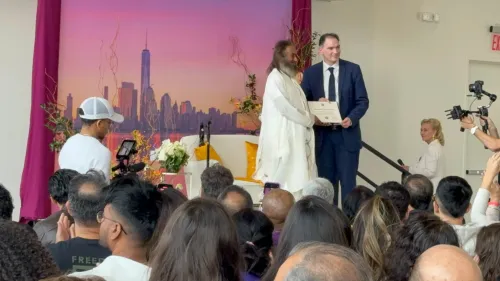
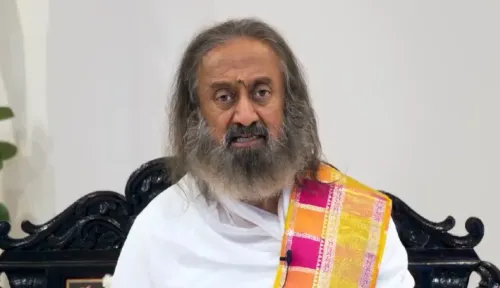
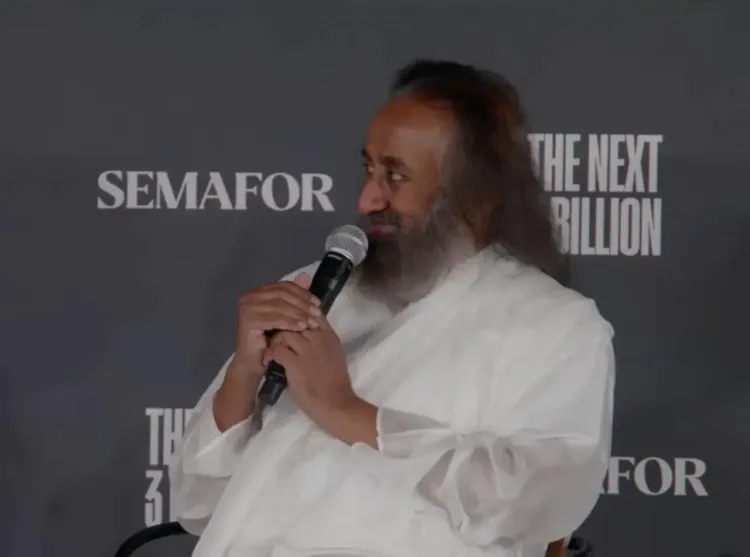
Gurudev Sri Sri Ravi Shankar addressed Semafor's The Next 3 Billion summit in New York on 22 September 2026 .
He argued that 'prosperity comes with peace' and that sustainable growth requires addressing both inequality and inner well-being.
He identified corruption as a primary barrier to resource distribution in the Global South .
A two-month mindset programme for 500 unemployed youth near an Art of Living centre in rural India was later replicated in Kenya , Ghana , Nigeria , Botswana , and South Africa .
On AI, he distinguished between 'absence of intelligence, artificial intelligence, and absolute intelligence' — the last being the focus of his Institute of Absolute Intelligence .
Art of Living founder Gurudev Sri Sri Ravi Shankar on Tuesday, 22 September told a high-level global forum in New York that economic prosperity is inseparable from peace and inner well-being, arguing that sustainable growth demands societies tackle both material inequality and human mental health simultaneously.
What Ravi Shankar Said at Semafor Summit
Speaking at Semafor's The Next 3 Billion summit, Ravi Shankar made his central argument in direct terms: 'Prosperity comes with peace. If there is no peace, there can't be prosperity.' The summit convened heads of state, global institutional representatives, and business leaders to examine how technology and digital inclusion can widen economic opportunity. The speaker roster included Kenyan President William Samoei Ruto, Democratic Republic of Congo Prime Minister Judith Suminwa, WTO Director-General Ngozi Okonjo-Iweala, and IMF Managing Director Kristalina Georgieva.
On Inequality and Mindset
In a conversation with Semafor Co-Founder and CEO Justin B. Smith, Ravi Shankar addressed the widening gap between the wealthy and the disadvantaged, noting the problem exists in virtually every country, including the United States. He urged people in economic hardship to move beyond what he called 'victim consciousness' and assume greater ownership of their progress, while simultaneously calling on those with resources to cultivate empathy and a culture of sharing. He also identified corruption as a structural barrier preventing resources from reaching communities at the grassroots level, particularly across nations in the Global South.
The Rural India Model and Its African Expansion
Ravi Shankar drew on a concrete example from rural India, recalling that approximately 500 unemployed young people living near an Art of Living centre had initially refused 200 government-backed projects, convinced they would fail. A focused two-month programme designed to build an entrepreneurial mindset transformed their outlook. He said the model was subsequently extended to several African nations — including Kenya, Ghana, Nigeria, Botswana, and South Africa — underscoring its potential for replication across the developing world.
Workplace Stress, AI, and Absolute Intelligence
Turning to workplaces, Ravi Shankar warned that stress disrupts communication and undermines business performance, emphasising that employees need a genuine sense of belonging and security, especially during periods of uncertainty. On artificial intelligence, he offered a wry three-part categorisation: 'There's an absence of intelligence, artificial intelligence, and absolute intelligence.' Smith noted at the session's close that, given the choice, he would opt for the third. Ravi Shankar has also founded the Institute of Absolute Intelligence, which promotes scientific inquiry into consciousness.
Point of View
Not a policy. The corruption critique lands with force, but without structural recommendations it risks sounding like diagnosis without prescription. At a forum ostensibly about the 'next three billion,' the most consequential variable — political will — went largely unaddressed.
NationPress
22 Sept 2026
Frequently Asked Questions
What did Sri Sri Ravi Shankar say at the Semafor summit in New York?
He argued that economic prosperity cannot be separated from peace and inner well-being, stating 'Prosperity comes with peace. If there is no peace, there can't be prosperity.' He also addressed inequality, corruption in the Global South, workplace stress, and artificial intelligence at Semafor's The Next 3 Billion summit on 22 September 2026.
What is Semafor's The Next 3 Billion summit?
It is a high-level global forum that brings together heads of state, institutional leaders, and business figures to discuss how technology and digital inclusion can expand economic opportunities, particularly for underserved populations. Speakers at the 2026 edition included the Kenyan President, the DRC Prime Minister, the WTO Director-General, and the IMF Managing Director.
What was Ravi Shankar's rural India entrepreneurship example?
He recalled that around 500 unemployed young people near an Art of Living centre in rural India initially rejected 200 government-backed projects, doubting their viability. A two-month programme focused on building an entrepreneurial mindset changed their outlook, and the model was later taken to Kenya, Ghana, Nigeria, Botswana, and South Africa.
What did Ravi Shankar say about artificial intelligence?
He offered a three-part distinction — 'absence of intelligence, artificial intelligence, and absolute intelligence' — with the third being the domain explored by his Institute of Absolute Intelligence, which promotes scientific research into consciousness. Semafor CEO Justin B. Smith said he would choose the third if given the option.
Why did Ravi Shankar highlight corruption at the summit?
He identified corruption as a major structural obstacle preventing resources from reaching grassroots communities, particularly in Global South countries. He argued that without addressing this barrier, both government programmes and private initiatives struggle to translate into tangible improvements for the most disadvantaged.