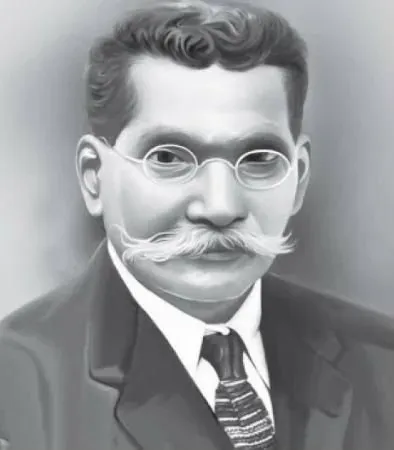
Stalin pays tribute to Dalit icon Rettamalai Srinivasan on birth anniversary
Synopsis
DMK president M. K. Stalin marked the birth anniversary of Dalit leader Rettamalai Srinivasan on 7 July 2026, honouring his Round Table Conference advocacy in London and his refusal to shake hands with King George V. Stalin also recalled the DMK government's renaming of a Chennai road in Srinivasan's honour.
Key Takeaways
Stalin paid tribute to Rettamalai Srinivasan on his birth anniversary on 7 July 2026 .
Srinivasan represented the depressed classes at the Round Table Conferences in London in the early 1930s.
Srinivasan reportedly refused to shake hands with King George V to protest the condition of untouchables in India.
Under the Dravidian Model government, a road in Otteri, Chennai was renamed 'Rettamalai Srinivasan Road' in his honour.
The tribute is part of the DMK government's broader pattern of institutionally recognising Dalit and Dravidian movement leaders since 2021 .
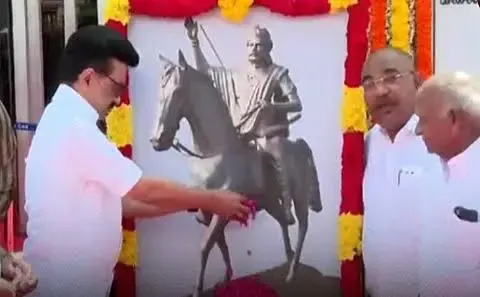
DMK president M. K. Stalin on Tuesday, 7 July 2026, paid tribute to Rettamalai Srinivasan, the pioneering Dalit rights leader known as Thiravida Mani, on his birth anniversary, honouring his legacy of fighting untouchability and representing the depressed classes at the Round Table Conferences in London.
Context
In his post, Stalin recalled that Srinivasan 'raised his voice loudly from London at the Round Table Conference for the political rights of the oppressed people.' He also highlighted Srinivasan's act of defiance in refusing to shake hands with King George V — a gesture meant to draw attention to the condition of those treated as untouchables in India. Stalin wrote that he takes pride in remembering that courage.
The tribute was posted from the vantage point of London itself, the very city where Srinivasan made his historic interventions in the early 1930s, lending symbolic weight to Stalin's message.
Policy Backdrop
Stalin also recalled that under the Dravidian Model government, a road in Otteri, Chennai — where Srinivasan's mortal remains were interred — was renamed 'Rettamalai Srinivasan Road' (Irattumalai Srinivasan Salai). The renaming was presented as an act of institutional recognition for a leader who fought against untouchability.
Since assuming office in 2021, the DMK government in Tamil Nadu has periodically renamed public roads and institutions after Dravidian and anti-caste leaders. These gestures are framed as part of the party's broader social-justice governance philosophy, which it brands the 'Dravidian Model.'
Stakeholders and Impact
Rettamalai Srinivasan is a foundational figure for Dalit communities in Tamil Nadu and for the wider Dravidian movement. His participation in the Round Table Conferences — London meetings held between 1930 and 1932 to discuss Indian constitutional reforms — placed him alongside national-level leaders advocating for safeguards for minorities and the depressed classes.
For Dalit communities and Dravidian movement supporters, tributes of this nature from a sitting state government reinforce a direct political lineage between early 20th-century anti-caste activism and present-day governance. The road renaming in Otteri is a tangible, lasting marker of that recognition.
What's Next
The DMK government's pattern of commemorating Dalit and Dravidian icons through infrastructure namings and official events is expected to continue. Observers will watch for further announcements tied to anniversaries of anti-caste leaders, particularly as the party reinforces its social-justice credentials ahead of future electoral cycles in Tamil Nadu.
Point of View
Connecting the DMK's present governance to the early 20th-century anti-caste struggle. By invoking London — the site of Srinivasan's Round Table Conference interventions — while posting from that city, Stalin amplifies the symbolic resonance. The road renaming in Otteri is the material anchor: it converts historical commemoration into a governance deliverable the party can point to. This pattern of linking Dravidian icons to concrete policy acts is central to how the DMK constructs and sustains its social-justice brand ahead of electoral cycles.
NationPress
7 Jul 2026
Frequently Asked Questions
Who was Rettamalai Srinivasan?
Rettamalai Srinivasan was a pioneering Dalit rights activist from Tamil Nadu who campaigned against untouchability and represented the depressed classes at the Round Table Conferences held in London between 1930 and 1932.
What did Rettamalai Srinivasan do at the Round Table Conference?
Rettamalai Srinivasan advocated for the political rights of the oppressed and depressed classes at the Round Table Conferences in London, making him one of the early Dalit voices in colonial-era constitutional negotiations.
Why did Rettamalai Srinivasan refuse to shake hands with King George V?
According to M. K. Stalin's tribute post, Srinivasan refused to shake hands with King George V to draw attention to the condition of people treated as untouchables in India — an act of protest and defiance.
What is the Rettamalai Srinivasan Road in Chennai?
The DMK government renamed a road in Otteri, Chennai — where Srinivasan's mortal remains were interred — as 'Rettamalai Srinivasan Road' as part of its Dravidian Model governance and social-justice recognition efforts.
Why does MK Stalin frequently tribute Dravidian and Dalit icons?
As DMK president and former Chief Minister, M. K. Stalin regularly honours Dravidian and anti-caste leaders to reinforce the party's social-justice political identity and connect present governance to the historical Dravidian movement.