Stalin Wishes Mani Ratnam on Birthday, Hails His Cinematic Vision
Synopsis
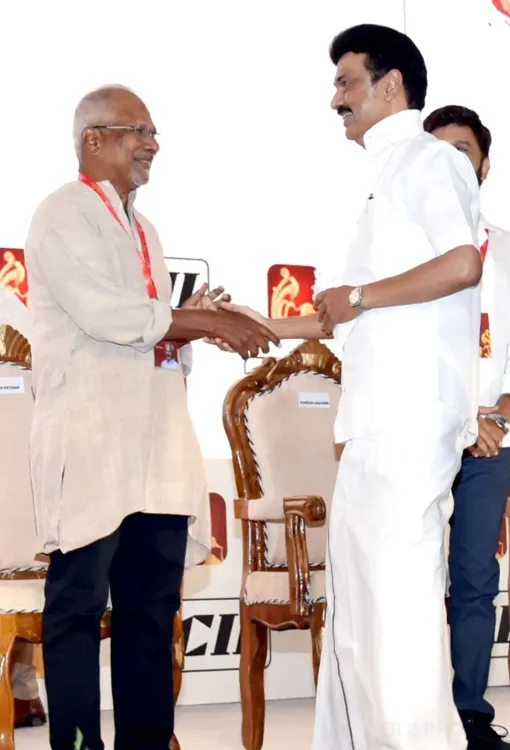
DMK president M. K. Stalin on 2 June 2026 wished veteran filmmaker Mani Ratnam a happy birthday, praising his relentless self-renewal and calling his passion a lesson for aspiring young directors. The tribute reflects the DMK's enduring cultural bond with Tamil cinema.
Key Takeaways
Stalin posted birthday greetings for filmmaker Mani Ratnam on 2 June 2026 .
Stalin praised Ratnam for 'reinventing himself every day' and approaching cinema with 'an unquenchable thirst.' He specifically called Ratnam's passion 'a lesson for the youth' entering the film industry.
Mani Ratnam , born in 1956 , is known for films including Nayakan , Roja , Bombay , and Ponniyin Selvan .
The tribute reflects the DMK 's historically deep ties with Tamil cinema, rooted in the party's founding era.
DMK president M. K. Stalin on Tuesday, 2 June 2026, extended warm birthday greetings to celebrated filmmaker Mani Ratnam, praising his relentless creative drive and calling his passion an inspiration for aspiring young directors.
Posting in Tamil on X, Stalin wrote: 'Birthday wishes to director Mr. Mani Ratnam, who reinvents himself every day and approaches cinema with an unquenchable thirst. His immense passion is itself a lesson for the youth who are just starting out. I wish that Mr. Mani Ratnam continues to delight us with many more works that express the depths of the human mind with aesthetic beauty.'
Context
Mani Ratnam, born in 1956, is one of Indian cinema's most respected auteurs. His filmography — spanning Tamil, Telugu, and Hindi — includes landmarks such as Nayakan, Roja, Bombay, and the two-part epic Ponniyin Selvan, each noted for blending artistic depth with wide audience appeal.
Stalin's tribute specifically highlighted Ratnam's quality of constant self-renewal, a characteristic that has kept the director relevant across four decades and multiple generations of Indian cinema-goers.
Policy Backdrop
DMK and Tamil cinema share a historically intertwined relationship. The party, founded in 1949, was shaped in its early years by stalwarts such as C. N. Annadurai and M. Karunanidhi, both of whom were accomplished screenwriters before becoming chief ministers. Public tributes to film figures have long been a natural extension of this cultural overlap.
The Tamil Nadu government has in recent years taken active steps to promote Tamil cultural output in domestic and diaspora markets, making such gestures by political leaders more than ceremonial — they also signal continued state interest in the film industry's growth.
Stakeholders and Impact
Stalin's message carries weight beyond birthday formality. By singling out Ratnam's 'unquenchable thirst' and calling it 'a lesson for the youth,' the DMK chief is effectively endorsing a model of artistic discipline for the next generation of Tamil filmmakers.
Young directors and film students in Tamil Nadu and across the Indian film industry are among the direct audiences of such a message, which reinforces the state's cultural identity as a hub of serious, craft-driven cinema.
What's Next
Attention will now turn to Mani Ratnam's upcoming projects, with the Tamil film industry and his large fanbase eager to see what the director brings to screens next. Any state-level announcements on film incentives or cultural heritage initiatives ahead of upcoming Tamil Nadu assembly sessions could further underscore the government's commitment to supporting the industry that figures like Ratnam represent.
Stalin's tribute is a reminder that in Tamil Nadu, the worlds of politics and cinema remain deeply, and deliberately, connected.
Point of View
He positions Ratnam not merely as a celebrated elder but as an active model for the industry's future. This fits a broader pattern in which DMK leaders use cultural tributes to reinforce the party's identity as the custodian of Tamil artistic excellence. At a time when Tamil cinema is navigating global streaming markets and shifting audience tastes, such political endorsements carry soft-power implications for the state's cultural brand. The message also subtly signals continued government goodwill toward the film industry ahead of potential policy decisions.
NationPress
22 Sept 2026
Frequently Asked Questions
Why did MK Stalin wish Mani Ratnam on his birthday?
DMK president M. K. Stalin wished Mani Ratnam on his birthday on 2 June 2026, praising the filmmaker's creative passion and calling it an inspiration for young directors entering the film industry.
When is Mani Ratnam's birthday?
Mani Ratnam's birthday is celebrated on 2 June. He was born in 1956 and is one of India's most acclaimed film directors.
What is the connection between DMK and Tamil cinema?
DMK was founded in 1949 and has deep historical ties to Tamil cinema. Party founders C. N. Annadurai and M. Karunanidhi were accomplished screenwriters before becoming chief ministers, and DMK leaders have long issued public tributes to film figures.
What films is Mani Ratnam known for?
Mani Ratnam is known for landmark films including Nayakan, Roja, Bombay, and the two-part epic Ponniyin Selvan, which are celebrated for combining artistic depth with broad popular appeal.
What did MK Stalin say about Mani Ratnam?
Stalin said Mani Ratnam 'reinvents himself every day' and approaches cinema with 'an unquenchable thirst,' adding that his passion is 'a lesson for the youth' and expressing hope for many more works that express the depths of the human mind with aesthetic beauty.