Stalin Urges TN Govt to File Review Petition on BC(M) Reservation Ruling
Synopsis
DMK president M. K. Stalin has demanded the Tamil Nadu government immediately file a Supreme Court review petition against a ruling that backward-class converts to Islam do not qualify for BC(M) reservations, arguing caste-based social backwardness persists beyond religious conversion and must remain the sole criterion for welfare entitlement.
Key Takeaways
Stalin called on the Tamil Nadu government to file an immediate review petition against a Supreme Court judgment on BC(M) reservations for converts to Islam.
Stalin argues that social backwardness rooted in caste structures does not disappear upon religious conversion and must not be used as grounds to deny reservation rights.
He invoked the Dravidian Model government's earlier Tamil Nadu Assembly resolution urging the Union government to extend SC reservation benefits to Dalit Christians , calling on the current government to continue that push.
The post positions BC, MBC, and SC communities as sharing a common historical oppression that should be recognised religion-neutrally under reservation policy.
Both a Supreme Court review petition and a constitutional amendment through Parliament are identified as necessary parallel legal routes.
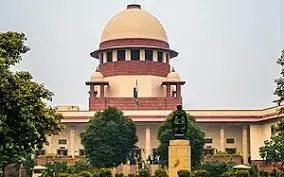
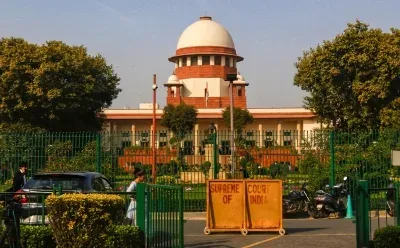
A Supreme Court judgment stripping reservation rights from backward-class converts to Islam has drawn sharp pushback from DMK president M. K. Stalin, who on Thursday, 15 October 2026, called on the Tamil Nadu government to immediately file a review petition against the ruling — framing the verdict as a direct assault on the Dravidian social-justice tradition.
Why Stalin calls the Supreme Court verdict 'anti-social justice'
Posting in Tamil, Stalin laid out a foundational argument: social backwardness is not the product of a single day or generation — it is the cumulative result of thousands of years of structural caste oppression. 'மதம் மாறுவதாலேயே அது மறைந்துவிடுவதில்லை' ('Conversion to another religion does not make it disappear'), he wrote, rejecting the premise that a change of faith erases inherited disadvantage.
He described the court's finding — that BC (Muslim) reservation need not be extended to backward-class people who have converted to Islam — as contrary to social justice. His argument is empirical rather than theological: the unit of backwardness is caste history, not current religious identity.
The demand: a review petition, without delay
Stalin's call is unambiguous. The Tamil Nadu government must file a review petition against the judgment 'immediately', and must work to 'uphold the reservation rights of those from backward communities who have embraced Islam.' He frames inaction as complicity in social injustice — strong language aimed squarely at the sitting state administration.
The urgency matters politically. BC, MBC, and SC communities together constitute a decisive share of Tamil Nadu's electorate, and any perception that hard-won reservation protections are eroding can reshape political alignments quickly.
The Dravidian Model precedent Stalin invokes
Stalin did not stop at the present. He reminded voters that during his own tenure under the #DravidianModel government, the Tamil Nadu Assembly passed a resolution urging the Union government to amend the Constitution to extend Scheduled Caste reservation benefits to Dalit Christians who had converted — a parallel battle on the same underlying principle. He called on the current state government to continue prosecuting that effort as well.
The Dravidian Model framework has long treated caste-based social backwardness as the operative criterion for welfare entitlement — independent of religion. Tuesday's post extends that logic to its logical conclusion: if oppression travels with the person across religious lines, so must protection.
The constitutional stakes
At the heart of both disputes — Dalit Christian reservations and BC(M) reservations — is a structural tension in Indian constitutional law between religion-neutral social indicators and religion-specific classification norms. BC(M) is a Tamil Nadu state-level sub-category for Muslims from backward communities; its legal standing now faces fresh uncertainty following the judgment Stalin cites.
A review petition, if filed, would keep the legal question alive in the Supreme Court. A broader constitutional amendment — the route Stalin's earlier resolution pursued for Dalit Christians — would require Union government support, making the political calculus in New Delhi as consequential as any courtroom argument in Chennai.
The DMK has now put both remedies on the table. Whether the current Tamil Nadu government acts on the first — and how quickly — will be the immediate test.
Point of View
He constructs a unified narrative — that caste oppression, not religious identity, is the constitutional touchstone for welfare — that can mobilise multiple minority constituencies simultaneously. The demand also puts the current Tamil Nadu government on the spot: inaction risks being read as abandonment of a core social-justice commitment, while action reopens a contentious federalism debate about state-level sub-categorisation versus central constitutional norms. At a broader level, the post signals that religion-neutral reservation arguments are hardening into a platform priority for the Dravidian political tradition, likely presaging legislative moves in both Chennai and New Delhi.
NationPress
15 Oct 2026
Frequently Asked Questions
What did the Supreme Court rule about BC(M) reservations for converts to Islam?
The Supreme Court ruled that backward-class people who have converted to Islam do not need to be given reservation benefits under the BC(M) category. M. K. Stalin has called this verdict anti-social-justice and urged the Tamil Nadu government to challenge it through a review petition.
What is BC(M) reservation in Tamil Nadu?
BC(M) is a sub-category within Tamil Nadu's state-level reservation system specifically for Muslims from backward communities. It is distinct from the central OBC list and covers communities classified as socially and educationally backward who follow Islam.
Why does Stalin say religious conversion should not affect reservation eligibility?
Stalin argues that social backwardness results from thousands of years of caste-based structural oppression, which does not disappear when a person changes their religion. He holds that caste history — not current religious identity — should be the qualifying criterion for reservation benefits.
What was the Dravidian Model government's resolution on Dalit Christian reservations?
Under the DMK government led by Stalin, the Tamil Nadu Assembly passed a resolution urging the Union government to amend the Constitution to extend Scheduled Caste reservation benefits to Dalit Christians who had converted from SC communities. Stalin has now called on the current Tamil Nadu government to continue pursuing that constitutional amendment.
What action is M. K. Stalin demanding from the Tamil Nadu government?
Stalin is demanding two immediate actions: first, that the Tamil Nadu government file a review petition in the Supreme Court against the BC(M) reservation judgment; and second, that it continue pressing the Union government for a constitutional amendment to extend SC reservation benefits to Dalit Christians.