Assam-Meghalaya taxi standoff resolved after CM-level talks, says Tourism Minister
Synopsis
A tourist taxi war between Assam and Meghalaya that shut down inter-state visitor movement for days ended only after the two Chief Ministers stepped in directly. Meghalaya has agreed to compensate damaged Assam vehicles — but has firmly shut the door on relief for homestay and hotel businesses that bore the economic brunt of the blockade.
Key Takeaways
The Assam-Meghalaya tourist taxi standoff , triggered by 19 August violence and road blockades, has been resolved as of 25 August .
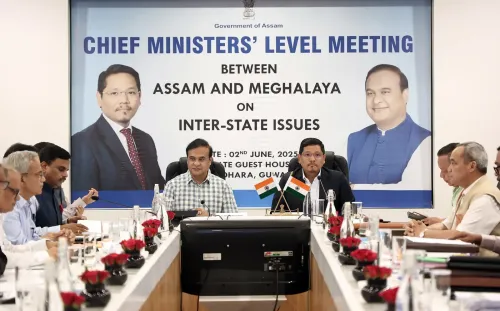
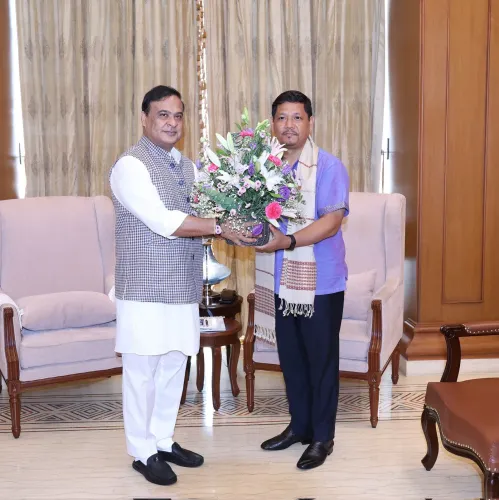
Resolution came after direct talks between Meghalaya CM Conrad K.
Sangma and Assam CM Himanta Biswa Sarma .
Meghalaya Tourism Minister Timothy D.
Shira confirmed that no further bans or blockades should remain in force.
The Meghalaya government will compensate owners of Assam-registered tourist vehicles damaged during the incidents.
Homestay operators and hoteliers will not receive government compensation for losses from tourist cancellations.
Both states must ensure reciprocal access for each other's tourist vehicles for the arrangement to hold.
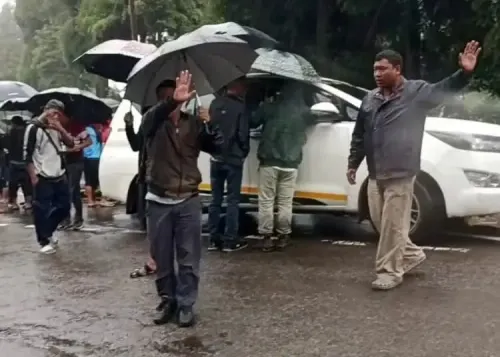
The prolonged standoff between tourist taxi associations of Meghalaya and Assam has been resolved following intervention at the Chief Ministerial level, Meghalaya Tourism Minister Timothy D. Shira announced on Tuesday, 25 August. The dispute, which had paralysed inter-state tourist movement since road blockades erupted in the wake of 19 August violence, is now expected to ease pressure on both states' tourism sectors.
How the Resolution Was Reached
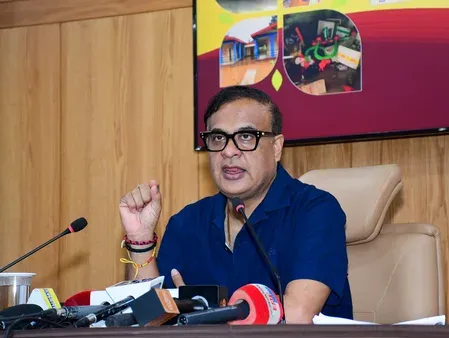
Minister Shira credited direct discussions between Meghalaya Chief Minister Conrad K. Sangma and Assam Chief Minister Himanta Biswa Sarma for breaking the impasse. 'The issue has been resolved, so there should not be any more ban or blockade now,' Shira said, signalling that the diplomatic channel at the top had succeeded where association-level talks had stalled. This is a notable instance of inter-state executive intervention to defuse what had become a bilateral transport crisis.
Impact on Tourism and What Changes Now
The road blockades had brought tourist inflow into Meghalaya to a virtual standstill. 'There were no tourists coming in and how will they be able to come as the roads were blocked,' Shira noted. The resolution calls for reciprocal access: tourist associations in Assam must allow Meghalaya-registered vehicles to enter, while Meghalaya-based associations must similarly permit Assam vehicles to operate within the state. Shira stressed that 'cooperation and reciprocity from both sides' was essential for the arrangement to hold.
Meghalaya to Compensate Damaged Assam Vehicles
In a significant concession, the Meghalaya government has committed to compensating owners of Assam-registered tourist vehicles damaged during the recent incidents. 'Whatever damages caused to Assam vehicles, it will be compensated by the government of Meghalaya,' Shira said, adding that this commitment removed any remaining justification for continued restrictions. However, the Minister drew a clear line on broader relief, ruling out compensation for homestay operators and hoteliers who suffered losses from tourist cancellations during the disruption. 'There will be no compensation for the homestay,' he stated plainly.
Call for Restraint and Responsible Action
Shira urged all stakeholders to exercise greater caution going forward, warning that actions in one state inevitably carry cross-border consequences. 'My appeal is that we should understand, any action we are taking here will have a reaction or not in Assam,' he said. The Minister emphasised that maintaining smooth inter-state movement was not merely a transport issue but a structural necessity for the tourism economies of both states, which depend heavily on the free flow of visitors across the shared border.
What Comes Next
With the blockades lifted, the tourism industry in both Meghalaya and Assam is expected to begin recovering lost ground. The episode underscores the vulnerability of north-east India's tourism corridor to localised transport disputes, and the resolution sets a precedent for CM-level mediation as a rapid-response mechanism. Whether the reciprocal access arrangement holds will depend on ground-level compliance by both associations in the days ahead.
Point of View
But the episode exposes a structural fault line in north-east India's tourism economy: a single localised incident can sever an entire inter-state visitor corridor within days. The decision to compensate damaged Assam vehicles is a pragmatic concession, but the refusal to cover homestay and hotel losses leaves the sector's most vulnerable operators — who had no role in the dispute — without a safety net. More critically, the fact that only a Chief Ministerial phone call could unlock what transport associations could not resolve on their own raises questions about whether any durable, lower-level grievance mechanism exists between the two states for future incidents.
NationPress
25 Aug 2026
Frequently Asked Questions
What was the Assam-Meghalaya tourist taxi standoff about?
The standoff involved road blockades by tourist taxi associations in both states following violence on 19 August, which brought inter-state tourist vehicle movement to a halt. The dispute severely disrupted tourist inflow into Meghalaya and affected businesses dependent on visitors from Assam and beyond.
How was the standoff resolved?
The impasse was resolved through direct intervention by Meghalaya Chief Minister Conrad K. Sangma and Assam Chief Minister Himanta Biswa Sarma. Tourism Minister Timothy D. Shira confirmed on 25 August that there should be no further bans or blockades following those CM-level discussions.
Will Meghalaya compensate businesses affected by the blockade?
The Meghalaya government has committed to compensating owners of Assam-registered tourist vehicles that were damaged during the incidents. However, Minister Shira explicitly ruled out compensation for homestay operators and hoteliers who suffered losses due to tourist cancellations during the disruption.
What are the conditions for restoring normal inter-state movement?
The arrangement requires reciprocal compliance from both sides: Assam tourist associations must allow Meghalaya-registered vehicles to enter Assam, while Meghalaya associations must permit Assam vehicles to operate in the state. Minister Shira stressed that cooperation from both sides is essential for the resolution to hold.
Why does this dispute matter for north-east India's tourism?
Meghalaya and Assam share a critical tourism corridor, and the free movement of tourist vehicles across their inter-state border is central to both economies. The blockade demonstrated how quickly a transport association dispute can shut down an entire regional visitor circuit, with ripple effects on hotels, homestays, and local livelihoods.