Was a Stone Sculpture Found in the Jhelum River Handover to the Archaeology Department?
Synopsis
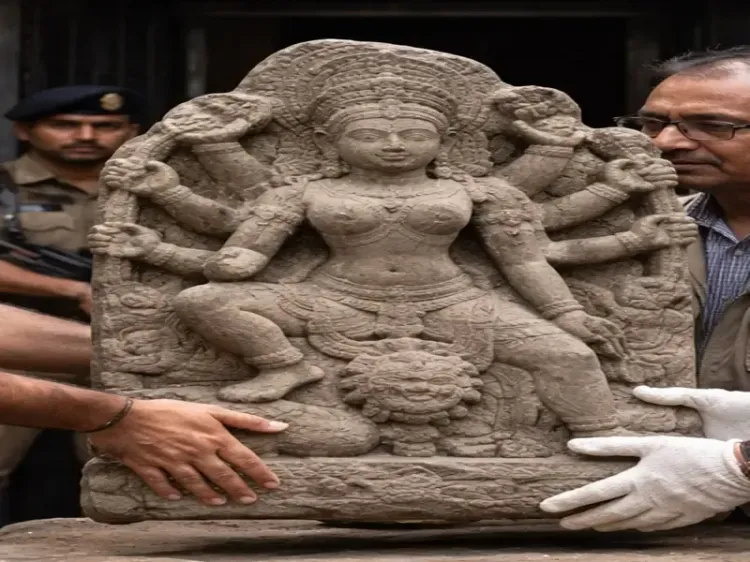
In a remarkable effort to safeguard cultural heritage, Baramulla Police have successfully transferred a stone sculpture of Goddess Durga, recovered from the Jhelum River, to the Archaeology Department. This act emphasizes the importance of preserving historical artifacts and encourages citizens to report similar discoveries.
Key Takeaways
The stone sculpture of Goddess Durga was recovered from the Jhelum River.
Baramulla Police facilitated the safe handover to the Archaeology Department.
This event emphasizes the need for cultural heritage preservation.
Community awareness is crucial for reporting historical discoveries.
Kashmir is home to numerous ancient temples and cultural sites.
Srinagar, Dec 26 (NationPress) In a significant move, police in Baramulla district, Jammu and Kashmir, successfully transferred a stone sculpture retrieved from the Jhelum river to the Archaeology Department for preservation and conservation, an official confirmed.
As stated by the police, Baramulla Police took the necessary measures to ensure the secure transfer of the sculpture, which was found in the Jhelum River, adhering to proper protocols.
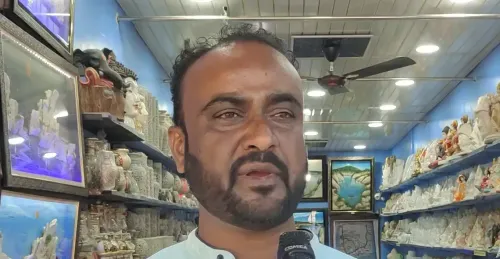
A fisherman, identified as Nazir Ahmad Latoo, son of Ghulam Mohammad Latoo and a resident of Shaltang–Zogyar, reported to Police Station Sheeri in Baramulla about the discovery of the stone sculpture while fishing.
The sculpture was promptly reported to police officials and secured at Police Station Sheeri, according to the statement.
On December 26, 2025, following directives from the Directorate of Archives, Archaeology and Museums, Jammu and Kashmir, Baramulla Police formally handed over the sculpture—identified as Goddess Durga—to officials from the Archaeology Wing in Srinagar through an established handover process.
Baramulla Police reiterated their dedication to safeguarding cultural heritage and urged the public to promptly notify authorities about any archaeological or historical discoveries.
It is important to note that during the height of terrorism in Kashmir in the early to mid-1990s, militants ravaged numerous homes and temples belonging to the minority Kashmiri Pandit community.
In various instances, idols of gods and deities were removed from their historic sites and discarded into rivers or left abandoned elsewhere.
Kashmir is renowned for housing some of the oldest Hindu temple sites, including the famed Shankaracharya Temple in Srinagar dedicated to Lord Shiva, the remnants of the ninth-century Martand Sun Temple dedicated to Surya, and the ancient Shiva shrine at Pandrethan.
The region also features revered sites like the Kheer Bhawani temple at Tullamulla and the Sharika Mata shrine at Hari Parbat, reflecting Kashmir's rich Shaivite and Vaishnavite heritage.
Point of View
It is vital to consider the cultural implications of such discoveries. The handover of the stone sculpture to the Archaeology Department not only highlights the importance of preserving cultural artifacts but also underscores the necessity for community engagement in safeguarding our heritage.
NationPress
5 Oct 2026
Frequently Asked Questions
What was recovered from the Jhelum River?
A stone sculpture of Goddess Durga was recovered from the Jhelum River.
Who found the sculpture?
The sculpture was discovered by a fisherman named Nazir Ahmad Latoo.
What will happen to the sculpture?
The sculpture has been handed over to the Archaeology Department for preservation and conservation.
Why is this discovery significant?
It highlights the importance of cultural heritage and encourages citizens to report archaeological findings.
What is the history of the area regarding cultural artifacts?
The region has a rich history, and many artifacts were destroyed during the early 1990s due to terrorism.