Exploring Strategic Autonomy Challenges at Jaipur Military Station
Synopsis
The 6th General K. Sundarji Memorial Lecture at Jaipur addressed critical issues surrounding India's strategic autonomy. With insights from top military and diplomatic leaders, the event explored how India can navigate a complex global landscape.
Key Takeaways
Strategic autonomy is essential for national security in a volatile world.
The need for resilience across critical domains like technology and cyber.
Importance of balancing economic integration with national resilience.
Enhancing defense preparedness through indigenization and jointness.
Maritime security in the Indo-Pacific is a priority for India.
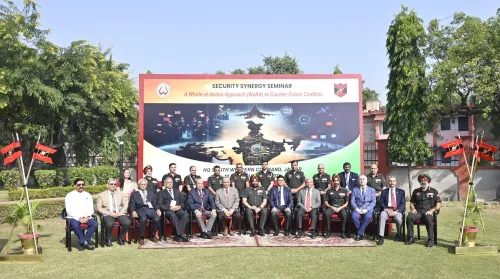
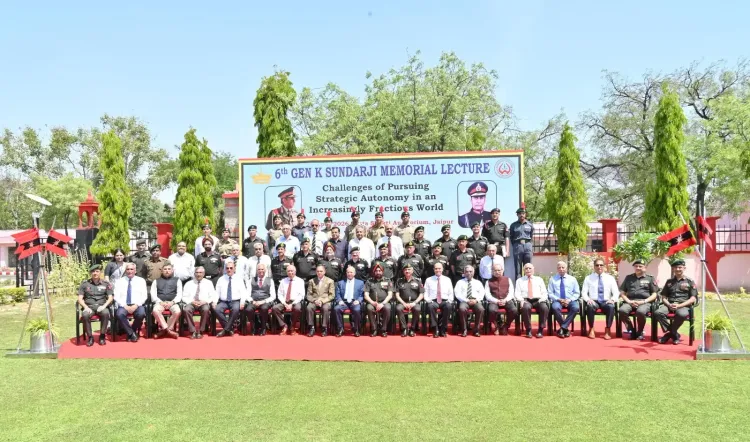
Jaipur, April 2 (NationPress) The 6th Edition of the General K. Sundarji Memorial Lecture took place on Thursday at the Sapta Shakti Auditorium in Jaipur. Organized by the Mechanised Infantry Centre & School (MIC&S) in partnership with the Centre for Land Warfare Studies (CLAWS), the seminar focused on the theme, “Challenges of Pursuing Strategic Autonomy in an Increasingly Fractious World.”
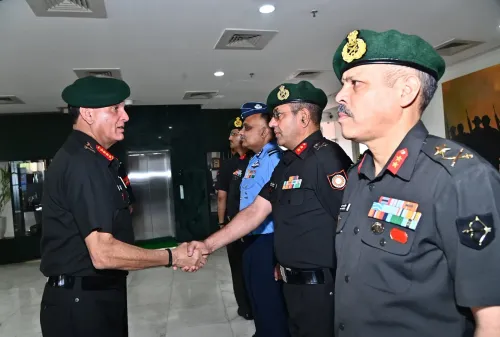
Lieutenant General Manjinder Singh, Army Commander of the Sapta Shakti Command, delivered the keynote address, laying groundwork for an enlightening intellectual dialogue.
He underscored the necessity of strategic autonomy in a world characterized by geopolitical instability and intricate security dilemmas.
He asserted that, given the rapidly changing global landscape defined by escalating great power rivalries, geo-economic fragmentation, technological challenges, and regional disputes, strategic autonomy has evolved from being a diplomatic goal to a crucial requirement for protecting a nation’s sovereignty, economy, security, and long-term interests.
The event honored General Krishnaswamy Sundarji, a transformative military leader and innovative strategist, spotlighting his lasting legacy of doctrinal transformation, modernization of technology, and institutional reform that continues to influence India’s strategic thought.
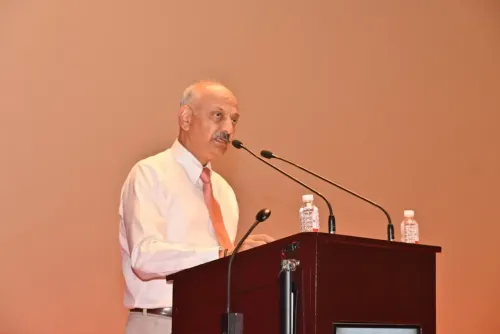
The seminar included distinguished speakers such as Ambassador Pankaj Saran, former Deputy National Security Adviser, and Vice Admiral Sanjay Jasjit Singh, Director General of the United Service Institution of India.
Leveraging their vast experience, the speakers shared critical insights on how India can protect its sovereign decision-making amidst a turbulent global backdrop.
The discussions offered a nuanced examination, merging both diplomatic and military perspectives.
Key talking points included recalibrating India’s foreign policy in a multipolar world; the effects of emerging technologies and geo-economic competition on national security; enhancing defense preparedness, collaboration, and indigenization; maritime security in the Indo-Pacific; and reconciling economic integration with national resilience.
The talks also scrutinized evolving geopolitical shifts, including the repercussions of recent conflicts on India’s strategic calculations.
The seminar highlighted that modern strategic autonomy necessitates resilience across essential sectors such as technology, energy, cyber, space, and secure supply chains, along with credible deterrence and the capacity to forge partnerships without strategic dependence.
Over the years, MIC&S has transformed into one of the Indian Army’s most advanced training establishments and is a hub of expertise in Infantry Combat Vehicles (ICVs) and mechanized warfare strategies.
This institution has trained personnel from various arms equipped with ICVs, encompassing 50 battalions of the Regiment, and offers advanced courses for Indian Army members, the Indian Coast Guard, and allied foreign nations.
A cutting-edge Urban Warfare Training Node is also being set up at Ahilyanagar.
Wrapping up the event, Lieutenant General P.S. Shekhawat, Chief of Staff of the Sapta Shakti Command and Colonel of the Mechanized Infantry Regiment, expressed appreciation to the speakers for their insightful contributions and stressed the importance of intellectual rigor in addressing current geopolitical challenges.
The occasion successfully convened policymakers, military experts, and strategic thinkers, fostering forward-looking insights aimed at fortifying India’s strategic stance while paying homage to General Sundarji’s legacy and reaffirming the commitment to a robust, self-reliant, and future-ready India.
Point of View
Emphasizing the need for resilience and strategic independence in an evolving global landscape.
NationPress
7 Oct 2026
Frequently Asked Questions
What was the main theme of the seminar?
The seminar focused on the 'Challenges of Pursuing Strategic Autonomy in an Increasingly Fractious World.'
Who delivered the keynote address?
Lieutenant General Manjinder Singh, Army Commander of the Sapta Shakti Command, delivered the keynote address.
Why is strategic autonomy important for India?
Strategic autonomy is crucial for safeguarding India's sovereignty, economy, security, and long-term interests amid global uncertainties.
What topics were discussed at the seminar?
Topics included India's foreign policy recalibration, emerging technologies, defense preparedness, and maritime security in the Indo-Pacific.
What legacy did General Krishnaswamy Sundarji leave?
General Sundarji is remembered for his doctrinal innovation, technological modernization, and institutional reform in the Indian military.