Raisina Science Diplomacy Initiative: Navigating Disruptive Technologies and Strategic Autonomy
Synopsis
The inaugural Raisina Science Diplomacy Initiative convened global leaders to explore the impact of science diplomacy on strategic autonomy and the governance of disruptive technologies, emphasizing collaboration and adaptability in a changing world.
Key Takeaways
Science diplomacy is crucial for addressing strategic autonomy and disruptive technologies.
A collaborative approach is essential to navigate geopolitical shifts.
Governance models for emerging technologies must be equitable and effective.
Building trust in scientific systems fosters global cooperation.
Private sector involvement is vital for future discussions on science diplomacy.
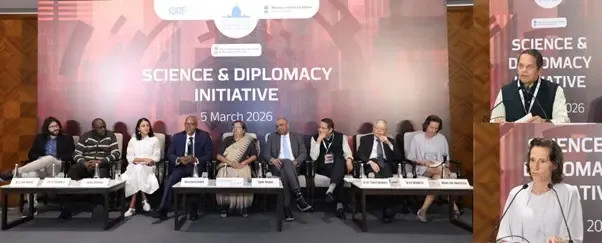
New Delhi, March 5 (NationPress) The first-ever Raisina Science Diplomacy Initiative (SDI) took place on Thursday, gathering prominent global thinkers, government officials, and academic experts to explore the crucial function of science diplomacy in addressing the challenges of strategic autonomy and the governance issues brought on by disruptive technologies.
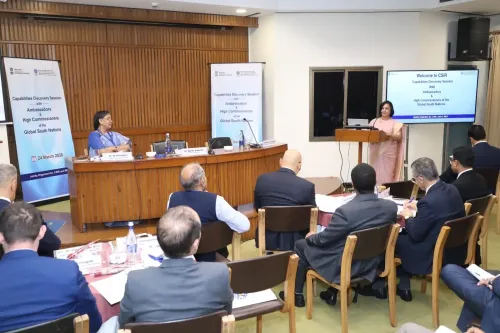
This initiative, a collaborative effort between the Office of the Principal Scientific Adviser to the Union government and the Observer Research Foundation (ORF), was part of the broader Raisina Dialogue. Approximately 80 innovators, diplomats, scientists, and practitioners from various leading international organizations participated in a closed-door setting designed to encourage candid discussions.
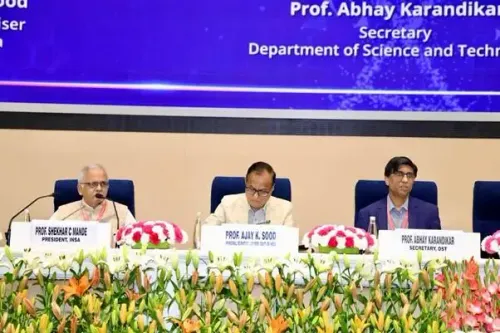
The event was led by Ajay Kumar Sood, the Principal Scientific Adviser to the Union government, with co-chairs including Peter Gluckman, President of the International Science Council; Marilyne Andersen, Director General of the Geneva Science and Diplomacy Anticipator (GESDA); and Vijay Chauthaiwale, who oversees the Foreign Affairs Department of the Bharatiya Janata Party.
In the opening remarks, the emphasis was placed on the central importance of science and technology in national development strategies, economic growth, security priorities, and social progress across nations.
It was stressed that science diplomacy must evolve, continually adapting to the changing landscape of technology, geopolitical dynamics, and emerging global issues.
The first roundtable, titled "Science Diplomacy in the Era of Strategic Autonomy," highlighted the necessity of reconciling national strategic goals with the inherently collaborative spirit of scientific inquiry.
Speakers pointed out that building trust and collaboration in scientific endeavors is crucial, even as geopolitical contexts shift, and emphasized the need for robust networks, transparent research environments, and resilient multilateral structures.
The second roundtable, "Science Diplomacy and Governance of Disruptive Technologies," concentrated on developing fair and effective governance frameworks for cutting-edge technologies. This included discussions on anticipatory policy processes, inclusive norm-setting, and the vital alignment of technological innovation with ethical and social considerations.
Participants asserted that coordinated global strategies are essential to mitigate risks while leveraging the transformative potential of disruptive technologies.
The discourse also underscored the need to enhance scientific diplomacy capacity, using scientific collaboration to bridge global inequalities, and tackling governance challenges related to technology through practical, use-case driven methods.
Steen Sondergaard, Chief Scientist at NATO, shared insights regarding NATO's foresight initiatives and their implications for global systems.
The findings from the Raisina Science Diplomacy Initiative are expected to enrich the ongoing global conversations on science diplomacy.
Looking forward, Principal Scientific Adviser Ajay Kumar Sood highlighted the necessity of further developing the initiative by addressing two pivotal questions: the role of private sector actors in shaping science diplomacy frameworks to better anticipate and manage disruptive technologies, and how to effectively incorporate existing multilateral tools to promote a fairer distribution of technological advancements across different societies.
Point of View
Technology, and international relations. With prominent figures in attendance, the discussions reflect a commitment to adapting scientific collaboration to meet modern challenges while ensuring equitable access to advancements.
NationPress
30 Sept 2026
Frequently Asked Questions
What is the Raisina Science Diplomacy Initiative?
The Raisina Science Diplomacy Initiative is a platform that brings together global thought leaders and policymakers to address the role of science diplomacy in strategic autonomy and governance of disruptive technologies.
Who are the key figures involved in the initiative?
The initiative is chaired by Ajay Kumar Sood, Principal Scientific Adviser to the Union government, with co-chairs including Peter Gluckman, Marilyne Andersen, and Vijay Chauthaiwale.
What were the main topics discussed at the initiative?
Key topics included the balance of national strategic priorities with collaborative science, governance models for disruptive technologies, and enhancing capacity for scientific collaboration.
How does science diplomacy adapt to global changes?
Science diplomacy must evolve by responding to new technological developments, geopolitical shifts, and emerging global issues, ensuring that scientific collaboration remains relevant.
Why is strengthening scientific cooperation important?
Strengthening scientific cooperation builds trust among nations, promotes equitable access to technology, and helps address global inequalities and governance challenges.