Finland's President Stubb Emphasizes India's Influence in the Future World Order
Synopsis
During the Raisina Dialogue, Finland's President Alexander Stubb asserted that India and the Global South are pivotal in forming a new, equitable multilateral world order, marking the end of Western dominance. His insights on ongoing global conflicts highlight the urgency for collaborative solutions.
Key Takeaways
Global South's Influence: The Global South, led by India, is crucial in shaping a fair world order.
End of Western Dominance: Stubb declares the Western-centric world era is over.
Call for Cooperation: Collective action is essential to address ongoing global conflicts.
Power Politics: Current international relations are characterized by power dynamics and violence.
Raisina Dialogue's Importance: The conference facilitates critical discussions on global geopolitics.
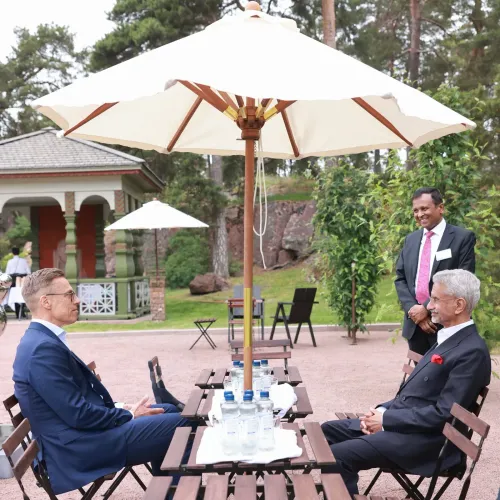
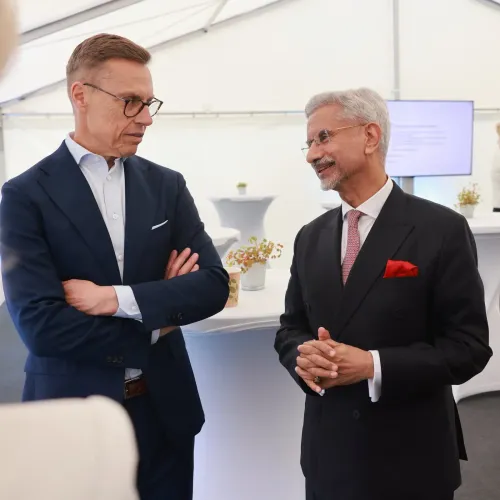
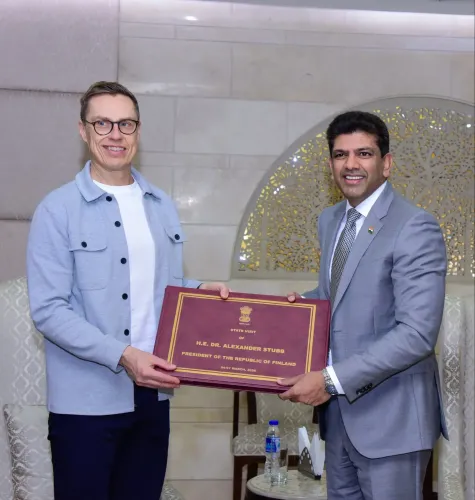
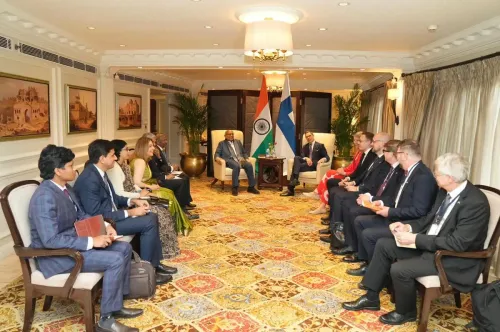
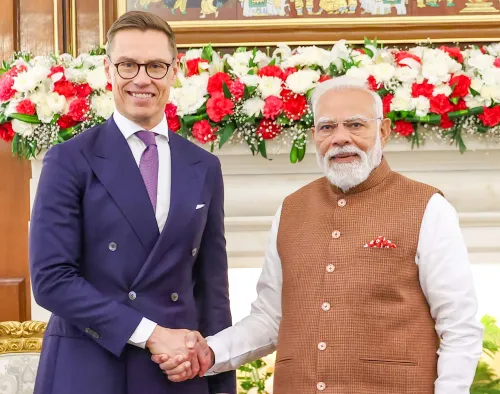
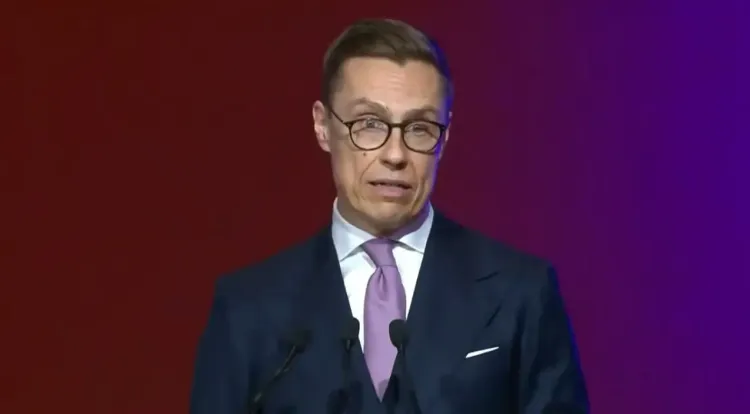
New Delhi, March 5 (NationPress) The President of Finland, Alexander Stubb, emphasized the increasing influence of India and the Global South in establishing a collaborative, equitable, and inclusive multilateral world order. During his speech at the Raisina Dialogue held in New Delhi, Stubb pointed out that the global landscape is undergoing transformation, reminiscent of the shifts seen after World War I, World War II, and the Cold War. He remarked that the era dominated by the West has concluded.
"My proposition is straightforward. I contend that the Global South will shape the future world order, with India emerging as a key player or possibly 'the force' in determining whether we advance towards a conflict-driven multipolarity, marked by negotiations and areas of influence, or whether we move towards a new cooperative, just, and inclusive multilateral order based on established international institutions, norms, and rules. The choices made by India and other pivotal nations during this transition are crucial. They will chart the course for our future," he asserted.
The 11th iteration of the Raisina Dialogue, India's premier conference focusing on geopolitics and geo-economics, commenced on Thursday in New Delhi, gathering a diverse group of global leaders, policymakers, and strategic analysts. Stubb serves as the chief guest at this notable event.
Stubb acknowledged the shifting balance of power, noting that the Global South possesses both demographic and economic advantages.
"Consider that we are in a nation exhibiting growth rates of around 7%, potentially sustained until 2047. Additionally, it is the largest democracy globally. My assertion is that the era of Western dominance is finished, representing a significant disruption. This realization may take time to permeate through the West. While nostalgia can offer insights, it seldom provides solutions. Thus, a sound starting point for any analysis is to engage with the world as it is, rather than as we wish it to be," he expressed.
Stubb emphasized that violence is increasingly being utilized as a tool of foreign policy across the globe. He referenced ongoing conflicts in Ukraine, West Asia, and Sudan, and shared insights from discussions with Prime Minister Narendra Modi, the UAE President, and the Qatar Emir.
"We are navigating a landscape of power politics, where might appears to dictate right. Violence has re-emerged as a prevalent tool of foreign policy globally, often with minimal restraint. In Ukraine, Russia is attempting to dominate a sovereign nation through a war that blatantly breaches international law. The resolution of this conflict will bear significant implications not just for Europe but for the world at large. It is in our collective interest that the outcome does not favor the aggressor. In the Middle East, we are witnessing rapid developments, with countries striving for diplomatic resolutions.
"I had the opportunity to speak with the President of the United Arab Emirates yesterday and the Emir of Qatar today, while gaining insights from the Prime Minister of India regarding the situation. In Sudan, the relentless cycle of domestic power struggles and regional tensions have resulted in one of the deadliest conflicts of our era, displacing millions from their homes. The days of predictable international politics are behind us. Each new day brings fresh surprises and challenges. While this is intriguing for those of us in international relations, it poses a continuous challenge to global stability," stated Stubb.
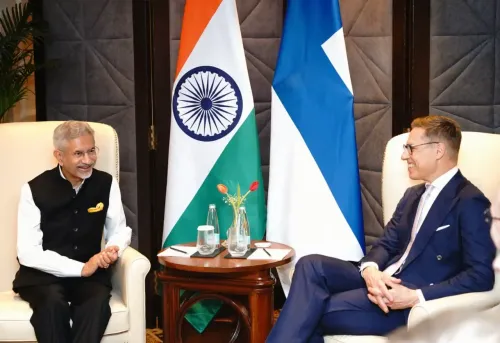
He also echoed remarks made by External Affairs Minister S. Jaishankar, endorsing his viewpoint.
"One of my esteemed foreign ministers, Dr. Jaishankar, has noted, and I will quote him again, 'Europe must move beyond the notion that Europe's issues are the world's issues, while the world's issues do not concern Europe.'... I completely concur, Dr. Jaishankar. We must recognize that the conflicts I mentioned—Ukraine, the Middle East, and Sudan, along with many others—are problems that concern all of us.
"We must collaborate to resolve them. The repercussions of Russia's aggressive actions in Ukraine are evident in fertilizer and oil prices, similar to what we are currently observing with the ongoing strife in the Middle East. Does this imply the demise of the liberal world order established post-World War II? No, it does not. The breach of rules does not invalidate the entire system. Just as a driver caught for speeding does not render speed limits irrelevant. Abandoning international rules would lead to the disintegration of the current world order, yet we are far from that point," concluded Stubb.
Point of View
Emphasizing India's significant role alongside the Global South in shaping a new multilateral world order. The acknowledgment of shifting power dynamics away from a Western-centric view underscores the need for collaborative international solutions to pressing global issues.
NationPress
24 Sept 2026
Frequently Asked Questions
What did President Stubb say about the Global South?
President Stubb emphasized that the Global South, with India as a major player, will significantly influence the next world order, promoting cooperation and fairness.
How does Stubb view the current world order?
He believes the era of Western dominance is over and that the future will depend on collaborative efforts among nations.
What global issues did Stubb address?
He discussed the conflicts in Ukraine, the Middle East, and Sudan, highlighting the need for diplomatic solutions.
What is the Raisina Dialogue?
The Raisina Dialogue is India's premier conference on geopolitics and geo-economics, attracting global leaders and experts.
What did Stubb say about violence in foreign policy?
Stubb noted that violence is increasingly used as a tool in foreign policy today, which poses risks to global stability.