Sudip Bandyopadhyay vs TMC: A loyalist's long history of rebellion
Synopsis
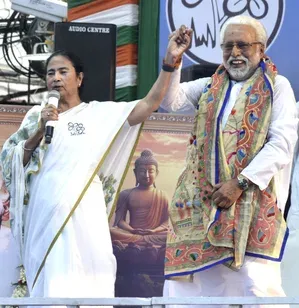
Sudip Bandyopadhyay's open break with TMC leadership looks sudden — but it isn't. A founding member who survived expulsion in 2003, a CBI arrest in 2017, and a quiet sidelining by Abhishek Banerjee, he has repeatedly tested Mamata's patience and returned. The question now is whether the Abhishek factor has finally made reconciliation impossible.
Key Takeaways
Sudip Bandyopadhyay arrived in New Delhi on 14 June and openly rebelled against Trinamool Congress (TMC) leadership.
He was temporarily expelled from the TMC in September 2003 after meeting BJP leader Lal Krishna Advani , but later reconciled with Mamata and became Minister of State in the UPA government.
The CBI arrested him in 2017 in the alleged Rose Valley scam ; Mamata Banerjee publicly called it 'vendetta politics.' Abhishek Banerjee replaced Bandyopadhyay as TMC's Lok Sabha leader , reportedly citing health concerns, deepening internal tensions.
Bandyopadhyay is one of the few TMC leaders who was with Mamata since the party's founding in 1998 , giving him a historically close — if periodically fractured — relationship with the party chief.
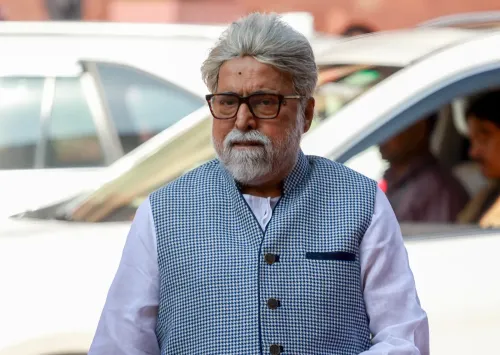
Trinamool Congress (TMC) leader Sudip Bandyopadhyay, long regarded as one of party Chairperson Mamata Banerjee's closest confidantes, has once again broken ranks with the party leadership — a pattern that, on closer examination, has defined his political career for over two decades. His sudden appearance in New Delhi and open rebellion against the TMC hierarchy on 14 June has drawn national attention, but insiders say it is far from unprecedented.
A Loyalist Who Has Tested Limits Before
Bandyopadhyay's relationship with Mamata Banerjee stretches back to her days in the Indian National Congress (Congress), and he was among the handful of senior leaders who walked out with her when she founded the Trinamool Congress in 1998. That founding loyalty gave him a privileged position in her inner circle — one that survived multiple storms.
The first major rupture came in September 2003, when Mamata had him temporarily expelled from the party after he met then Deputy Prime Minister Lal Krishna Advani of the Bharatiya Janata Party (BJP). Bandyopadhyay maintained the meeting was to formally thank the Union government for allocating funds toward the restoration of Swami Vivekananda's birthplace. Mamata, however, reportedly interpreted the visit as an attempt to secure a Cabinet berth, triggering a political storm within the party.
Notably, the two leaders were at the time allocated official quarters on the same floor at Baba Khadak Singh Marg in Delhi — so close that, with doors open, one could see across the corridor into the other apartment. The friction eventually forced Bandyopadhyay to relocate. But not permanently.
Reconciliation, CBI Arrest, and Mamata's Defence
The two reconciled, and Bandyopadhyay was appointed Minister of State in the United Progressive Alliance (UPA) government under then Prime Minister Manmohan Singh — a period that coincided with Mamata's second exit from the National Democratic Alliance (NDA) and her alliance with the UPA.
When the Central Bureau of Investigation (CBI) arrested Bandyopadhyay in 2017 in connection with the alleged Rose Valley scam, Mamata publicly backed him, calling the arrest 'vendetta politics'. The party also pointed to his active participation in protests against alleged corruption and the then demonetisation drive as evidence of his commitment to the TMC's positions.
The Abhishek Factor and the Sidelining of Seniors
The most recent and arguably the most consequential source of tension has been the rise of Abhishek Banerjee, Mamata's nephew and now widely considered the party's heir apparent. According to party insiders, Abhishek was reportedly opposed to septuagenarian leaders contesting elections — a position that directly threatened Bandyopadhyay, who is in his seventies.
Abhishek also replaced Bandyopadhyay as the TMC's leader in the Lok Sabha, with the move attributed to concerns over the senior leader's health. Sources suggest Bandyopadhyay was far from pleased, but chose to bide his time — a hallmark of his political style. Ahead of the 2024 Lok Sabha elections, he reportedly succeeded in persuading Mamata to override her nephew's purported preference for keeping older candidates out of the contest, allowing at least two other sitting TMC parliamentarians in their seventies to remain in the fray. Abhishek, according to insiders, did not take that outcome lightly.
The Exit of Mukul Roy and a Shifting Equation
Bandyopadhyay's proximity to Mamata was further reinforced after the exit of Mukul Roy, once considered her right-hand man and the de facto number two in the TMC. Roy's departure left a vacuum in the party's inner circle that Bandyopadhyay, for a period, appeared to fill. But Abhishek Banerjee's consolidation of influence within the party fundamentally altered those dynamics.
Insiders describe Bandyopadhyay as a 'polite face' in a party not always known for subtlety — a politician who understood when to speak and, more crucially, when not to. That patience, observers say, may have finally run its course. Whether his latest move marks a permanent break or another chapter in a long cycle of friction and reconciliation remains to be seen.
Point of View
It signals that the informal seniority system that once stabilised the party is effectively over. That is a governance risk as much as a political one, particularly in a state where TMC's organisational depth still depends on veteran networks.
NationPress
27 Sept 2026
Frequently Asked Questions
Why has Sudip Bandyopadhyay rebelled against the Trinamool Congress?
Bandyopadhyay has publicly broken with TMC leadership following years of reported marginalisation, most recently his replacement as party leader in the Lok Sabha by Abhishek Banerjee. Insiders say tensions over the sidelining of senior leaders ahead of the 2024 elections also contributed to the rift.
Has Sudip Bandyopadhyay clashed with Mamata Banerjee before?
Yes. In September 2003, Mamata temporarily expelled him from the party after he met then Deputy Prime Minister Lal Krishna Advani. The two later reconciled, and Bandyopadhyay was made Minister of State in the UPA government. A similar cycle of friction and return has marked their relationship for over two decades.
What role did Abhishek Banerjee play in the current rift?
Abhishek Banerjee's rise as TMC's heir apparent has reportedly strained relations with older party leaders including Bandyopadhyay. Abhishek replaced Bandyopadhyay as the party's Lok Sabha leader, reportedly citing health concerns, and was said to favour keeping septuagenarian leaders out of electoral contests — a move Bandyopadhyay reportedly resisted.
What is the Rose Valley scam and how is Bandyopadhyay connected?
The Rose Valley scam refers to an alleged Ponzi scheme run by the Rose Valley Group. The CBI arrested Bandyopadhyay in 2017 in connection with the case. Mamata Banerjee defended him at the time, calling the arrest 'vendetta politics.'
Who is Sudip Bandyopadhyay in the TMC?
Bandyopadhyay is a founding member of the Trinamool Congress, having left the Indian National Congress alongside Mamata Banerjee when she established the party in 1998. He served as Minister of State in the UPA government and was the party's leader in the Lok Sabha before being replaced by Abhishek Banerjee.