CM Sukhu allows 24-hour shops, restaurants in Himachal Pradesh
Synopsis
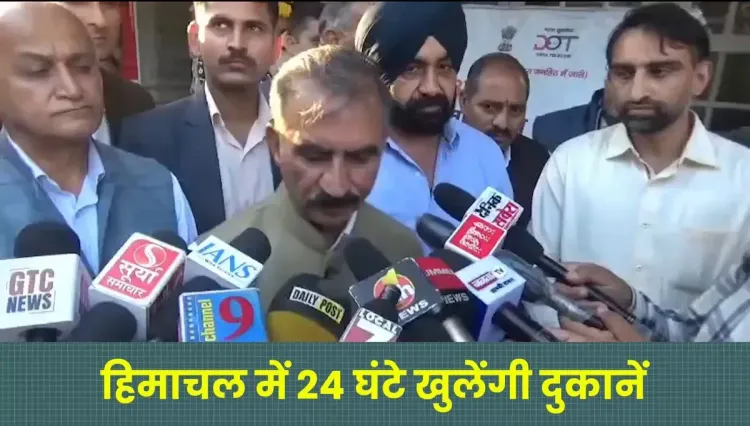
Himachal Pradesh CM Sukhvinder Singh Sukhu has permitted shops and restaurants to stay open 24 hours according to their capacity, targeting tourist convenience and relief from inspector raj for local traders, while also assuring fair wages for establishment workers.
Key Takeaways
Himachal Pradesh has permitted shops and restaurants to operate 24 hours based on their individual capacity.
The move is aimed at improving convenience for tourists visiting the hill state.
Local shopkeepers are to be freed from inspector raj — frequent and discretionary regulatory inspections.
CM Sukhu explicitly assured that employees in these establishments will receive full and fair wages.
The announcement was made on 27 May 2026 and formal government orders and capacity guidelines are awaited.
The reform follows a broader pattern of Indian states liberalising retail and hospitality hours as part of ease-of-doing-business initiatives.
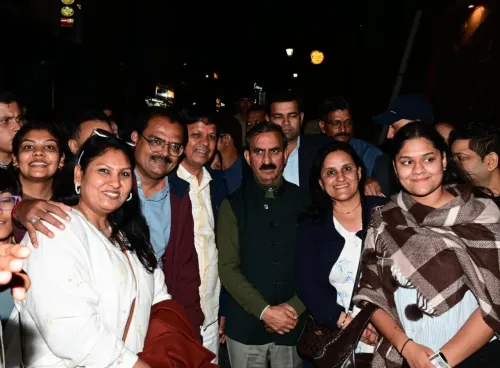
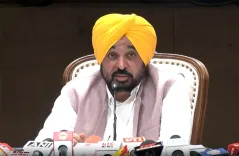
Himachal Pradesh Chief Minister Sukhvinder Singh Sukhu on Wednesday, 27 May 2026 announced that the state government has permitted restaurants and shops across Himachal Pradesh to remain open round the clock, calibrated to their individual capacity, with the twin goals of improving tourist convenience and freeing local traders from what he described as 'inspector raj' (inspector rule — a term for excessive regulatory oversight).
In his post on X, CM Sukhu stated: 'The government has given permission to keep restaurants and shops in the state open 24 hours according to their capacity, with the aim of providing convenience to tourists and freeing local shopkeepers from inspector raj. We have also ensured that employees working there receive their full and fair wages for their hard work.'
Context
Himachal Pradesh is a hill state whose economy is deeply intertwined with domestic and international tourism, particularly during summer and winter peak seasons. Restricted trading hours and frequent compliance inspections have long been cited by traders and hospitality operators in towns such as Shimla, Manali, Dharamshala, and Kasauli as barriers to serving tourists who arrive at all hours.
The announcement addresses two distinct pain points simultaneously: the visitor experience and the regulatory burden on small business owners. By tying permissions to a shop or restaurant's own capacity rather than a uniform standard, the government signals a flexible, business-friendly approach.
Policy Backdrop
The phrase 'inspector raj' has been a recurring target in Indian ease-of-doing-business debates for over a decade. It refers to the practice of labour, food-safety, and municipal inspectors making frequent — and sometimes discretionary — visits to commercial establishments, a process critics argue creates compliance costs and opportunities for harassment of small traders.
Several Indian states have periodically extended retail and hospitality trading hours as part of broader deregulation drives. Such reforms are typically accompanied by assurances on worker protections to pre-empt criticism from labour groups. CM Sukhu's explicit mention of fair wages signals awareness of that political calculus.
Stakeholders and Impact
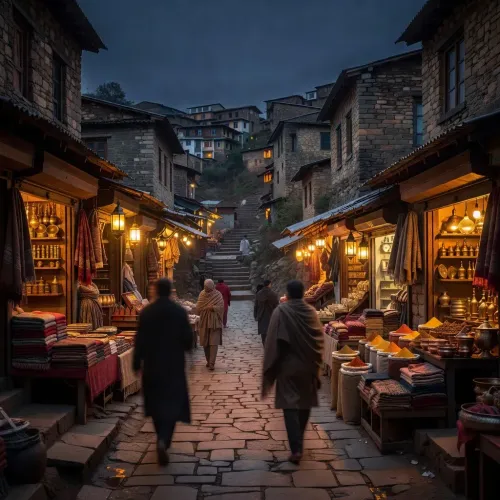
Tourists stand to benefit from greater access to food, retail, and hospitality services at night and in the early hours — a particularly relevant change for travellers arriving on overnight buses or early-morning flights into hill-station towns. Local shopkeepers and restaurant owners gain the freedom to operate longer without fear of inspection-based penalties.
Workers in these establishments are the third constituency the government has addressed. The assurance of 'full and fair wages' suggests the state intends to pair the deregulation of trading hours with enforcement of wage norms, though the specific mechanism — whether through amended labour rules or new enforcement circulars — has not yet been detailed publicly.
What's Next
The formal government order, capacity-assessment guidelines, and any labour-department enforcement circulars will be closely watched to understand how the policy is operationalised on the ground. Industry bodies representing hotel and restaurant operators are likely to seek clarity on which categories of establishments qualify and how capacity is to be measured.
Tourism-arrival data for the 2026 season will ultimately serve as a practical test of whether the liberalised hours translate into a measurable uplift in visitor spending and satisfaction across Himachal Pradesh's key tourist corridors.
Point of View
But its political timing — ahead of a tourism season — suggests a dual motive: economic liberalisation and visible outreach to the trader community, a constituency that has not always aligned with the Congress. The explicit wage-protection assurance is a calculated move to insulate the policy from left-of-centre criticism within the party's own base. Whether the reform delivers tangible benefits will depend heavily on the quality of the implementing order and the state's capacity to enforce wage norms without recreating the very inspector raj it seeks to dismantle. For the Congress government in Shimla, the credibility of this announcement rests entirely on the follow-through.
NationPress
14 Sept 2026
Frequently Asked Questions
Can shops and restaurants in Himachal Pradesh now stay open all night?
Yes. The Himachal Pradesh government, as announced by CM Sukhvinder Singh Sukhu on 27 May 2026 , has permitted shops and restaurants to remain open for 24 hours based on their individual capacity. The formal government order detailing eligibility and capacity norms is awaited.
What is 'inspector raj' and why is CM Sukhu targeting it?
Inspector raj refers to the practice of frequent, often discretionary inspections by labour, food-safety, and municipal officials that can burden small businesses with compliance costs. CM Sukhu cited removing this burden on local shopkeepers as one of the two key objectives of the new 24-hour trading permission.
Will workers in 24-hour shops and restaurants get extra pay in Himachal Pradesh?
CM Sukhu stated that the government has ensured employees working in these establishments will receive 'full and fair wages' for their work. The specific mechanism — whether through amended labour rules or enforcement circulars — has not yet been publicly detailed.
Which areas of Himachal Pradesh will benefit from 24-hour shops?
The announcement applies across Himachal Pradesh as a whole. Tourist-heavy towns such as Shimla , Manali , Dharamshala , and Kasauli are expected to see the most immediate impact given their high volumes of overnight and early-morning tourist arrivals.
When did Himachal Pradesh allow 24-hour shops and restaurants?
The announcement was made by Chief Minister Sukhvinder Singh Sukhu on Wednesday, 27 May 2026 , via a post on his official X account.