CM Sukhu Amends HP Shops Act to Allow 24-Hour Operations

Synopsis
Chief Minister Sukhvinder Singh Sukhu has amended the Himachal Pradesh Shops and Commercial Establishments Act, 1969, to allow 24-hour operations, signalling a push to improve the state's ease-of-doing-business standing and attract investment. Industries Minister Harshvardhan Chauhan was present at the announcement.
Key Takeaways
The Himachal Pradesh Shops and Commercial Establishments Act, 1969 has been amended to permit 24-hour operations for shops and commercial establishments.
Chief Minister Thakur Sukhvinder Singh Sukhu announced the reform, citing ease-of-doing-business promotion as the primary objective.
Industries Minister Harshvardhan Chauhan and senior state officials were present at the announcement on June 10, 2026 .
The move aligns Himachal Pradesh with several other Indian states that have already liberalised colonial-era shop and establishment laws.
Key implementation details — including worker safety norms, night-shift wage rules, and inspection protocols — are yet to be publicly notified.
The reform is expected to benefit tourism-linked retail, hospitality, and convenience businesses that are central to the state economy.
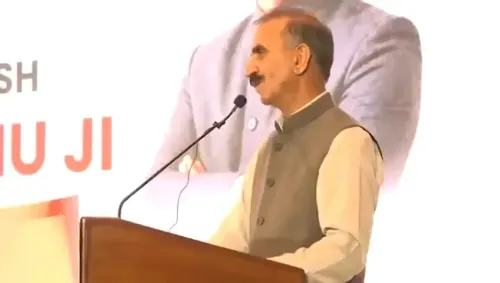
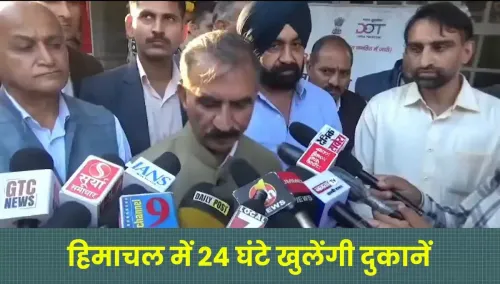
The Chief Minister's Office of Himachal Pradesh announced on Wednesday, June 10, 2026 that Chief Minister Thakur Sukhvinder Singh Sukhu has moved to amend the Himachal Pradesh Shops and Commercial Establishments Act, 1969, permitting shops and commercial establishments to operate round the clock as part of the state's push to improve its ease-of-doing-business environment.
Context
The post, shared by the official CMO account, states that the 1969 Act has been amended to allow 24-hour operations — 24 ghante sanchalan ki anumati [permission for 24-hour operations] — with the stated objective of promoting ease of doing business. Industries Minister Harshvardhan Chauhan and senior officials were present at the occasion. The announcement marks a significant liberalisation of a decades-old colonial-era statute that had previously restricted operating hours for retail and commercial businesses across the hill state.
Policy Backdrop
Since 2014, the Government of India's national Ease of Doing Business initiative has benchmarked states on regulatory reforms, creating strong incentives for state governments to modernise shop and establishment laws. Himachal Pradesh, a northern hill state, has been working to attract investment by streamlining its commercial regulatory framework under Chief Minister Sukhu, who assumed office in December 2022. The amendment to the Himachal Pradesh Shops and Commercial Establishments Act, 1969 follows a broader national pattern in which multiple states have overhauled similar colonial-era statutes to permit round-the-clock commerce, particularly in the context of post-pandemic economic revival.
Several larger states had already moved in this direction in preceding years, and Himachal Pradesh's amendment positions it alongside peers competing for retail investment, logistics operations, and hospitality businesses that require flexible or continuous hours. The reform is expected to benefit sectors such as tourism-linked retail, pharmacies, convenience stores, and food-service establishments that are central to the state's economy.
Stakeholders and Impact
Retail business owners and commercial establishments across Himachal Pradesh stand to gain the most immediate benefit, as they will no longer face legal restrictions on operating after conventional hours. The tourism sector — a major pillar of the state's economy — is likely to see positive downstream effects, given that hill-station destinations such as Shimla and Manali attract visitors who seek late-night services. Workers employed in extended-hours shifts will be a key stakeholder group to watch, with questions around night-shift wages, safety protocols, and inspection mechanisms yet to be publicly detailed.
Industries Minister Harshvardhan Chauhan's presence at the announcement signals that the reform is being driven through the industries portfolio, suggesting it forms part of a wider investment-attraction agenda rather than a standalone regulatory adjustment.
What's Next
The practical implementation of the amendment will hinge on the notification of revised rules in the Himachal Pradesh state gazette, along with any accompanying guidelines on worker protections, night-shift wage standards, and inspection frameworks. Observers will watch whether the state issues supplementary orders addressing labour welfare concerns that typically accompany such liberalisation measures. The reform's impact on Himachal Pradesh's ranking in national ease-of-doing-business assessments will likely be tracked in subsequent central government evaluations, providing a measurable outcome for the Sukhu administration's industrial reform agenda.
Point of View
Arriving at a time when Himachal Pradesh is seeking to diversify its economic base beyond hydropower and horticulture. By liberalising operating hours, the administration is signalling openness to the organised retail, logistics, and hospitality sectors that have historically bypassed the hill state for more permissive regulatory environments. The reform's political optics are notable: positioning a Congress-led government as a business-friendly administration counters a common critique and mirrors a pattern seen in other non-BJP state governments that have adopted central ease-of-doing-business frameworks to demonstrate economic competence. The real test, however, will be in the gazette notification and whether adequate worker protections accompany the deregulation.
NationPress
26 Oct 2026
Frequently Asked Questions
What change has Himachal Pradesh made to its Shops and Commercial Establishments Act?
Himachal Pradesh has amended the Shops and Commercial Establishments Act, 1969, to allow shops and commercial establishments to operate for 24 hours , removing previous restrictions on operating hours.
Why did CM Sukhu amend the HP Shops Act?
Chief Minister Sukhvinder Singh Sukhu stated the amendment is aimed at promoting ease of doing business in Himachal Pradesh , in line with national efforts to improve the state's regulatory environment for commerce and investment.
Who was present at the HP Shops Act amendment announcement?
Industries Minister Harshvardhan Chauhan and senior state government officials were present at the occasion when the amendment was announced on June 10, 2026 .
Which other Indian states allow 24-hour shop operations?
Several Indian states have amended their colonial-era shops and establishments acts in recent years to permit round-the-clock operations, particularly following the post-pandemic economic revival push and national ease-of-doing-business reforms.
What does the HP Shops Act amendment mean for workers?
The amendment opens the door to extended and night-shift employment in retail and commercial establishments in Himachal Pradesh ; however, specific rules on night-shift wages, worker safety, and inspections are yet to be notified through the state gazette.