35 cloudbursts, 31 dead: J&K's deadliest monsoon summer of 2026
Synopsis
Thirty-five cloudbursts in a single monsoon season, 31 lives lost, highways shut, and entire neighbourhoods submerged — J&K's summer of 2026 is a stark illustration of how climate change and ecological degradation are turning extreme weather from a rare event into a recurring crisis in one of India's most fragile mountain territories.
Key Takeaways
35 cloudbursts have struck Jammu and Kashmir between 1 June and 4 August 2026 , killing 31 people .
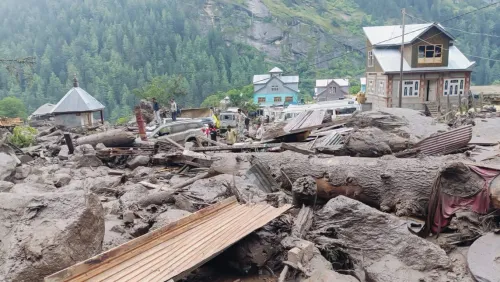
A major cloudburst hit Chatroo, Kishtwar on 1 August , damaging homes, shops, and vehicles.
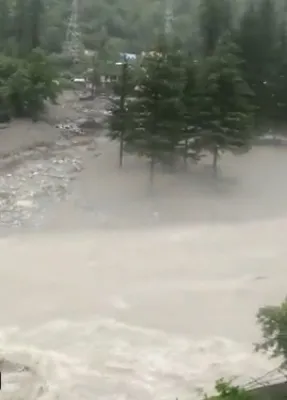
Three back-to-back cloudbursts in Shopian district in four days inundated Badrhama , Pehlipora , and Heerpora .
Naseema Begum, 52 , was swept away in a flash flood in Kupwara's Himli area on Monday.
Hardest-hit districts include Poonch , Rajouri , Kathua , Doda , and Kishtwar in the Chenab Valley.
Experts link the surge to rising global temperatures, ecological degradation, and Kashmir's fragile mountain terrain.
Jammu and Kashmir has recorded 35 cloudbursts between June 1 and 4 August 2026, killing 31 people and leaving a trail of destruction across the union territory — from the Chenab Valley to the Kashmir Valley — in what is shaping up as one of the most punishing monsoon seasons in recent memory.
Scale of Destruction
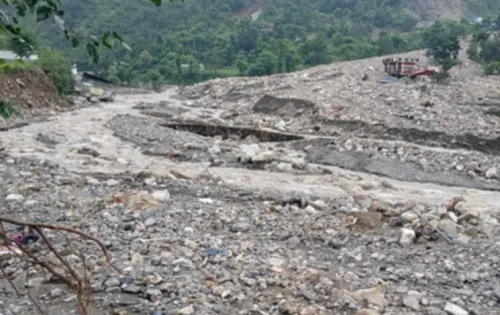
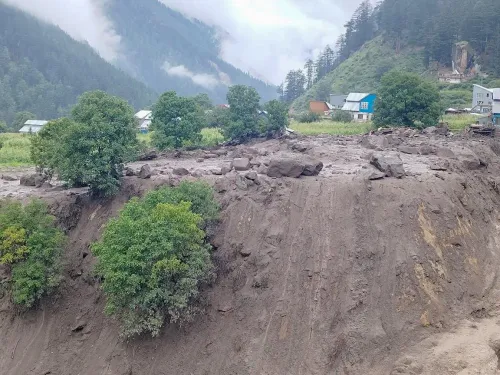
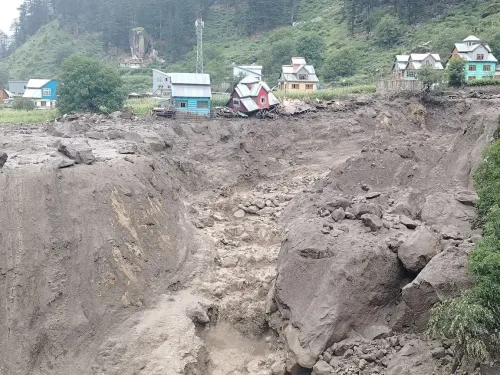
The 35 cloudbursts have collectively swept away dozens of residential houses, shops, schools, irrigation canals, and agricultural fields. Critical road links — including stretches of the Jammu-Srinagar National Highway and local roads in Kangan in Ganderbal district and Pahalgam — have faced repeated temporary closures due to debris accumulation and overflowing nallahs. Power supply and communication lines have been disrupted across multiple affected areas.
Of the total cloudbursts recorded this year, 22 struck between June 1 and mid-July, with persistent rainfall through late July and early August adding more incidents to the tally.
Key Incidents This Week
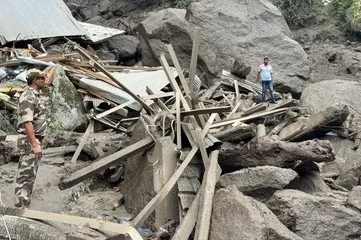
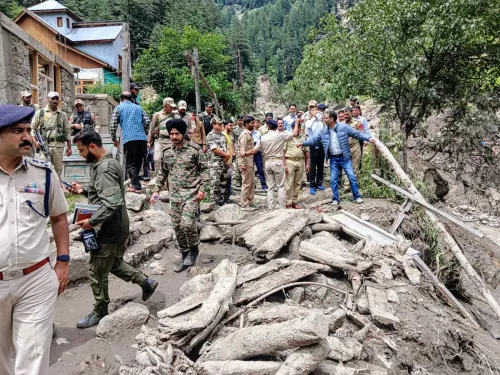
On 1 August, a severe cloudburst struck the Chatroo area of Kishtwar district, sending floodwaters, debris, uprooted trees, and boulders crashing into residential neighbourhoods and a local market. Several houses developed structural cracks, shops were inundated, and parked vehicles were washed away.
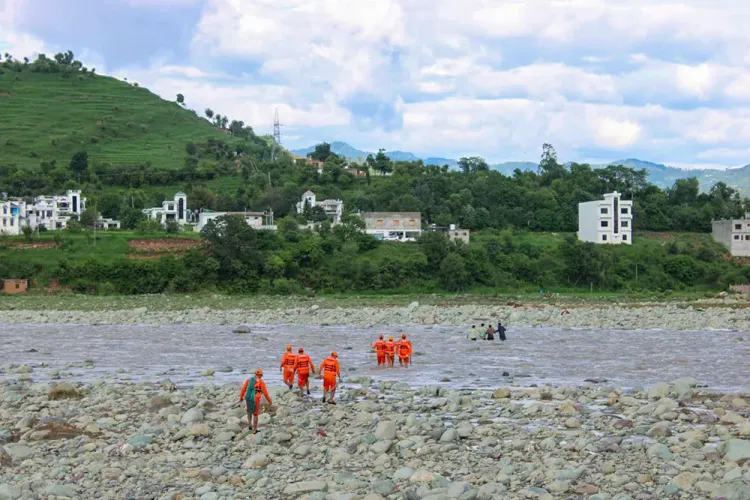
Three successive cloudbursts in the past four days have battered Shopian district, causing extensive damage to public and private property in the Badrhama, Pehlipora, and Heerpora areas. Teams from Shopian Police, the State Disaster Response Force (SDRF), and local residents launched immediate rescue and relief operations to evacuate stranded residents.
On Monday, Naseema Begum, 52, was swept away by a flash flood triggered by a cloudburst in the Himli area of Lolab in Kupwara district, North Kashmir, while she was working in an agricultural field near a small nallah.
Most Affected Districts
The districts bearing the heaviest impact are Poonch, Rajouri, Kathua, Doda, and Kishtwar in the Chenab Valley, alongside localised incidents across Kashmir including Shopian, Kupwara, Bandipora, Anantnag (Pahalgam), and recent mudslides in Ganderbal. Local administration, police, SDRF, and National Disaster Response Force (NDRF) teams remain deployed for ongoing evacuations and clearing operations.
Why Cloudbursts Are Intensifying
Experts attribute the surge in extreme weather events to a combination of local ecological degradation and global climate change. Locally, hill cutting, deforestation, and heavy construction in fragile zones have destabilised slopes and choked natural drainage channels. On a global scale, rising temperatures allow the atmosphere to hold roughly 7% more moisture per degree Celsius, supercharging monsoon clouds. Higher sea surface temperatures in the Arabian Sea and the Indian Ocean increase the volume of water vapour carried by incoming winds toward the mountains.
Geographically, Kashmir's steep, narrow valleys and high-altitude slopes force warm, moist air rapidly upward, triggering sudden heavy condensation and near-immediate runoff. Erratic monsoon patterns — including shifted jet streams and localised convective systems — produce tall, dense storm clouds capable of dumping massive rainfall over tiny areas within minutes.
Authorities Urge Vigilance
Disaster management authorities have advised residents in flood-prone and landslide-vulnerable areas to remain on high alert and strictly follow weather advisories as the monsoon continues to impact the region. Restoration work on roads, power lines, and communication infrastructure is ongoing across several districts. With the monsoon season far from over, officials warn that further incidents cannot be ruled out.
Point of View
And J&K's administration needs to treat it as such. The combination of unchecked hill cutting, construction in fragile zones, and climate-amplified rainfall is well-documented, yet land-use enforcement in the region remains inconsistent. Disaster response is improving, but it remains reactive; early-warning infrastructure and binding restrictions on construction in high-risk zones are the interventions that can actually reduce the death toll in future seasons. The monsoon will return next year.
NationPress
4 Aug 2026
Frequently Asked Questions
How many cloudbursts have hit Jammu and Kashmir in 2026?
As of 4 August 2026, 35 cloudbursts have struck Jammu and Kashmir, killing 31 people. Of these, 22 occurred between 1 June and mid-July, with the remainder through late July and early August.
Which districts in J&K have been worst affected by the 2026 cloudbursts?
The most heavily impacted districts are Poonch, Rajouri, Kathua, Doda, and Kishtwar in the Chenab Valley. Localised incidents have also struck Shopian, Kupwara, Bandipora, Anantnag (Pahalgam), and Ganderbal in the Kashmir Valley.
What caused the Kishtwar cloudburst on 1 August 2026?
A massive cloudburst struck the Chatroo area of Kishtwar district on 1 August 2026, sending floodwaters, debris, uprooted trees, and boulders into residential areas and a local market. Several houses developed cracks, shops were inundated, and parked vehicles were washed away.
Why are cloudbursts becoming more frequent in Jammu and Kashmir?
Experts attribute the increase to both local and global factors. Locally, hill cutting, deforestation, and construction in fragile zones destabilise slopes and block drainage. Globally, rising temperatures allow the atmosphere to hold roughly 7% more moisture per degree Celsius, intensifying monsoon clouds. Kashmir's steep terrain further amplifies sudden runoff.
What precautions have authorities advised for residents in J&K?
Disaster management authorities have advised people in flood-prone and landslide-vulnerable areas to remain on high alert and strictly follow weather advisories. SDRF and NDRF teams are deployed across affected districts for evacuations and restoration work.