Will the SC Address the ED's Claims of CM Mamata Banerjee's Interference?
Synopsis
The Supreme Court prepares to address allegations of interference by West Bengal's CM Mamata Banerjee during ED operations. This pivotal case raises significant questions about state interference in central investigations. The hearing on February 3 could have far-reaching implications for state and central agency relations.
Key Takeaways
The Supreme Court will address allegations of political interference in a central investigation.
ED claims obstruction of lawful duties by state officials during raids.
Important legal precedents may arise from this case regarding state and central agency relations.
CCTV footage and digital evidence are critical to the ongoing investigations.
The outcome could reshape the political landscape in West Bengal.
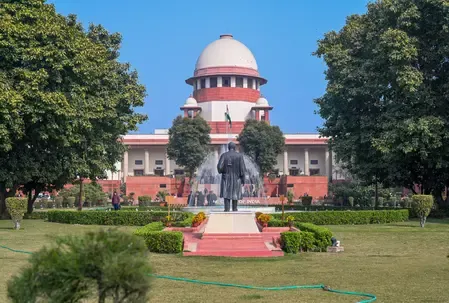
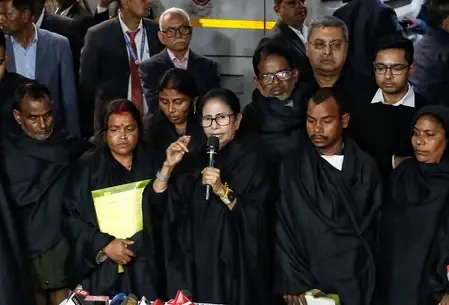
New Delhi, Feb 2 (NationPress) The Supreme Court is set to deliberate on February 3 regarding a plea submitted by the Enforcement Directorate (ED). This plea accuses the West Bengal government and Chief Minister Mamata Banerjee of interfering with recent search operations at the political consultancy Indian Political Action Committee (I-PAC) and the residence of its co-founder Pratik Jain in Kolkata.
According to the court's schedule, a bench comprising Justices Prashant Kumar Mishra and Vipul M. Pancholi will continue the hearing on February 3.
In their petition, the ED has requested the registration of FIRs against Chief Minister Banerjee, the state Director General of Police (DGP), and the Kolkata Police Commissioner, alleging that they obstructed lawful duties during concurrent raid operations.
During the last session, the Supreme Court suspended the FIRs filed by the West Bengal Police against ED officials in connection with these searches, emphasizing that the petitions raised significant concerns about the alleged interference by state agencies in a central investigation.
The bench led by Justice Mishra issued a notice to the Chief Minister and high-ranking police officials, granting them two weeks to submit their counter-affidavits and scheduled the next hearing for February 3.
In its interim directive, the Supreme Court also mandated the preservation of CCTV footage and other digital storage devices containing recordings from the searched locations and nearby areas, noting that the petitions raised a serious issue regarding the investigations conducted by the Directorate of Enforcement and potential interference from state agencies.
The court cautioned that if these issues remain unresolved, it might lead to a scenario of lawlessness in one or more states.
Solicitor General Tushar Mehta, representing the ED, described the incident as a case where mobocracy supplants democracy, claiming that officials from the central agency faced intimidation and were obstructed from fulfilling their lawful responsibilities.
In contrast, senior advocate Abhishek Manu Singhvi, representing the West Bengal government, contested the validity of the ED's petition, alleging forum shopping and asserting that sufficient remedies were available in the Calcutta High Court, where similar requests were already under consideration.
Point of View
The unfolding legal situation between the Enforcement Directorate and the West Bengal government underscores the delicate balance of power between state and central agencies. The Supreme Court's involvement is crucial in ensuring that investigations remain free from political interference, maintaining the integrity of India's democratic institutions.
NationPress
24 Sept 2026
Frequently Asked Questions
What is the ED's allegation against CM Mamata Banerjee?
The ED alleges that CM Mamata Banerjee interfered with their lawful duties during search operations at I-PAC's office and Pratik Jain's residence.
When is the Supreme Court's hearing scheduled?
The Supreme Court's hearing is scheduled for February 3.
What did the Supreme Court decide in the previous hearing?
In the previous hearing, the Supreme Court stayed the FIRs filed by the West Bengal Police against ED officials, indicating serious questions about alleged interference.
What are the potential implications of this case?
The case could have significant implications for the relationship between state and central agencies, impacting future investigations and political accountability.
What measures did the Supreme Court order regarding evidence?
The Supreme Court ordered the preservation of CCTV footage and digital recordings from the searched premises.