Supriya Sule rules out NCP merger, NDA tie-up after Ajit Pawar's death
Synopsis
Supriya Sule's blunt 'full stop' on NCP merger talks — and her flat refusal to join the NDA — does more than close a chapter: it institutionalises the split, turns a family feud into a permanent partisan rivalry, and forces both factions to build political identities that can survive without the undivided NCP's organisational machine or Ajit Pawar's personal authority.
Key Takeaways
Supriya Sule declared on 16 November 2026 that NCP merger talks had reached a 'full stop' and ruled out joining the BJP-led NDA .
The announcement follows the death of Ajit Pawar in January 2026 , which had prompted reunification speculation for nearly a year.
NCP (SP) holds 8 Lok Sabha MPs and 10 MLAs ; the ruling NCP holds 1 Lok Sabha MP and 41 MLAs in the Mahayuti government.
The ruling NCP lost the Aurangabad graduates MLC seat to NCP (SP) in October 2026 , signalling trouble in sustaining Ajit Pawar's personal vote bank.
A permanently divided NCP is seen as benefiting the BJP in Western Maharashtra sugar-belt seats and the Congress within the MVA .
Both factions must now compete as formal political rivals, ending months of cadre hesitation rooted in merger rumours.
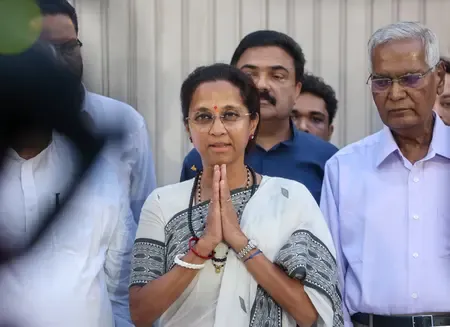
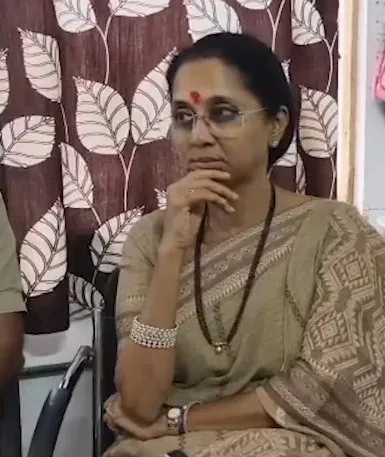
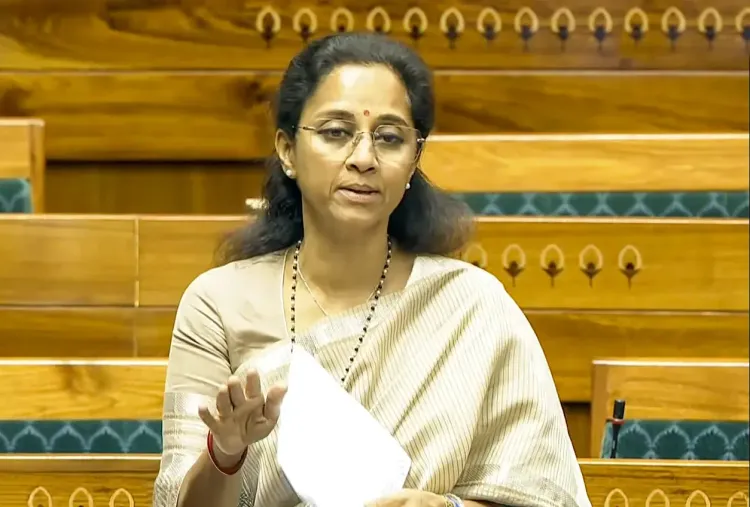
Nationalist Congress Party (Sharadchandra Pawar) working president and Baramati MP Supriya Sule on Saturday, 16 November 2026, declared that merger talks between the two NCP factions had reached a 'full stop', and categorically ruled out any alignment with the BJP-led National Democratic Alliance (NDA). The statement, coming in the wake of the death of her brother and former Maharashtra deputy chief minister Ajit Pawar in January 2026, marks a decisive rupture in Maharashtra politics — formally ending months of reunification speculation that had kept both camps in a state of political limbo.
NCP (SP): Anchoring the Opposition Without State Power
By choosing ideological consistency over access to state power, the Sharad Pawar-led NCP (SP) has positioned itself as the principal Opposition anchor in Maharashtra. The faction holds eight Lok Sabha MPs — significantly outnumbering the rival faction's lone MP — giving it substantial leverage in New Delhi and within the Maha Vikas Aghadi (MVA).
Sule's firm rejection of an NDA alignment has also pre-empted a potential internal revolt. Younger leaders such as Rohit Pawar had reportedly threatened to defect to the Congress if the faction pivoted towards the Bharatiya Janata Party (BJP). By holding the line, Sule has simultaneously shored up intra-party cohesion and established her independent authority as the inheritor of her father's political legacy — without appearing to seek a crutch from the ruling establishment.
The practical challenge, however, is sustaining ground-level cadres. With only 10 MLAs in the Maharashtra Assembly and the next Assembly elections years away, motivating workers without state patronage or development funds is a well-documented difficulty in Western Maharashtra's cooperative-driven political economy. Sule's described approach involves a division of labour: positioning herself as a policy-focused national parliamentarian while empowering Rohit Pawar and Jayant Patil to lead state-level mobilisation.
Over the medium term, analysts note that if sustaining a standalone regional party without the original 'Clock' symbol becomes resource-intensive, NCP (SP) could explore closer structural integration — or even an eventual merger — with the Congress, effectively returning to the pre-1999 political configuration.
Ruling NCP Faces a Post-Ajit Pawar Identity Crisis
For the ruling NCP faction, Sule's statement forecloses an easy route to reclaiming emotional legitimacy among traditional Pawar loyalists. Without Ajit Pawar's charismatic mass appeal and his direct organisational grip over local sugar cooperatives, district banks, and municipal bodies, the faction must now construct a new leadership architecture.
One emerging model, according to reports, involves a collective leadership structure: Sunetra Pawar — who holds the dual roles of Maharashtra Deputy Chief Minister and NCP national president — serving as the unifying face and Pawar surname, while party working president Praful Patel manages Delhi relations, Maharashtra unit chief Sunil Tatkare oversees state organisation, and senior minister Chhagan Bhujbal anchors Other Backward Class (OBC) outreach.
Recent results, however, signal the difficulty of that transition. In the October 2026 Maharashtra Legislative Council polls, the ruling NCP's nominee reportedly lost to NCP (SP) in the Aurangabad graduates constituency — an early indicator that Ajit Pawar's personal vote bank does not transfer automatically to a collective leadership setup.
Short-Term Security, Long-Term Vulnerabilities
With 41 MLAs in the comfortable Mahayuti government, the ruling NCP does not face an immediate existential crisis. Ministerial portfolios, Guardian Ministerships — including Pune and Beed — and state funds offer tools to retain MLA loyalty and ring-fence its Western Maharashtra base ahead of local body and civic polls.
Yet structural risks persist. The faction's over-dependence on the BJP risks eroding its autonomous identity. Chief Minister Devendra Fadnavis has reportedly indicated that the BJP would expect to be consulted on any merger decisions — framing the NCP as a junior partner whose seat allocation in future polls could be trimmed if its independent vote-transfer capacity weakens.
Incrementally inducing individual MLAs or local strongmen from NCP (SP) to cross over remains an option, but party insiders caution that absorbing outsiders could trigger friction among the existing 41 MLAs over ticket distribution and cabinet berths.
Systemic Fallout: A Divided NCP Reshapes Maharashtra's Power Map
Political observers argue that a permanently divided NCP prevents either faction from recreating the undivided party's historic 55–70 seat dominance in Maharashtra. The fracture creates room for the BJP to expand into traditional sugar-belt constituencies in Western Maharashtra, while the Congress is positioned to consolidate anti-BJP votes within the MVA.
Notably, Sule's announcement delivers something both factions have lacked since January 2026: clarity. Persistent reunification rumours had kept cadres on both sides reluctant to campaign aggressively against each other. With a merger formally buried, the two wings of the NCP will now compete as permanent political rivals, transforming what was once a family dispute into a structurally entrenched partisan contest.
How each faction manages that transition — and whether either can build a durable identity independent of the Pawar name — will shape Maharashtra's political landscape well beyond the next Assembly cycle.
Point of View
Yet it offers no immediate answer to the resource crunch that plagues state-level parties without patronage access. The ruling NCP's vulnerability is subtler but arguably deeper: it has state power, 41 MLAs, and ministerial portfolios, but its identity remains hostage to the Pawar surname and to BJP's willingness to treat it as an equal rather than a managed affiliate. A divided NCP ultimately advantages the BJP most — it absorbs the ruling faction's loyalty while picking up sugar-belt seats the undivided NCP once locked up. The Congress, by contrast, inherits the protest vote almost by default. Neither Pawar faction has yet articulated a vision for Maharashtra that extends beyond legacy management.
NationPress
16 Nov 2026
Frequently Asked Questions
What did Supriya Sule say about the NCP merger?
Supriya Sule declared on 16 November 2026 that merger talks between the two NCP factions had come to a 'full stop,' following the death of her brother Ajit Pawar in January 2026. She also ruled out any possibility of NCP (SP) joining the BJP-led NDA.
Why did Ajit Pawar's death trigger talk of a merger?
Ajit Pawar had led the NCP faction that split from Sharad Pawar's group and joined the BJP-led Mahayuti government. His death in January 2026 raised speculation that the two estranged branches might reconcile, since the personal and political rivalry between the brothers had been a primary driver of the original split.
How strong is NCP (SP) in the Maharashtra Assembly?
NCP (SP) holds 10 seats in the Maharashtra Assembly, compared to the ruling NCP's 41 MLAs within the Mahayuti government. However, NCP (SP) commands eight Lok Sabha MPs, far outnumbering the rival faction's single MP, giving it disproportionate leverage at the national level.
What challenges does the ruling NCP face without Ajit Pawar?
The ruling NCP must transition from Ajit Pawar's one-man command structure to a collective leadership model involving Sunetra Pawar, Praful Patel, Sunil Tatkare, and Chhagan Bhujbal. Early results, including a reported loss in the October 2026 Aurangabad graduates MLC constituency, suggest Ajit Pawar's personal vote bank is not transferring easily to new leaders.
What does a permanent NCP split mean for Maharashtra politics?
Political observers argue it prevents either faction from recreating the undivided NCP's 55–70 seat dominance in Maharashtra. It creates space for the BJP to expand in sugar-belt constituencies while positioning the Congress as the primary consolidator of anti-BJP votes within the MVA.