How is Surat's Construction Waste Recycling Reducing Carbon Emissions by Over 500 Tonnes Annually?
Synopsis
Discover how Surat's groundbreaking approach to recycling construction waste is setting a national standard. With a commitment to a zero-waste philosophy and an impressive 100% recycling rate, the city is leading the way in sustainable practices and carbon emission reduction. Join us as we explore this innovative journey.
Key Takeaways
Surat aims for a zero-waste city status.
100% recycling of construction waste is achieved.
Over 500 tonnes of carbon emissions are reduced annually.
The Kosad plant operates under a Public-Private Partnership .
Clean Construction Guidelines promote environmental health.
Gandhinagar, Jan 29 (NationPress) Surat is making remarkable progress towards its goal of becoming a zero-waste city, serving as a national benchmark for the sustainable management of construction and demolition (C&D) waste. This initiative has achieved a 100% recycling rate for construction waste, leading to significant reductions in carbon emissions.
Once predominantly recognized for its diamond and textile industries, Surat is now gaining accolades for its environmental initiatives.
As part of the state government's declared Urban Development Year, the Surat Municipal Corporation (SMC) is dedicated to merging modern infrastructure development with green growth and circular economy practices.
The city aims to ensure that all C&D waste produced is recycled, either at the generation site or at designated recycling centers, rather than being sent to landfills.
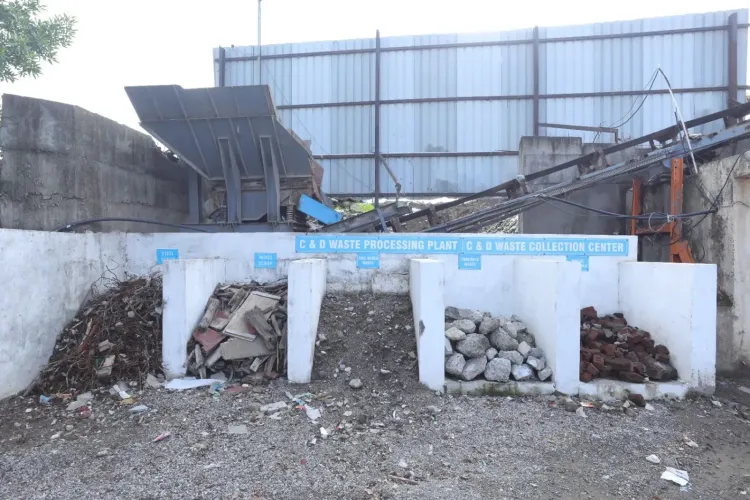
At the heart of this initiative is the construction and demolition waste recycling facility located in Kosad, which operates under a Public-Private Partnership model.
This plant has a processing capacity of 300 metric tonnes per day and currently recycles around 80 metric tonnes of demolition waste every day. Materials like bricks, concrete, and iron fragments are processed scientifically and repurposed to create products such as crushed aggregates, recycled sand, paver blocks, and concrete bricks.
Official estimates indicate that the complete recycling of construction waste has led to a reduction of over 500 tonnes of carbon dioxide emissions annually, which is equivalent to saving approximately 250,000 kilograms of coal.
This initiative has also alleviated the pressure on the extraction of natural resources such as stone and sand.
Surat's performance in cleanliness has been acknowledged in Swachh Survekshan 2024, where the city secured the highest score nationwide and maintained its spot in the Super Clean League.
The SMC has implemented Clean Construction Guidelines, becoming the first municipal body in India to do so.
Through e-governance platforms, residents can easily register from home for the collection of construction waste, enhancing compliance and monitoring.
In a move designed to bolster the circular economy, the SMC has mandated the use of up to 20% recycled material produced at the plant in government contracts.
Officials believe this initiative is likely to stimulate the market for recycled products and promote broader adoption of sustainable construction materials.
The Clean Construction Guidelines have also played a role in reducing air pollution, with requirements for the use of barricades, sheds, sprinklers for dust control, and green nets at construction sites.
Smart monitoring systems have led to a decrease in citizen complaints regarding dust and debris.
Since the Kosad plant commenced operations in 2018, the volume of C&D waste collected has consistently increased.
The city collected 65,746 metric tonnes in 2018–19, 37,457 metric tonnes in 2019–20, 10,614 metric tonnes in 2020–21, 23,315 metric tonnes in 2021–22, 41,451 metric tonnes in 2022–23, 49,381 metric tonnes in 2023–24, and 58,106 metric tonnes in 2024–25, all of which were recycled instead of being sent to landfills.
Point of View
I am impressed by Surat's ambitious steps towards sustainability. By prioritizing the recycling of construction waste and implementing innovative policies, Surat is setting a precedent for cities across India and beyond. Their commitment to reducing carbon emissions and resource extraction reflects a growing awareness of environmental responsibility that is crucial in our current climate.
NationPress
27 Oct 2026
Frequently Asked Questions
What is the recycling capacity of Surat's waste plant?
The recycling plant in Surat has a processing capacity of 300 metric tonnes per day.
How much carbon dioxide emissions is Surat reducing annually?
Surat's recycling efforts have led to a reduction of over 500 tonnes of carbon dioxide emissions each year.
What materials are reused from the recycling process?
Materials such as bricks, concrete, and iron fragments are reused to create products like crushed aggregates, recycled sand, and concrete bricks.
How does Surat's Clean Construction Guidelines impact air quality?
The guidelines help reduce air pollution by mandating the use of dust control measures at construction sites.
Is registration for waste collection available online?
Yes, citizens can register online for construction waste collection through e-governance platforms.