Swachh Bharat Mission at 12: Indian cities use AI, EVs and digital tools to overhaul sanitation
Synopsis
Twelve years after Swachh Bharat Mission launched with brooms and awareness campaigns, Indian cities are deploying AI-powered canal-cleaning robots, GPS-tracked electric autos, and digital desludging dashboards. From Thiruvananthapuram's G-SPIDER to Chennai's 5,478 e-rickshaws cutting 15,160 tonnes of annual emissions, the mission's tech evolution signals a genuine infrastructure shift — not just a clean-up exercise.
Key Takeaways
The Swachh Bharat Mission marks its 12th anniversary on 2 October 2026 , with cities showcasing AI, EV and digital-platform adoption.
Raipur Municipal Corporation launched a digital FSM dashboard on the UPYOG platform, enabling online desludging bookings and real-time vehicle monitoring.
Thiruvananthapuram deployed G-SPIDER , an AI canal-cleaning robot with machine vision and a biomimetic claw, on the Amayizhanchan Canal.
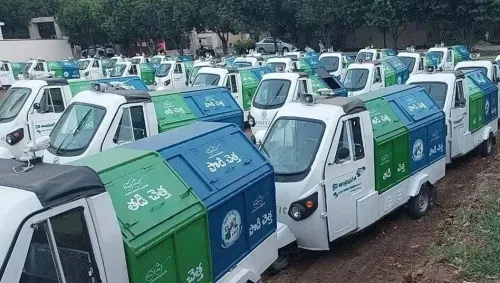
Guntur has over 200 GPS-tracked electric autos for waste collection, saving 71,000 litres of diesel annually and cutting 21,000 tonnes of emissions over a decade .
Greater Chennai Corporation runs 5,478 e-rickshaws across 15 zones , reducing carbon emissions by 41 tonnes per day and 15,160 tonnes annually .
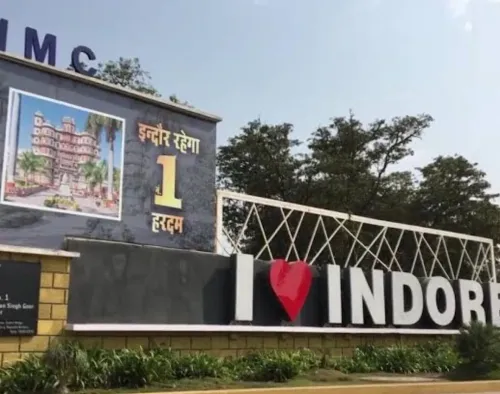
Indore uses 100 EVs with GPS monitoring via its Integrated Command and Control Centre for core-area waste collection.
Indian cities are deploying artificial intelligence (AI), electric vehicles (EVs) and digital platforms to fundamentally modernise urban sanitation services, according to an official factsheet released on Thursday, 1 October 2026, ahead of the 12th anniversary of the Swachh Bharat Mission. The statement, citing multiple city-level rollouts, highlights a measurable shift from manual, diesel-dependent waste management toward sensor-enabled, electrified infrastructure.
Digital Faecal Sludge Management in Raipur
Raipur Municipal Corporation has introduced a digital Faecal Sludge Management (FSM) dashboard built on the UPYOG platform, developed in association with the Ministry of Housing and Urban Affairs, the National Institute of Urban Affairs, and the National Urban Digital Mission. The system allows residents to book desludging services online, pay digitally, and track the entire process — eliminating the need to visit a municipal office for septic tank cleaning.
Once a resident enters a mobile number or property ID, the system automatically identifies the associated address. A single-page booking form initiates the desludging process. After completing the work, drivers upload photographs as verification, while the dashboard enables the city to monitor vehicles and optimise resource deployment. Critically, digital monitoring is supporting the transition from manual sewer cleaning to fully mechanised operations.
AI-Powered Canal Cleaning in Thiruvananthapuram
Thiruvananthapuram Municipal Corporation has deployed G-SPIDER, an AI-powered canal-cleaning robot, to clean the Amayizhanchan Canal. The robot uses machine vision and sensor intelligence to detect, assess, and extract accumulated waste, adapting to varying waste types, flow conditions, and structural complexities in real time.
Its five-degrees-of-freedom mechanism employs a biomimetic claw designed to pick up mixed and irregular debris, which is then transferred directly into designated collection vehicles. G-SPIDER significantly enhances worker safety by reducing direct human exposure to toxic gases, contaminated water, and hazardous materials. It is also capable of operating during high water levels and continuous-flow conditions, enabling systematic, scheduled canal maintenance.
Electric Vehicles Transform Waste Collection
Several Indian cities have moved waste collection fleets to electric vehicles at scale. In Guntur, more than 200 electric autos now handle door-to-door waste collection citywide. Each vehicle is fitted with GPS tracking for real-time monitoring. The fleet is estimated to eliminate the use of more than 71,000 litres of diesel annually and reduce greenhouse gas emissions by 21,000 tonnes over a decade.
The Greater Chennai Corporation in Tamil Nadu has deployed 5,478 battery-operated e-rickshaws across all 15 zones for door-to-door collection. These vehicles cover approximately 40 km per day each, replacing diesel-powered counterparts, and the fleet is reported to cut around 41 tonnes of carbon emissions daily — an annual reduction of 15,160 tonnes.
In Indore, Madhya Pradesh, 100 electric vehicles have been deployed for door-to-door collection in core areas, with real-time GPS monitoring routed through the city's Integrated Command and Control Centre (ICCC) to ensure service transparency and accountability.
12 Years of Swachh Bharat: From Brooms to Bots
The Swachh Bharat Mission, launched on 2 October 2014, originally focused on open-defecation-free India and basic urban cleanliness. Twelve years on, it has evolved into a technology-driven urban sanitation programme, integrating digital dashboards, AI robotics, and electrified fleets — a transformation that reflects broader ambitions in India's urban infrastructure planning. The pace of deployment across geographically and demographically distinct cities — from Raipur to Thiruvananthapuram to Guntur and Chennai — suggests the tech-enabled model is scaling beyond pilot experiments.
As cities face growing pressure to meet climate commitments and improve public health outcomes, the integration of AI and EVs into civic services is set to deepen in the coming years.
Point of View
But its spread is uneven — the cities showcased here are predominantly those that already rank high on urban governance indices. The harder question is whether AI dashboards and e-rickshaws are reaching India's Tier-3 and Tier-4 towns, where sanitation deficits are most acute and municipal capacity thinnest. Carbon-emission savings from Chennai's e-rickshaw fleet are substantial on paper, but verified independently they are not. Twelve years in, the mission needs a rigorous audit layer as much as it needs new robots.
NationPress
1 Oct 2026
Frequently Asked Questions
What is the Swachh Bharat Mission and when does it turn 12?
The Swachh Bharat Mission is India's flagship urban and rural sanitation programme, launched on 2 October 2014. It completes 12 years on 2 October 2026, and has evolved from a basic cleanliness drive into a technology-integrated urban sanitation initiative.
What is the G-SPIDER robot used in Thiruvananthapuram?
G-SPIDER is an AI-powered canal-cleaning robot deployed by Thiruvananthapuram Municipal Corporation on the Amayizhanchan Canal. It uses machine vision and sensor intelligence to detect and remove waste, and features a five-degrees-of-freedom biomimetic claw to handle mixed debris — reducing the need for workers to enter hazardous environments.
How many electric vehicles has Greater Chennai Corporation deployed for waste collection?
The Greater Chennai Corporation has deployed 5,478 battery-operated e-rickshaws across all 15 zones of the city. The fleet travels approximately 40 km per day per vehicle and is reported to reduce carbon emissions by around 41 tonnes daily, or 15,160 tonnes annually.
What is the UPYOG platform used in Raipur's FSM dashboard?
UPYOG is a digital platform associated with the Ministry of Housing and Urban Affairs, the National Institute of Urban Affairs, and the National Urban Digital Mission. Raipur Municipal Corporation used it to build a Faecal Sludge Management dashboard that allows residents to book, pay for, and track septic tank desludging services online.
How much diesel and emissions does Guntur's electric auto fleet save?
Guntur's fleet of more than 200 GPS-tracked electric autos eliminates the use of over 71,000 litres of diesel annually. The initiative is estimated to reduce greenhouse gas emissions by 21,000 tonnes over a decade, according to official figures.