Swamy: India Must Refuse Bangladesh's Demand to Extradite Hasina
Synopsis
Dr. Subramanian Swamy has publicly called on India to refuse Bangladesh's demand to extradite Sheikh Hasina, arguing that Bangladesh's treatment of women — including the polygamy permitted under its legal framework — disqualifies it from delivering equal justice to its deposed female leader.
Key Takeaways
Subramanian Swamy posted on 10 November 2026 that India must refuse any extradition demand for Sheikh Hasina from Bangladesh.
Swamy argues that Bangladesh's legal and social framework does not treat women as equals, making extradition unjust.
India and Bangladesh signed an extradition treaty in 2013 that provides the formal legal channel for such requests.
Swamy called for Sheikh Hasina to be granted an Indian passport and allowed to stay in India 'as long as she wants.' India's Ministry of External Affairs has not issued a public statement on the reported extradition demand.
The case sits at the intersection of bilateral treaty obligations, humanitarian considerations, and India's stated commitment to gender equality.
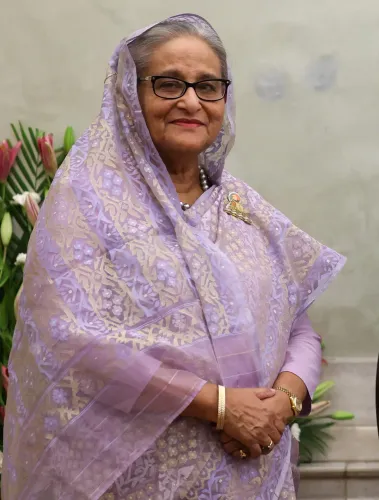
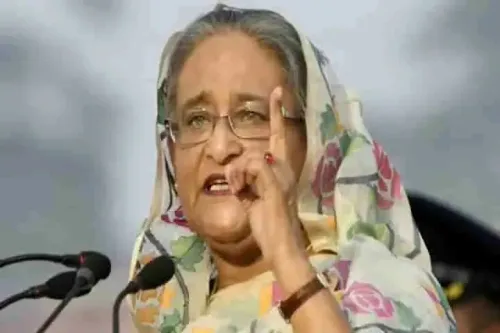
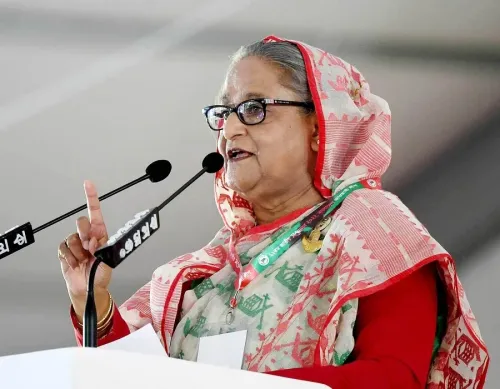
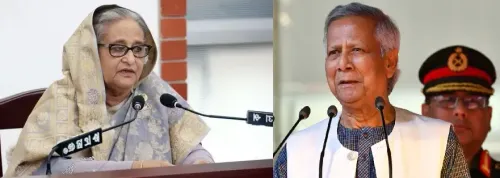
A demand from Dhaka for the return of Sheikh Hasina has drawn a sharp and very public response — veteran politician Dr. Subramanian Swamy declared on Tuesday, 10 November 2026 that India must flatly refuse any extradition request and allow the former Bangladeshi leader to remain in the country for as long as she chooses, citing what he describes as deep structural inequality in how Bangladesh treats its women.
Swamy's post on X pulled no punches: 'Bangladesh wants India to extradite former Bangladesh Hasina hiding in Bharat Desh. We must refuse that demand since Islamic Bangladesh does not regard their Muslim females as equal to their Muslim men.' He went further, arguing that Sheikh Hasina's removal from power was engineered by 'hard line BD Males who don't treat women as equals and can have four wives for one male Muslim.' His conclusion was unambiguous — India should offer her sanctuary, backed by an Indian passport, indefinitely.
The extradition treaty that frames the demand
India and Bangladesh formalised an extradition treaty in 2013, creating a legal channel for the transfer of accused persons between the two countries. That treaty is now the instrument through which Dhaka is reportedly pressing its case. But treaties do not operate in a vacuum — Indian law and humanitarian considerations provide sovereign latitude in deciding whether to honour a request, and political figures from both sides have historically navigated that grey zone.
Sheikh Hasina, the former Prime Minister of Bangladesh, has been residing in India following a dramatic political upheaval in her country. The circumstances of her departure — and the nature of the government that replaced her — sit at the centre of Swamy's argument. His framing is provocative but pointed: a country that permits polygamy for men while removing a democratically elected female leader, he argues, cannot be trusted to deliver equal justice to that same woman.
Swamy's gender-rights argument as diplomatic cover
The rhetorical move here is significant. Swamy grounds his refusal not in cold geopolitics or bilateral realpolitik but in gender equality — a principle he argues India upholds 'theoretically' and Bangladesh does not in practice. 'Hindustan treats Women as equals theoretically,' he wrote, a qualifier that is itself a small grenade thrown at the Indian establishment. The argument effectively invites India's Ministry of External Affairs to test whether its own stated values are compatible with handing a female former head of government to the administration that ousted her.
India's Ministry of External Affairs has not issued a formal public statement in response to the reported Bangladeshi demand. Any official response would need to weigh treaty obligations, regional diplomatic stakes, and the domestic political optics of either protecting or surrendering a neighbouring country's deposed leader. Watch for any formal communication between the two foreign ministries — that exchange will be the real signal of where this heads.
Swamy has staked out the loudest position on the Indian side so far. Whether the government follows, ignores, or quietly navigates around it will define the next chapter of one of South Asia's most consequential bilateral relationships.
Point of View
But India retains sovereign discretion on humanitarian and public-policy grounds, and Swamy is essentially daring the establishment to use it. The statement also reflects a broader pattern in Indian political discourse where the treatment of women in neighbouring Muslim-majority countries is deployed as a legitimising frame for foreign-policy positions. How the MEA responds — or chooses not to — will reveal whether Swamy's public pressure carries any weight inside the government.
NationPress
10 Nov 2026
Frequently Asked Questions
Why is Bangladesh asking India to extradite Sheikh Hasina?
Bangladesh has reportedly sought the return of Sheikh Hasina , its former Prime Minister, who has been residing in India following a political upheaval. The request is framed through the India-Bangladesh extradition treaty of 2013 , which provides a legal channel for transferring accused persons between the two countries.
Does India have to honour Bangladesh's extradition request for Hasina?
Not automatically. The 2013 extradition treaty provides a framework but India retains sovereign discretion based on humanitarian considerations, domestic law, and public-policy grounds. Politicians like Dr. Subramanian Swamy are publicly urging the government to refuse the request.
What did Subramanian Swamy say about Sheikh Hasina?
Dr. Subramanian Swamy said India must refuse Bangladesh's extradition demand for Sheikh Hasina because Bangladesh does not treat women as equals. He argued she was ousted by 'hard line' male political forces and called for India to give her a passport and permanent sanctuary.
What is the India-Bangladesh extradition treaty?
India and Bangladesh signed an extradition treaty in 2013 that creates a formal legal mechanism for either country to request the transfer of persons accused of crimes. It is the instrument Bangladesh is reportedly using to press for Sheikh Hasina 's return.
What has India's government officially said about Hasina's extradition?
India's Ministry of External Affairs has not issued a formal public statement on the reported extradition demand as of 10 November 2026 . Any official response from the MEA or Ministry of Home Affairs will be the key indicator of India's position.