Tharoor flags Parliament panel report on Bangladesh visas, Hasina extradition
Synopsis
Congress MP Dr. Shashi Tharoor flagged cross-border media attention to the Parliamentary Standing Committee on External Affairs report recommending phased restoration of Bangladesh visas and providing an update on the Sheikh Hasina extradition request, highlighting the report's significance for India-Bangladesh ties.
Key Takeaways
The Parliamentary Standing Committee on External Affairs released a report covering Bangladesh visa restoration and the Sheikh Hasina extradition request .
Shashi Tharoor noted the report received media attention on both sides of the India-Bangladesh border .
The committee recommended a phased restoration of Bangladesh visas, affecting students, patients, traders, and border communities.
Sheikh Hasina has been in India since her resignation in August 2024 ; Bangladesh has formally sought her extradition.
India-Bangladesh relations are governed by a framework dating to the 1972 Treaty of Friendship , with the 2015 Land Boundary Agreement as a landmark milestone.
The Ministry of External Affairs response on visa timelines and extradition processing will be the next key development to watch.
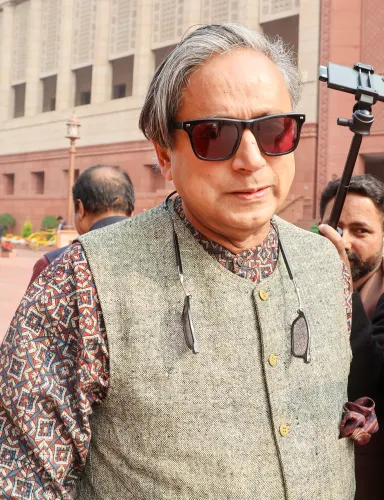
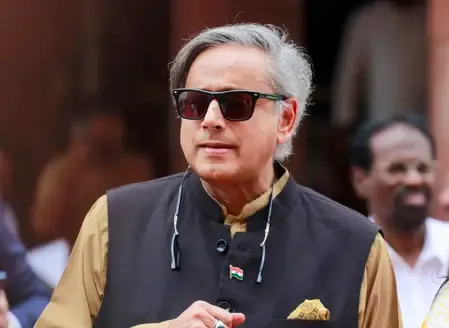
A parliamentary committee's scrutiny of one of India's most consequential bilateral relationships has drawn cross-border attention — and Congress MP Dr. Shashi Tharoor, a member of the Parliamentary Standing Committee on External Affairs, noted that coverage on both sides of the India-Bangladesh border has picked up the committee's recommendations on Sunday, August 2, 2026.
What the committee examined
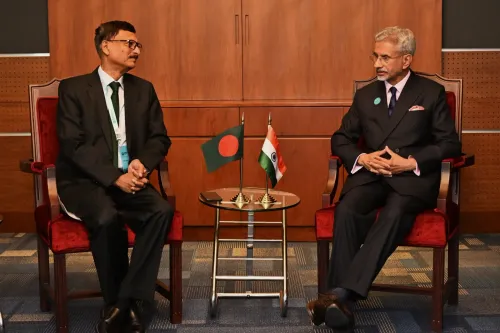
The Parliamentary Standing Committee on External Affairs — Parliament's watchdog on India's diplomatic posture — released a report covering two of the most sensitive threads in the current India-Bangladesh relationship: the phased restoration of Bangladeshi visas and an update on India's handling of the extradition request concerning former Bangladesh Prime Minister Sheikh Hasina.
Tharoor described the media attention on both sides of the border as 'modest' — a signal that the report, while substantive, has not yet broken into the mainstream political conversation it arguably warrants.
The Hasina question and the visa freeze
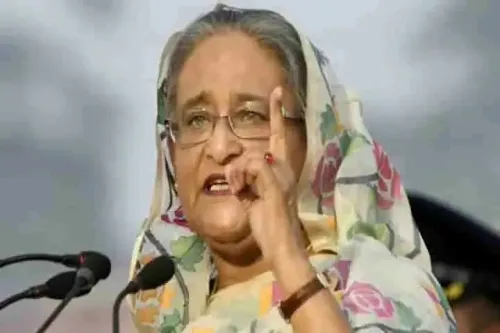
Sheikh Hasina resigned as Bangladesh's Prime Minister in August 2024 amid a wave of mass protests and subsequently sought refuge in India. Her presence on Indian soil has since become a live diplomatic friction point, with Dhaka formally seeking her extradition. The committee's report, per the coverage Tharoor flagged, includes an update on how New Delhi is processing that request — a matter that touches India's treaty obligations, its domestic political calculations, and the temperature of ties with the new Dhaka government.
The visa dimension is equally consequential. Cross-border movement between India and Bangladesh — students, patients, traders, families — depends on a functioning visa regime. The committee's call for a phased restoration of Bangladesh visas suggests the current framework has been disrupted, with real costs to border communities and people-to-people ties that date back to the 1972 Treaty of Friendship, Cooperation and Peace.
Why parliamentary oversight matters here
India and Bangladesh share a relationship built over five decades — from the 1971 liberation war to the 2015 Land Boundary Agreement that finally resolved long-pending enclave disputes. But the 2024 political transition in Dhaka introduced new strains: questions around legal cooperation, migration pressures, and the diplomatic optics of hosting a former head of government wanted by the successor administration.
Parliamentary standing committees do not set policy, but their reports signal legislative intent and can push the Ministry of External Affairs toward formal positions. That the report is drawing attention from Bangladeshi media — not just Indian outlets — underscores that its recommendations land on both sides of the border with real weight.
The full committee report's release in Parliament and any subsequent MEA response on visa timelines and extradition processing will be the next definitive moment in this story.
Point of View
The extradition question is a genuine dilemma — honouring treaty obligations to a new Bangladeshi government versus the political and security calculus of surrendering a former ally. Tharoor's decision to amplify the report's cross-border coverage is a subtle but deliberate move: it signals to the MEA that Parliament is watching, and that the committee's recommendations carry public legitimacy on both sides of the border. The phased visa restoration call, if acted upon, would be the lower-stakes but higher-visibility early deliverable that could ease bilateral friction without resolving the harder Hasina question.
NationPress
16 Sept 2026
Frequently Asked Questions
What did the Parliamentary Standing Committee on External Affairs recommend about Bangladesh?
The committee recommended a phased restoration of Bangladesh visas and sought an update from the government on the status of Bangladesh's extradition request for former Prime Minister Sheikh Hasina.
Why is Sheikh Hasina in India and what is the extradition request about?
Sheikh Hasina resigned as Bangladesh's Prime Minister in August 2024 amid mass protests and sought refuge in India. The new Bangladeshi government has formally requested her extradition to face legal proceedings in Bangladesh.
What is the Parliamentary Standing Committee on External Affairs?
It is a joint parliamentary committee that oversees India's foreign policy and bilateral relations, examining matters referred by the Ministry of External Affairs and producing reports with policy recommendations.
Why were Bangladesh visas disrupted?
The research indicates the current visa regime between India and Bangladesh has been disrupted in the context of the 2024 political transition in Dhaka and subsequent bilateral strains. The committee has called for phased restoration to restore people-to-people ties.
What is Shashi Tharoor's role in this committee?
Dr. Shashi Tharoor is a Congress MP from Thiruvananthapuram and a member of the Parliamentary Standing Committee on External Affairs, which reviewed India's policy stance on Bangladesh.