CM Fadnavis Signs Taj Hotels MoU for Shirdi Airport 5-Star Hotel
Synopsis
Chief Minister Devendra Fadnavis oversaw the signing of an MoU between MADC and IHCL (Taj Group) at Mantralaya, Mumbai, to build a five-star hotel on a 3.7-acre plot at Shirdi International Airport, promising world-class hospitality for pilgrims and new jobs in the region.
Key Takeaways
MoU signed on 17 November 2026 at Mantralaya, Mumbai, between MADC and IHCL (Taj Group) for a five-star hotel at Shirdi International Airport.
The property will be built on a 3.7-acre plot within the airport premises.
Architecture and interiors will incorporate Shirdi's local art and cultural identity .
Primary beneficiaries include pilgrims and tourists visiting the Sai Baba shrine who need quality accommodation near the airport.
The project is expected to generate employment in hotel management and tourism sectors .
Shirdi International Airport has been operational since 2017 , developed by MADC to serve the high-volume pilgrim corridor.
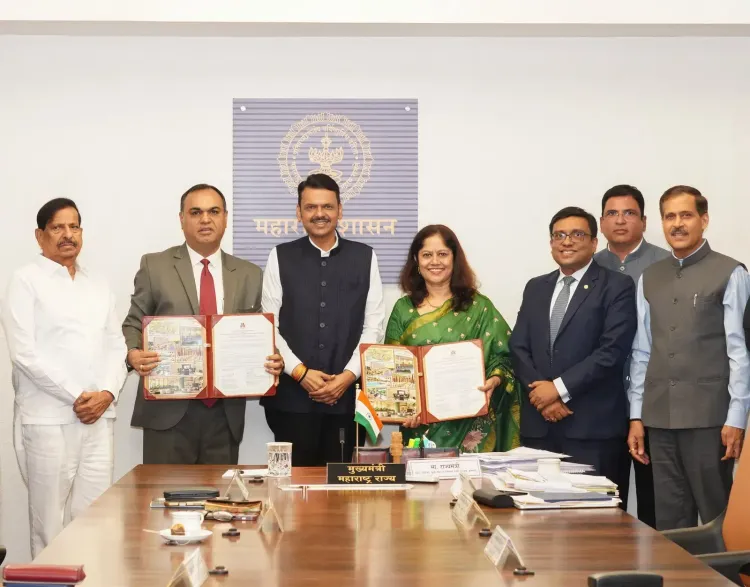
A pilgrim city famous for drawing millions to the shrine of Sai Baba is about to get a world-class address to match. Chief Minister Devendra Fadnavis presided over the signing of a landmark MoU between the Maharashtra Airport Development Company Limited (MADC) and The Indian Hotels Company Limited (IHCL) — the Tata-owned parent of the Taj Group — at Mantralaya, Mumbai, on Tuesday, 17 November 2026, paving the way for a five-star hotel at Shirdi International Airport.
A 3.7-Acre Plot, a Taj Flag, and Shirdi's Skyline
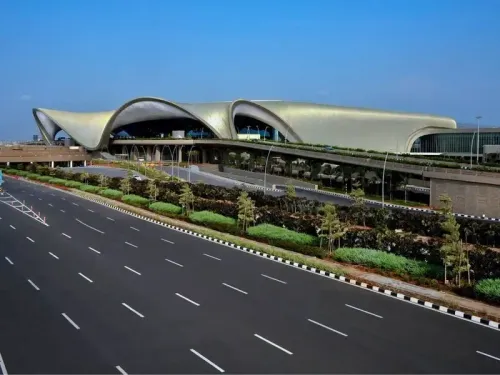
The MoU earmarks a 3.7-acre plot within the Shirdi International Airport premises for the new property. What sets this project apart from a standard luxury hotel is its design brief: the architecture and interiors are explicitly required to reflect Shirdi's local art and distinctive cultural identity, anchoring a global brand to deeply local roots. It is, in that sense, as much a heritage statement as a hospitality one.
IHCL EVP Suma Venkatesh and MADC Managing Director Deepak Kapoor signed the agreement in the presence of Minister Ganesh Naik and Minister of State Adv. Ashish Jaiswal.
Why Shirdi Needs This Now
Shirdi International Airport, developed and operated by MADC, has been operational since 2017 — purpose-built to channel the enormous pilgrim footfall to the Sai Baba shrine. The town attracts tens of thousands of devotees daily, yet high-quality accommodation close to the airport has remained a conspicuous gap. The new Taj property is designed to close exactly that gap, offering 'quality accommodation and hospitality facilities' to devotees and tourists who have historically had to settle for far more modest options.
Maharashtra has steadily pursued integrated airport-and-hospitality models at pilgrimage hubs, signing a series of MoUs with private hotel groups to leverage public land at airport campuses for star-category properties. This agreement is a natural extension of that strategy.
Jobs, Tourism, and the Broader Economic Bet
Beyond comfort for pilgrims, the state is explicitly pitching the project as an employment engine. The MoU flags job creation in hotel management and the tourism sector as a core objective — a pointed signal that the development is meant to lift the local economy around Shirdi, not merely serve inbound visitors. Construction, operations, and ancillary services at a full-scale five-star property routinely generate hundreds of direct and indirect jobs in mid-sized Indian cities.
Maharashtra's calculation is straightforward: a Taj flag at the airport elevates the entire destination's profile, attracting a higher-spending class of pilgrim-tourists who extend stays, explore the region, and multiply the economic multiplier well beyond the hotel's own footprint.
When the first guest checks into a Taj suite overlooking the runway at Shirdi, it will mark the moment a centuries-old pilgrimage circuit fully entered the premium-travel age — and Maharashtra will have set the template for every other religious tourism hub watching.
Point of View
Transforming pilgrim corridors into integrated tourism ecosystems. By mandating culturally rooted design, the Fadnavis government is also signalling that luxury and local identity are not mutually exclusive — a politically astute move in a town where Sai Baba devotion is inseparable from civic pride. The Taj brand brings international credibility that could nudge Shirdi onto the itineraries of overseas pilgrims and heritage tourists who currently bypass it. If executed on schedule, this model will likely be replicated at Maharashtra's other pilgrimage airports, reshaping the state's religious-tourism infrastructure at scale.
NationPress
17 Nov 2026
Frequently Asked Questions
What is the MoU signed at Shirdi Airport about?
The MoU is between MADC and IHCL (Taj Group) to develop a five-star hotel on a 3.7-acre plot within the Shirdi International Airport premises, aimed at providing world-class hospitality for pilgrims and tourists.
Where exactly will the Taj hotel at Shirdi be built?
The hotel will be constructed on a 3.7-acre plot inside the Shirdi International Airport campus in Shirdi, Maharashtra.
Who signed the MADC-IHCL MoU and who was present?
MADC MD Deepak Kapoor and IHCL EVP Suma Venkatesh signed the agreement. CM Devendra Fadnavis presided over the ceremony, with Minister Ganesh Naik and MoS Adv. Ashish Jaiswal also present.
What is MADC and what role does it play at Shirdi Airport?
The Maharashtra Airport Development Company Limited (MADC) is a state public-sector undertaking responsible for developing and operating airports across Maharashtra, including Shirdi International Airport, which it made operational in 2017.
Will the new Taj hotel at Shirdi reflect local culture?
Yes. The MoU explicitly requires that the hotel's architecture and interiors reflect Shirdi's local art and distinctive cultural identity, blending luxury hospitality with the town's heritage.