Tamil Maanila Congress exits NDA, charts independent path in Tamil Nadu
Synopsis
Tamil Maanila Congress has become the first NDA constituent in Tamil Nadu to formally quit the alliance after the AIADMK-led front was pushed to third place in the Assembly elections. President G.K. Vasan insists there is no ideological rift — but the exit signals how badly the alliance's electoral collapse has fractured its smaller partners.
Key Takeaways
Tamil Maanila Congress (Moopanar) formally exited the NDA on 14 June , announced by party president G.K.
TMC(M) is the first NDA constituent in Tamil Nadu to formally withdraw following the alliance's third-place finish in the recent Assembly elections.
Vasan cited cadre mobilisation and grassroots expansion — not ideological differences — as the reason for the exit.
The party was founded in 1996 by G.K.
Moopanar after a split from the INC and played a key role in the DMK -led alliance's 1996 election sweep.
Vasan left open the possibility of future electoral alliances, saying the current priority is rebuilding the party independently.
Tamil Maanila Congress (Moopanar) on Sunday, 14 June formally withdrew from the National Democratic Alliance (NDA), declaring that the party would pursue an independent political course to rebuild its organisational strength across Tamil Nadu. The announcement marks the first formal exit of an NDA constituent in the state following the alliance's poor showing in the recent Assembly elections.
What the Party Said
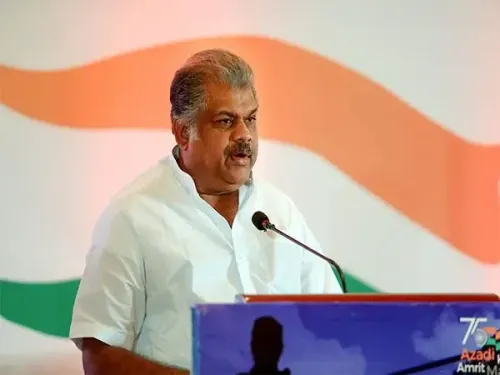
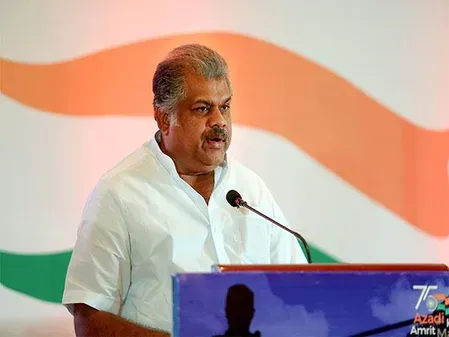
TMC(M) president G.K. Vasan made the announcement after a meeting of the party's executive committee in Chennai. He was emphatic that the decision carried no ideological undercurrent. 'We have no differences of opinion with the BJP, the AIADMK, or any other parties in the alliance. The decision has been taken solely to strengthen the Tamil Maanila Congress as an independent political movement,' Vasan said.
He acknowledged a structural tension that many smaller alliance partners face: cadre-level responsibilities and grassroots organisational drives are often constrained when a party operates within a coalition framework. 'Alliances are necessary during elections, but at this stage our focus is on rebuilding and strengthening the party,' he added.
Electoral Context: A Third-Place Finish
The exit follows a bruising electoral cycle for the AIADMK-led NDA, which was pushed to the third position in the recently concluded Tamil Nadu Assembly elections — a result that prompted deep introspection among alliance partners. The TMC(M) was among those who bore the cost of the alliance's underperformance without the cushion of a strong independent identity to fall back on.
Vasan did not close the door on future electoral partnerships. 'The TMC(M) is leaving the NDA while maintaining cordial and friendly relations with all its allies,' he said, signalling that the departure is strategic rather than acrimonious.
Historical Background of TMC(M)
The Tamil Maanila Congress was founded in 1996 by veteran Congress leader G.K. Moopanar after a split from the Indian National Congress (INC) over the latter's decision to ally with the AIADMK under J. Jayalalithaa. The newly formed party quickly became a significant political force, playing a pivotal role in the Dravida Munnetra Kazhagam (DMK)-led alliance's landslide victory in the 1996 Tamil Nadu Assembly elections.
Following Moopanar's death in 2001, the party went through several realignments before being revived under his son, G.K. Vasan, a former Union Minister. The party's trajectory since then has been one of diminishing electoral returns — a trend Vasan is now openly seeking to reverse.
What Comes Next
With the TMC(M) now functioning outside any formal alliance, the party faces the dual challenge of cadre mobilisation and visibility in a state where political space is dominated by the DMK and the AIADMK. Vasan's bet is that an independent identity — free from the compromises of coalition arithmetic — will attract both workers and voters who feel unrepresented. How the party performs in local body elections and by-polls in the coming months will be an early indicator of whether that calculation holds.
Point of View
But the harder truth is that the TMC(M) has struggled to demonstrate independent electoral relevance for over two decades. Rebuilding outside an alliance in a state where the DMK-Congress combine and a resurgent AIADMK dominate the political landscape is a high-risk wager. The real test will come at the next local body polls, not in press statements.
NationPress
25 Sept 2026
Frequently Asked Questions
Why has Tamil Maanila Congress quit the NDA?
TMC(M) president G.K. Vasan said the party exited the NDA to focus on rebuilding its organisational base and expanding its independent political presence in Tamil Nadu. He stressed there were no ideological differences with BJP, AIADMK, or other alliance partners.
Is TMC(M) the first NDA ally to leave the alliance in Tamil Nadu?
Yes, the Tamil Maanila Congress is the first constituent of the AIADMK-led NDA in Tamil Nadu to formally exit the alliance following the recent Assembly elections, in which the alliance was pushed to third place.
What is the history of Tamil Maanila Congress?
Tamil Maanila Congress was founded in 1996 by veteran Congress leader G.K. Moopanar after a split from the INC over its alliance with the AIADMK under J. Jayalalithaa. The party played a key role in the DMK-led alliance's sweeping 1996 Assembly election victory. After Moopanar's death in 2001, the party was revived by his son G.K. Vasan.
Will TMC(M) contest future elections alone?
Vasan indicated the party will function independently for now to strengthen its cadre base, but did not rule out electoral alliances in the future. 'Alliances are necessary during elections, but at this stage our focus is on rebuilding and strengthening the party,' he said.
How did the NDA perform in the recent Tamil Nadu Assembly elections?
The AIADMK-led NDA was pushed to the third position in the recently concluded Tamil Nadu Assembly elections, a result that prompted introspection among alliance partners and is widely seen as a key trigger for the TMC(M)'s decision to exit.