Giriraj Singh warns: no room for anarchy in India
Synopsis
Union Textiles Minister Giriraj Singh issued a stern warning on 9 November 2026, declaring that conspiracies to spread unrest in India will never succeed and that the country's people stand firmly for progress, leaving no room for anarchy.
Key Takeaways
Union Textiles Minister Giriraj Singh posted a strong warning on 9 November 2026 against those seeking to spread unrest in India.
He called the alleged efforts a 'vile conspiracy' ( kootsit shadyantra ) and said it will never succeed.
Singh asserted that India's people are committed to progress and construction, not anarchy.
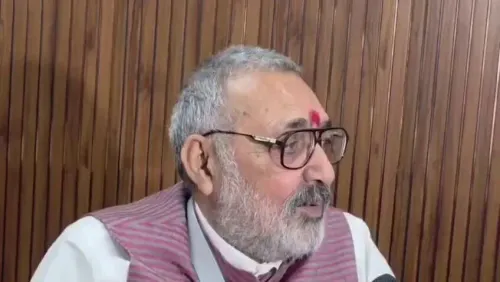
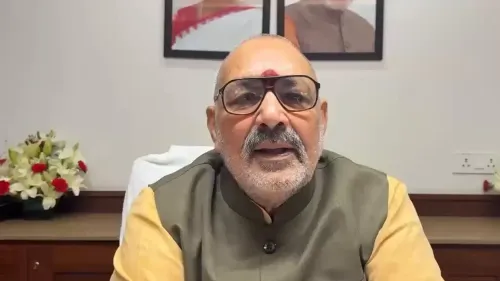
The post included a video , suggesting it was anchored to a specific visual context, though no triggering event was named directly.
The statement aligns with the BJP's long-standing public positioning of governance and stability over disruption.
India's spirit of progress, Union Textiles Minister Giriraj Singh declared on Monday, 9 November 2026, is armour enough against those who plot to sow unrest — and he wants the plotters to hear it plainly.
Posting on X, the senior BJP leader and Lok Sabha MP from Begusarai, Bihar, issued a sharp, direct warning: 'भारत में अशांति फैलाने की मंशा रखने वाले यह समझ लें कि उनकी यह कुत्सित षड्यंत्र इस देश में कभी सफल नहीं होगी।' ('Let those who intend to spread unrest in India understand that their vile conspiracy will never succeed in this country.') He went further: 'The people of India stand for progress and construction — there is no place for anarchy here.'
A message aimed squarely at would-be disruptors
The language Singh chose is deliberately categorical. Words like kootsit shadyantra — 'vile conspiracy' — are not diplomatic hedging; they signal that the minister views whatever prompted this statement as an organised, malicious effort rather than spontaneous unrest. The post carries a video, suggesting it was accompanied by visual context, though the specific triggering event is not named in the post itself.
What is clear is the framing: the Indian public, Singh argues, is fundamentally oriented toward building and growth, and that orientation itself is the country's strongest defence against destabilisation.
BJP's stability-and-development pitch — and why it recurs
This is not the first time senior BJP ministers have drawn a sharp line between 'development' and 'disruption' in their public messaging. The party has consistently positioned itself as the custodian of national stability, contrasting governance and economic momentum with what it characterises as politically motivated chaos. Singh's post fits squarely inside that rhetorical tradition — but the directness and the choice of the word shadyantra (conspiracy) add a sharper edge than a routine governance statement.
As Textiles Minister, Singh oversees a sector that employs tens of millions of workers and is a key pillar of India's manufacturing and export ambitions. Social stability is not abstract for him — it is a prerequisite for the industrial investment and supply-chain continuity his ministry depends on.
The country's people, Singh insisted, have made their choice: progress over chaos. Any attempt to overturn that verdict, he suggested, is not just doomed — it has already failed before it began.
Point of View
Implying a coordinated threat rather than incidental disorder. For a minister whose portfolio depends on industrial calm and investor confidence, the statement also carries a functional subtext: unrest is bad for business, and the government will not tolerate it. Watch for opposition parties to test whether the warning is tied to any specific event, and whether Parliament picks up the thread when it next sits.
NationPress
9 Nov 2026
Frequently Asked Questions
What did Giriraj Singh say about unrest in India?
On 9 November 2026, Union Textiles Minister Giriraj Singh warned that those conspiring to spread unrest in India will never succeed, stating that the country's people stand for progress and there is no place for anarchy.
Why did Giriraj Singh make this statement?
Singh did not name a specific triggering event in his post, but the strong language — including the word 'vile conspiracy' — suggests the statement was a response to perceived organised attempts to destabilise the country. His post also included a video.
Who is Giriraj Singh?
Giriraj Singh is India's Union Minister of Textiles, a senior BJP leader, and the Lok Sabha MP from Begusarai, Bihar. He is known for forthright public statements on governance and national issues.
What does 'kootsit shadyantra' mean?
'Kootsit shadyantra' is a Hindi phrase meaning 'vile conspiracy'. Singh used it to describe the alleged plots by those seeking to spread unrest in India.
How does this statement fit BJP's governance messaging?
The BJP has consistently framed its politics around national stability and economic development, contrasting it with what it describes as politically motivated disruption. Singh's warning follows that well-established pattern, though the directness of his language is notably sharp.