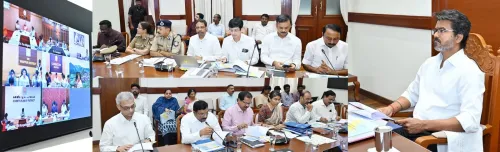
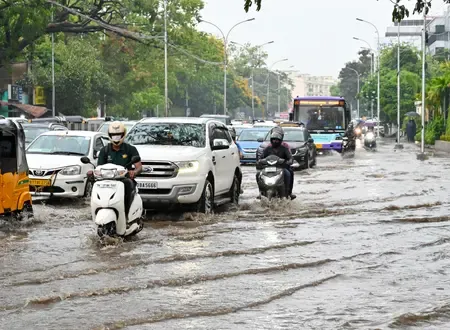
Tamil Nadu CM chairs Revenue and Disaster Management review
Synopsis
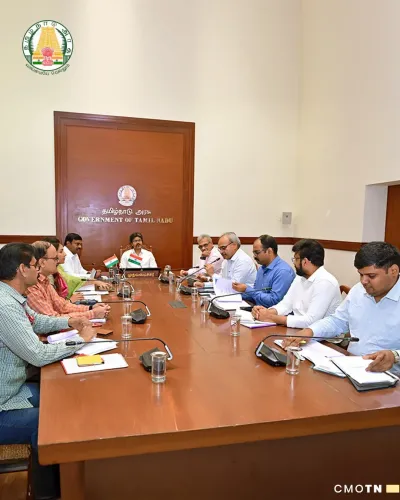
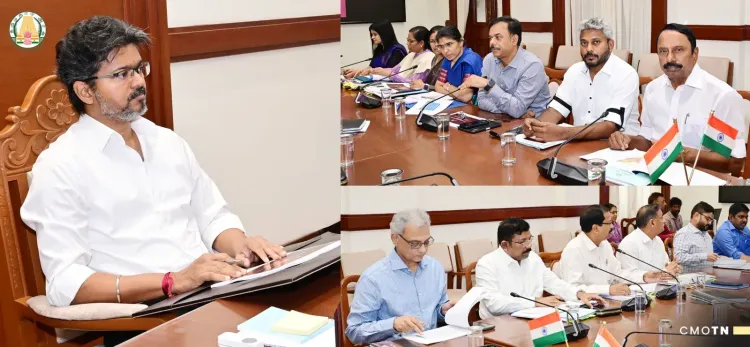
Chief Minister Joseph Vijay chaired a review of Tamil Nadu's Revenue and Disaster Management Department at the Chennai Secretariat on 2 July 2026, signalling early administrative attention to monsoon preparedness and ongoing relief schemes.
Key Takeaways
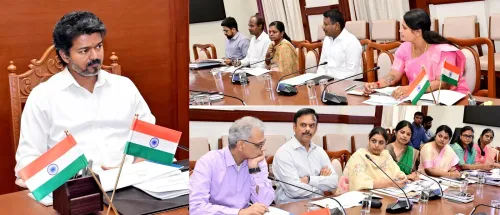
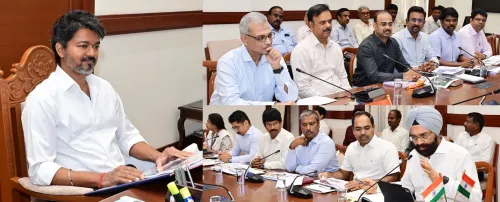
Chief Minister Joseph Vijay chaired the review meeting on 2 July 2026 at the Chief Secretariat, Chennai .
The meeting focused on the schemes and operations of the Revenue and Disaster Management Department .
Tamil Nadu's Revenue and Disaster Management Department coordinates with the State Disaster Management Authority under the Disaster Management Act, 2005.
The state faces annual disaster risk from the northeast monsoon season (October–December) , making pre-season reviews a critical governance exercise.
Outcomes from such reviews typically include directives to district collectors and potential revisions to the State Disaster Response Fund .
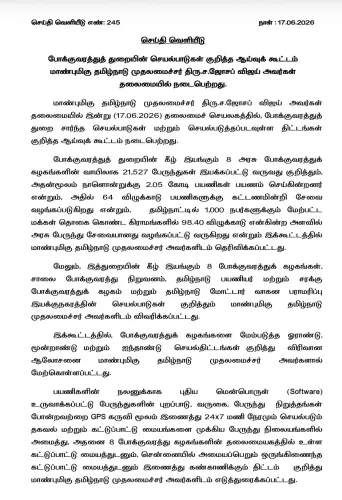
The Chief Minister's Office of Tamil Nadu announced on Thursday, 2 July 2026 that Chief Minister Joseph Vijay chaired a departmental review meeting at the Secretariat in Chennai, examining the schemes and operations of the Revenue and Disaster Management Department.
Context
The post, shared by the official CMO Tamil Nadu handle, states in Tamil: 'வருவாய் மற்றும் பேரிடர் மேலாண்மைத் துறையின் திட்டங்கள் மற்றும் செயல்பாடுகள் குறித்த ஆய்வுக்கூட்டம் நடைபெற்றது' — meaning a 'review meeting on the schemes and operations of the Revenue and Disaster Management Department was held.' The meeting was convened at the Chief Secretariat (தலைமைச் செயலகம்), the nerve centre of Tamil Nadu's administrative machinery in Chennai.
The Revenue and Disaster Management Department is responsible for land revenue administration, disaster preparedness, and the distribution of relief to affected communities across the state. It also serves as the coordinating body for the Tamil Nadu State Disaster Management Authority, constituted under the Disaster Management Act, 2005.
Policy Backdrop
Tamil Nadu is among India's most disaster-exposed states, facing annual threats from the northeast monsoon season that typically runs from October to December. The state has a well-documented history of convening pre-monsoon departmental reviews, a practice institutionalised after catastrophic events such as the 2015 Chennai floods and Cyclone Gaja in 2018.
Successive governments have used such review meetings to audit the readiness of district revenue machinery, assess the status of ongoing relief schemes, and align disaster response protocols ahead of high-risk weather periods. These sessions typically involve senior officials from revenue divisions, district collectors, and representatives of the State Disaster Management Authority.
Stakeholders and Impact
The primary beneficiaries of a well-functioning Revenue and Disaster Management Department are disaster-affected families across Tamil Nadu's coastal and flood-prone districts. Timely review meetings at the Chief Minister's level signal administrative priority and can accelerate the clearance of pending relief disbursements.
Revenue officials at the district and taluk levels are also key stakeholders, as directives emerging from such high-level reviews often translate into operational targets and timelines for field staff. Civil society groups working on disaster resilience in the state view CM-chaired meetings as an important accountability mechanism.
What's Next
Observers will watch for any follow-up announcements on monsoon preparedness measures, budget revisions for state relief funds, or new scheme launches emerging from the 2 July 2026 review. With the northeast monsoon still months away, the timing of this meeting suggests the administration is seeking an early head start on readiness planning. Any directives issued to district collectors or augmentation of the State Disaster Response Fund would be the clearest indicators of outcomes from today's deliberations.
Point of View
Demonstrating executive engagement with disaster preparedness after years in which flood response has been a flashpoint in state politics. Whether concrete policy outputs follow will determine whether this is routine oversight or the start of a more ambitious disaster resilience push.
NationPress
2 Jul 2026
Frequently Asked Questions
What was the review meeting chaired by Tamil Nadu CM Joseph Vijay about?
The meeting, held on 2 July 2026 at the Chennai Secretariat, reviewed the schemes and operations of Tamil Nadu's Revenue and Disaster Management Department, which handles land revenue administration, disaster preparedness, and relief distribution.
Why does Tamil Nadu hold pre-monsoon disaster management reviews?
Tamil Nadu is highly vulnerable to annual northeast monsoon floods and cyclones. Pre-monsoon reviews help the government audit district-level readiness, clear pending relief disbursements, and align disaster response protocols before the October–December high-risk period.
What is the Tamil Nadu State Disaster Management Authority?
It is the state body constituted under the national Disaster Management Act, 2005, tasked with coordinating disaster preparedness and response across Tamil Nadu, working closely with the Revenue and Disaster Management Department.
What outcomes can be expected from this review meeting?
Possible outcomes include directives to district collectors, revisions to the State Disaster Response Fund budget, and announcements on new monsoon preparedness measures or relief schemes in the coming weeks.
Which department in Tamil Nadu manages disaster relief and revenue administration?
The Revenue and Disaster Management Department handles both land revenue administration and disaster preparedness and relief, making it one of the most operationally critical departments in the state government.