Tamil Nadu leads India in organ donation, accounts for one-third of national total
Synopsis
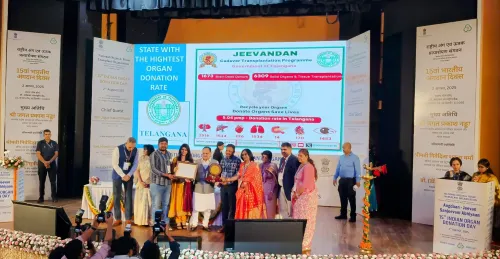
Tamil Nadu accounts for nearly one-third of all organ donations in India — a remarkable share for a single state in a country where donation rates remain critically low. At a Coimbatore ceremony honouring donors, Minister K.G. Arun Raj paired that pride with a sharp warning: any hospital or institution found misusing the transplantation system will face the strictest possible government action.
Key Takeaways
Tamil Nadu accounts for nearly one-third of all deceased organ donations in India, holding the top national position .
Arun Raj made the remarks at the 'Life After Life' ceremony in Coimbatore on 3 August .
A Wall of Honour was inaugurated to recognise organ donors and their families.
Transplant procedures were tightened following the kidney theft scandal ; the government has warned of strict action against any future irregularities.
The Minister stressed that donor family consent is central to the programme's success and deserves formal recognition.
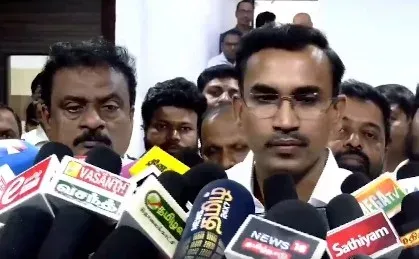
Tamil Nadu continues to lead the country in deceased organ donation, accounting for nearly one-third of all organ donations in India, state Health Minister K.G. Arun Raj said on Sunday, 3 August. The Minister made the remarks following the 'Life After Life' organ donor appreciation ceremony held in Coimbatore, where he also issued a firm warning against irregularities in the transplantation system.
Wall of Honour Inaugurated in Coimbatore
The ceremony saw the inauguration of a Wall of Honour dedicated to organ donors — individuals whose decisions, often made by bereaved families at moments of profound grief, have given critically ill patients a renewed chance at life. Minister Arun Raj described the inauguration as a deeply emotional experience, noting that the occasion also recalled a similar personal loss within his own family.
The Wall of Honour was established as a lasting tribute to donors whose organs have saved or transformed the lives of patients awaiting transplantation across the state.
Zero Tolerance for Irregularities
Addressing concerns around the integrity of the organ transplantation system, Arun Raj said procedures had been made significantly more stringent in the wake of the kidney theft scandal that had earlier shaken public confidence. The government subsequently reviewed and streamlined processes wherever required, he said, to improve efficiency without compromising on transparency or patient safeguards.
He was emphatic that any easing of procedural hurdles should not be mistaken for a relaxation of oversight. 'Any hospital, institution or organisation found indulging in irregularities connected with organ donation or transplantation would face the strictest possible action from the government,' he warned.
Tamil Nadu's National Standing in Organ Donation
Tamil Nadu has long been recognised as the benchmark state for deceased organ donation in India. The Minister said he was proud that the state's contribution amounted to nearly one-third of the country's total, and that it continued to hold the top position nationally in deceased organ donation. This performance is widely attributed to sustained public awareness campaigns, a robust hospital network, and the willingness of donor families to consent during their most difficult moments.
Notably, the state's lead comes even as India's overall organ donation rates remain low compared to global benchmarks, making Tamil Nadu's share all the more significant in meeting the country's transplantation demand.
Importance of Donor Families
Arun Raj stressed that the transplantation programme's success depended heavily on the willingness of bereaved families to give consent for organ donation. He said the contribution of such families deserved formal recognition, as their decisions — taken under immense emotional pressure — enabled critically ill patients to receive a new lease of life.
The 'Life After Life' programme was designed precisely to honour these families and donors, while building greater public awareness about the life-saving potential of organ donation. The government remains committed to maintaining and strengthening public trust in the system, he added.
With Tamil Nadu setting the national standard, the focus now shifts to whether other states can replicate its model — and whether the Centre will adopt elements of the Tamil Nadu framework in a broader national push.
Point of View
But enforcement will matter more than warnings. The deeper challenge is national: India's deceased donor rate remains among the lowest in the world, and without a replicable Tamil Nadu-style framework in other states, the transplant waiting list will keep growing regardless of what one state achieves.
NationPress
17 Sept 2026
Frequently Asked Questions
How much of India's organ donations does Tamil Nadu account for?
Tamil Nadu accounts for nearly one-third of all deceased organ donations in India, making it the top-ranked state nationally in this category, according to Minister K.G. Arun Raj.
What is the 'Life After Life' programme?
'Life After Life' is a Tamil Nadu government initiative that honours organ donors and their families, raises public awareness about organ donation, and recognises the life-saving impact of transplantation. The latest edition was held in Coimbatore on 3 August.
What is the Wall of Honour inaugurated in Coimbatore?
The Wall of Honour is a permanent tribute inaugurated at the Coimbatore ceremony to recognise organ donors whose decisions enabled critically ill patients to receive transplants. Minister K.G. Arun Raj described its inauguration as a deeply emotional experience.
What action will the Tamil Nadu government take against transplant irregularities?
Minister K.G. Arun Raj warned that any hospital, institution or organisation found involved in irregularities related to organ donation or transplantation will face the strictest possible government action. Procedures were already tightened following the kidney theft scandal.
Why did Tamil Nadu tighten its organ transplantation procedures?
The state reviewed and streamlined its transplantation procedures following a kidney theft scandal that raised serious concerns about the integrity of the system. The government has said efficiency improvements will not come at the cost of transparency or safeguards.