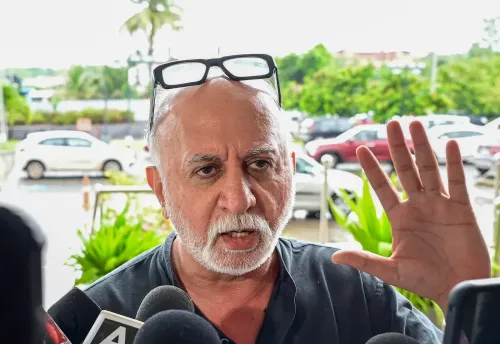
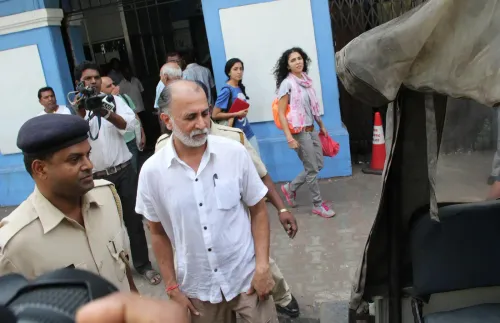
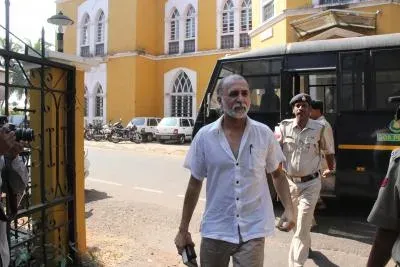
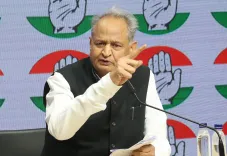
Tarun Tejpal surrenders, sent to Colvale jail to serve 10-year rape sentence

Synopsis
After more than a decade of legal proceedings, former Tehelka Editor-in-Chief Tarun Tejpal is now behind bars. Forced by the Supreme Court to surrender as a precondition for his appeal, he walked into Colvale Central Jail on 14 September — but his legal battle is far from over, with the Goa government also pushing the apex court to extend his sentence beyond 10 years.
Key Takeaways
Tarun Tejpal surrendered before the Additional Sessions Court, Mapusa on 14 September 2026 and was lodged at Colvale Central Jail, North Goa .
The Supreme Court on 25 August directed the 62-year-old to surrender within two weeks or forfeit his right to have his appeal heard on merits.
The Bombay High Court convicted him on 6 August , overturning a May 2021 sessions court acquittal, and sentenced him to 10 years rigorous imprisonment.
He was convicted under IPC Sections 376(2)(f) , 376(2)(k) (rape), 354A (sexual harassment), and 354B (assault with intent to disrobe).
The Goa government has separately petitioned the Supreme Court to enhance his sentence beyond 10 years .
The case stems from an alleged sexual assault in a hotel elevator in Goa in November 2013 .
Former Tehelka Editor-in-Chief Tarun Tejpal surrendered before a Goa court on Monday, 14 September 2026, and was subsequently lodged at the Central Jail, Colvale, in North Goa, weeks after the Bombay High Court convicted him in a 2013 rape case and sentenced him to 10 years of rigorous imprisonment. The surrender marks the beginning of his prison term after a legal battle spanning more than a decade.
How the Surrender Came About
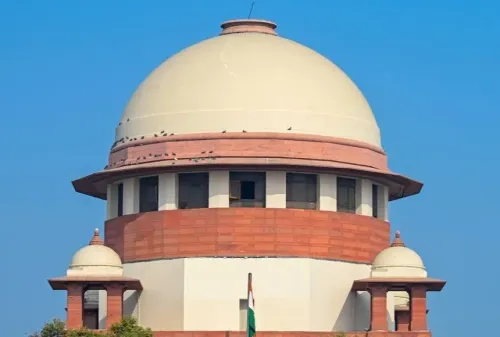
The Supreme Court on 25 August directed the 62-year-old journalist to surrender within two weeks as a condition for his appeal against the conviction to be heard on merits. The apex court had rejected his plea seeking urgent relief and made it clear that his appeal would be considered only after he filed a surrender certificate.
Tejpal subsequently surrendered before the Additional Sessions Court at Mapusa, following which he was transferred to Colvale Central Jail to begin serving his sentence. The court had fixed 22 September as the deadline for filing the surrender certificate, and the matter was to be listed on that date for hearing on the merits of his appeal — a hearing that now becomes possible.
Arguments Before the Supreme Court
Before the surrender directive was issued, senior advocate Kapil Sibal, appearing for Tejpal, argued that his client had remained on bail throughout most of the proceedings, barring an initial six months, and is now a senior citizen. Sibal also cited the Supreme Court (Enlargement of Criminal Appellate Jurisdiction) Act, 1970, contending that the court could consider the exemption plea alongside the appeal on merits.
Solicitor General Tushar Mehta, representing the Goa government, opposed the plea, arguing that Tejpal's appeal could not be entertained unless he either surrendered and produced a surrender certificate or obtained a formal exemption. Mehta also submitted that reliance on the 1970 Act was misplaced, as it was a temporary legislation and appellate jurisdiction is now governed by applicable statutory provisions. A single-judge bench of Justice Alok Aradhe sided with the state's position and directed Tejpal to surrender within two weeks.
The Bombay High Court Conviction
On 6 August, a division bench of Justices Neela Gokhale and Amit Jamsandekar of the Bombay High Court set aside Tejpal's earlier acquittal by a sessions court and convicted him of rape and related offences under the Indian Penal Code (IPC). He was convicted under Sections 376(2)(f) and 376(2)(k) (rape), 354A (sexual harassment), and 354B (assault or use of criminal force against a woman with intent to disrobe).
Notably, the Goa government has separately moved the Supreme Court seeking enhancement of Tejpal's sentence beyond the 10 years imposed by the High Court — a parallel proceeding that will add another dimension to the apex court hearings.
The Case: A Decade-Long Legal Journey
The case originated from allegations by a junior colleague that Tejpal sexually assaulted her inside an elevator of a luxury hotel in Goa during an event in November 2013. The Goa Police registered an FIR and arrested Tejpal that same month after a local court rejected his anticipatory bail plea. The Supreme Court granted him regular bail in July 2014.
In May 2021, the sessions court acquitted Tejpal, ruling that the prosecution had failed to prove its case beyond reasonable doubt and citing alleged lapses in the investigation. The Goa government challenged that acquittal before the Bombay High Court, arguing that the trial court had erred in appreciating the evidence — a challenge the High Court upheld this August.
With Tejpal now behind bars and the Supreme Court poised to hear his appeal on merits, the case enters what could be its final legal phase — though the Goa government's parallel plea for a harsher sentence adds further uncertainty to the outcome.
Point of View
Not a default right for the privileged. What complicates the picture further is the Goa government's bid to enhance the sentence: if the apex court agrees, it would signal that courts are prepared to take a harder line on institutional abuse of power — Tejpal was the survivor's editor and employer. The case will be watched as a test of whether India's legal system treats professional hierarchy as an aggravating, not a mitigating, factor in workplace sexual assault.
NationPress
14 Sept 2026
Frequently Asked Questions
Why did Tarun Tejpal surrender before a Goa court on 14 September 2026?
The Supreme Court on 25 August directed Tejpal to surrender within two weeks as a condition for his appeal against the Bombay High Court conviction to be heard on merits. He surrendered before the Additional Sessions Court at Mapusa on 14 September and was sent to Colvale Central Jail.
What did the Bombay High Court convict Tarun Tejpal of?
The Bombay High Court convicted Tejpal on 6 August under IPC Sections 376(2)(f) and 376(2)(k) (rape), 354A (sexual harassment), and 354B (assault with intent to disrobe), sentencing him to 10 years of rigorous imprisonment. The court overturned a sessions court acquittal from May 2021.
What is the background of the Tarun Tejpal rape case?
The case dates to November 2013, when a junior colleague alleged that Tejpal sexually assaulted her inside a hotel elevator in Goa during a Tehelka event. He was arrested in November 2013 after a local court rejected his anticipatory bail, was granted regular bail by the Supreme Court in July 2014, and was acquitted by a sessions court in May 2021 before the Bombay High Court overturned that acquittal in August 2026.
Can Tarun Tejpal still appeal against his conviction?
Yes. The Supreme Court has agreed to hear his appeal on merits now that he has surrendered and the surrender certificate has been filed. The matter was to be listed on 22 September 2026. However, the Goa government has also moved the Supreme Court seeking an enhancement of his sentence beyond the current 10 years.
Why did the Supreme Court reject Tejpal's plea for exemption from surrender?
The court, through a bench led by Justice Alok Aradhe, held that Tejpal's appeal could not be heard on merits unless he either surrendered or obtained a formal exemption. Solicitor General Tushar Mehta, appearing for the Goa government, successfully argued that the legal basis cited by Tejpal's counsel — the Supreme Court (Enlargement of Criminal Appellate Jurisdiction) Act, 1970 — was a temporary legislation and did not apply to the present proceedings.