Teen girl's stem cell donation saves brother from leukemia at Chandigarh hospital
Synopsis
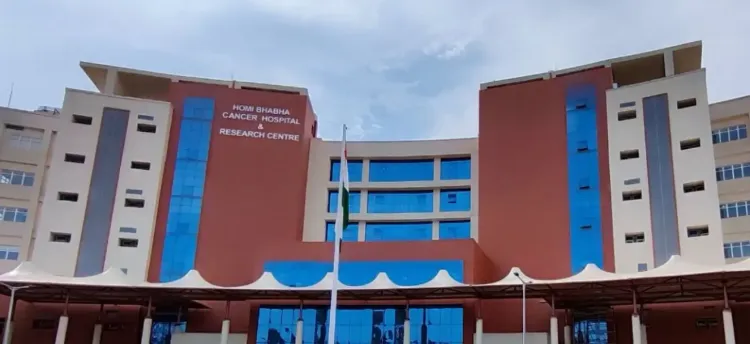
A 17-year-old girl's stem cell donation has given her 10-year-old brother a second shot at life after his second relapse of acute lymphoblastic leukemia — and made history at Chandigarh's Homi Bhabha Cancer Hospital, which completed its first-ever allogeneic bone marrow transplant. The boy, from Durgapur, West Bengal, was discharged healthy on 15 September, with over ₹14 lakh in financial aid facilitated by the hospital's social work team.
Key Takeaways
Homi Bhabha Cancer Hospital and Research Centre (HBCH&RC) near Chandigarh completed its first allogeneic bone marrow transplant (BMT) on a 10-year-old boy from Durgapur, West Bengal .
The boy's 17-year-old sister was identified as the most compatible donor and donated her stem cells.
The patient had suffered a second relapse of acute lymphoblastic leukemia (ALL) in April before travelling to HBCH&RC for treatment.
He was discharged in good health on Tuesday, 15 September 2026 , following successful engraftment and post-transplant monitoring.
The hospital facilitated over ₹14 lakh in financial assistance through government schemes and CSR support.
Since its BMT programme launched in 2024 , HBCH&RC has performed 15 stem cell transplants and 3 CAR-T cell therapy infusions .
A 17-year-old girl donated her stem cells to her 10-year-old brother, helping him recover from a second relapse of acute lymphoblastic leukemia (ALL), as Homi Bhabha Cancer Hospital and Research Centre (HBCH&RC) near Chandigarh successfully completed its first allogeneic bone marrow transplant (BMT). The child, originally from Durgapur, West Bengal, was discharged in good health on Tuesday, 15 September 2026, following weeks of intensive post-transplant monitoring.
Background: A Second Relapse and a Long Journey
The boy was first diagnosed with acute lymphoblastic leukemia (ALL) and, after an initial treatment cycle, suffered a second relapse in April. His family travelled from Durgapur to HBCH&RC, a unit of Tata Memorial Centre under the Department of Atomic Energy, seeking advanced care. Following intensive chemotherapy, he achieved remission. Given the elevated risk of further recurrence, the medical team recommended an allogeneic stem cell transplant as the best curative option — a procedure in which a patient's diseased blood-forming system is replaced with healthy stem cells from a compatible donor.
The Transplant: Sister Steps Up as Donor
Detailed donor evaluation identified the boy's elder sister as the most compatible match. Her stem cells were collected and infused intravenously into her brother. The transplanted cells successfully engrafted, and the child responded well to subsequent monitoring and supportive care.
Pediatric hematologist and BMT physician Dr Jasmeet Sidhu described the outcome: 'The patient's elder sister was identified as the most suitable donor after detailed donor evaluation. Her stem cells were collected and infused into her brother through a vein. The transplanted cells successfully engrafted and, following close monitoring and supportive care, the child has now recovered and was discharged from the hospital, in good health, on Tuesday. We will continue to closely monitor him during the post-transplant period.'
Hospital Facilities and Financial Support
Head of Medical Oncology Dr Seema Gulia noted that the hospital's dedicated paediatric oncology unit is equipped with modern treatment modalities including monoclonal antibodies, chimeric antigen receptor T-cell (CAR-T) therapy, immunotherapies, and targeted therapies. She added that treatment at HBCH&RC is 'highly subsidised', making advanced cancer care accessible to families from across the region.
The hospital's medical social work team facilitated more than ₹14 lakh in financial assistance for the family through government schemes and corporate social responsibility (CSR) support, and also arranged accommodation during the treatment period.
A Milestone for North India's Cancer Care
Hospital Director Dr Ashish Gulia called the outcome 'not only a medical milestone but a deeply human one', adding that the hospital ensured the family was supported 'medically, emotionally, as well as financially.'
Since its BMT programme launched in 2024, HBCH&RC has performed 15 stem cell transplants and 3 CAR-T cell therapy infusions, broadening access to potentially curative treatments for patients with difficult-to-treat blood cancers across North India. The hospital has positioned itself as an affordable referral centre for complex haematological malignancies in the region, and the medical team says it will continue close post-transplant surveillance of the young patient in the weeks ahead.
Point of View
Completed on a child from West Bengal who travelled across the country for treatment, underscores a persistent access gap: families with complex cancers still migrate hundreds of kilometres for procedures that should be regionally available. The ₹14 lakh in facilitated financial aid also raises the question of what happens to families who don't reach a hospital with an active social work team. Scaling the transplant programme and embedding financial navigation into the care pathway — not just celebrating firsts — is the real policy challenge here.
NationPress
15 Sept 2026
Frequently Asked Questions
What is an allogeneic bone marrow transplant and why was it needed?
An allogeneic bone marrow transplant is a procedure in which a patient's diseased blood-forming system is replaced with healthy stem cells from a compatible donor. It was recommended for the 10-year-old boy because he had suffered a second relapse of acute lymphoblastic leukemia (ALL), making the risk of recurrence after chemotherapy alone unacceptably high.
Who donated stem cells and how was the donor chosen?
The boy's 17-year-old elder sister was selected as the donor after a detailed compatibility evaluation. She was identified as the most suitable match, and her stem cells were collected and infused intravenously into her brother.
What is Homi Bhabha Cancer Hospital and Research Centre?
HBCH&RC is a unit of Tata Memorial Centre, operating under the Department of Atomic Energy. Located near Chandigarh, it offers subsidised cancer treatment and runs a dedicated paediatric oncology unit with facilities including CAR-T cell therapy, monoclonal antibodies, immunotherapies, and targeted therapies.
What financial support did the family receive?
The hospital's medical social work team facilitated over ₹14 lakh in financial assistance through government schemes and CSR support, and also arranged accommodation for the family during the treatment period.
How many transplants has HBCH&RC performed since launching its BMT programme?
Since the BMT programme's inception in 2024, HBCH&RC has performed 15 stem cell transplants and 3 CAR-T cell therapy infusions for patients with difficult-to-treat blood cancers across North India.