Tejashwi Yadav flags Rs 3662 cr contingency fund use for pensions

Synopsis
RJD leader Tejashwi Yadav has accused Bihar's NDA government of fiscal mismanagement, citing a Rs 3,662 crore Contingency Fund withdrawal in three months of FY 2026-27 — including for routine pension payments — and alleging the state's fiscal deficit has breached the FRBM ceiling by three to five times.
Key Takeaways
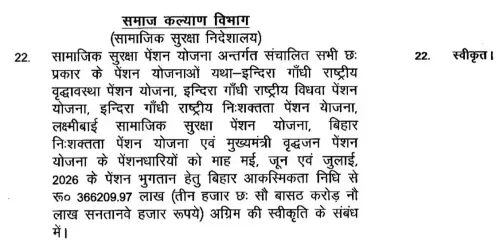
Rs 3,662 crore was reportedly withdrawn from Bihar's Contingency Fund in just the first three months of FY 2026-27 , including for routine social security pension payments.
Under Article 267(2) of the Constitution , the Contingency Fund is meant only for 'unforeseen or emergent' expenditure — not routine monthly disbursements, according to Yadav.
Bihar's fiscal deficit for FY 2025-26 is cited at 11.8 percent , far exceeding the 3 percent FRBM ceiling — roughly three to five times the legal limit.
The NDA government recently amended rules to allow Bihar's Contingency Fund to expand up to 10 percent of budgetary expenditure in a financial year, which Yadav flags as a governance concern.
Yadav has demanded the government explain publicly why regular budget allocations were insufficient for routine pension payments instead of issuing 'misleading press releases.' Social security pensioners — elderly citizens, widows, and persons with disabilities — are directly affected by the reliability of monthly payment flows.
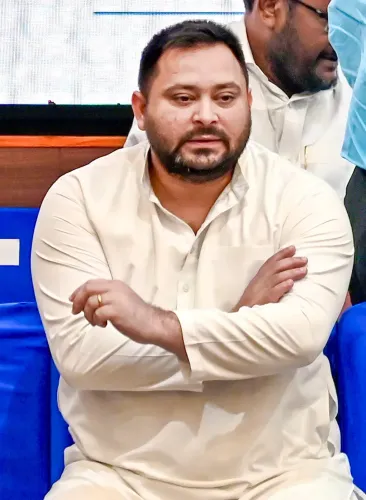
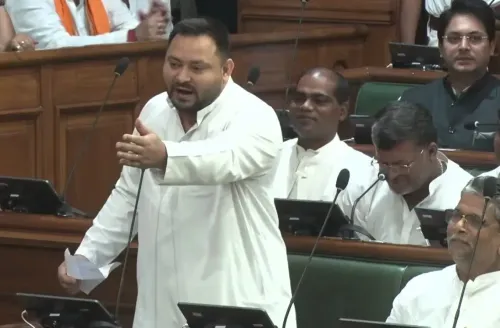
RJD leader Tejashwi Yadav, Leader of the Opposition in the Bihar Legislative Assembly, on Friday, 12 June 2026, launched a sharp attack on the NDA government in Bihar, alleging that the state is 'on the brink of bankruptcy' due to what he called bankrupt politics and inept leadership. He specifically flagged a withdrawal of Rs 3,662 crore from the state's Contingency Fund in just the first three months of financial year 2026-27, including for routine payments such as monthly social security pensions.
Context
In a lengthy post on X, Yadav wrote — 'खज़ाना खाली होने के कारण प्रदेश में अराजकत वित्तीय हालात है' ('The treasury is empty, creating anarchic financial conditions in the state'). He argued that using the Contingency Fund for predictable, recurring payments like monthly pensions is constitutionally impermissible and a sign of acute fiscal stress. The post amounts to one of his most detailed fiscal attacks on the Nitish Kumar-led NDA government in recent months.
Yadav also accused the government of responding to his earlier questions with 'misleading press releases' instead of substantive answers, and called on it to publicly explain why regular budgetary allocations were insufficient for routine disbursements.
Policy Backdrop
The Contingency Fund of a state is governed by Article 267(2) of the Constitution of India, which allows the state legislature to establish such a fund, placed at the disposal of the Governor, exclusively for 'unforeseen expenditure' of an emergent character. Yadav quoted the constitutional provision directly, underlining that 'the expenditure must be of an unforeseen nature or of emergent character' — and argued that monthly pension disbursements, paid regularly for decades into beneficiaries' accounts, cannot qualify as unforeseen.
Separately, the Fiscal Responsibility and Budget Management (FRBM) Act, 2003 mandates that states keep their fiscal deficit within 3 percent of GSDP. Yadav cited Bihar's own budget documents for FY 2026-27, which he says indicate that the state's fiscal deficit for FY 2025-26 reached 11.8 percent — roughly three to five times the FRBM ceiling. He also pointed to a recent NDA government amendment that allows Bihar's Contingency Fund to be expanded up to 10 percent of budgetary expenditure in any given financial year, calling this a further red flag on fiscal governance.
Bihar has historically faced questions about debt servicing and revenue mobilisation. Indian states broadly exceeded FRBM targets in the post-2020 period, but an 11.8 percent deficit figure — if confirmed — would represent a significant outlier requiring explanation.
Stakeholders and Impact
The most directly affected group is Bihar's social security pension beneficiaries — elderly citizens, widows, and persons with disabilities who depend on monthly transfers. Yadav asked pointedly: 'Is pension an unforeseen expenditure? Can our respected elderly citizens and mothers and sisters be treated as a disaster for which disaster funds must be used?' The rhetorical question underscores concerns about payment reliability if regular budget heads are depleted.
Bihar taxpayers and state employees are also stakeholders, as a widening fiscal deficit constrains capital expenditure on infrastructure and development projects. Yadav raised precisely this concern: if contingency funds are consumed by routine expenses, where will money come from for development works and other projects?
What's Next
The opposition's demand is clear: the Bihar government must publicly explain the constitutional and financial rationale for using the Contingency Fund for routine pension payments, and come clean on the state of its finances rather than 'misleading the public.' The Bihar Finance Department is expected to respond, and the matter is likely to be raised in the state legislature. Audit observations from the Comptroller and Auditor General (CAG) on Bihar's finances for FY 2025-26, along with any supplementary budget presented in the monsoon session, will be closely watched as independent benchmarks of the state's fiscal health.
Point of View
Deploying constitutional text and budget figures to shift the political debate from caste arithmetic to governance credibility ahead of future electoral cycles in Bihar. By framing the contingency fund withdrawal as constitutionally impermissible — not merely imprudent — he raises the stakes beyond routine opposition criticism and invites judicial or audit scrutiny. The 11.8 percent fiscal deficit figure, if substantiated by CAG data, would represent a structural indictment of the NDA government's budget management rather than a one-off anomaly. This line of attack also signals that the RJD intends to contest the next Bihar election on an economic-accountability platform, countering the ruling alliance's development narrative with hard fiscal numbers.
NationPress
26 Oct 2026
Frequently Asked Questions
Why is Tejashwi Yadav criticising Bihar's use of the Contingency Fund?
Tejashwi Yadav argues that the Bihar government withdrew Rs 3,662 crore from the Contingency Fund in the first three months of FY 2026-27 for routine payments like monthly social security pensions, which he says violates Article 267(2) of the Constitution because the fund is meant only for unforeseen or emergent expenditure.
What is the Contingency Fund and who controls it in Bihar?
The Bihar Contingency Fund is established under Article 267(2) of the Constitution and is placed at the disposal of the Governor to meet unforeseen or emergent expenditure. It is not intended for predictable, recurring payments like monthly pensions.
What is Bihar's fiscal deficit and how does it compare to FRBM limits?
According to Tejashwi Yadav, Bihar's fiscal deficit for FY 2025-26 reached 11.8 percent — roughly three to five times the 3 percent ceiling prescribed under the FRBM Act, 2003. These figures are cited from Bihar's own budget documents for FY 2026-27.
What change did the Bihar NDA government make to the Contingency Fund rules?
Yadav says the NDA government recently amended the rules to allow Bihar's Contingency Fund to be expanded up to 10 percent of budgetary expenditure in any financial year, which he views as an attempt to normalise the use of emergency funds for routine spending.
What has the Bihar government said in response to Tejashwi Yadav's allegations?
According to Yadav's post, the Bihar government has described the contingency fund usage as routine 'budgetary management' and issued press releases, but has not provided a detailed constitutional or financial justification — a response Yadav has called evasive and misleading.