Tejashwi questions Bihar's fiscal health over contingency fund use
Synopsis
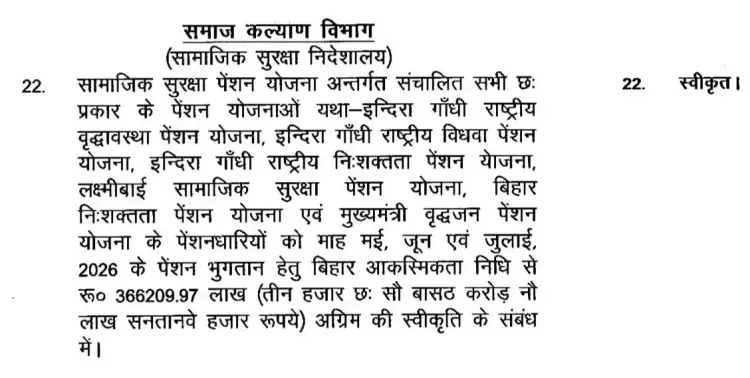
RJD leader Tejashwi Yadav has alleged that the Bihar cabinet approved a Rs 3,662 crore withdrawal from the state Contingency Fund to pay social security pensions for May–July 2026, warning of an impending fiscal emergency and calling on the Chief Minister to explain the state's deteriorating finances.
Key Takeaways
Rs 3,662 crore allegedly approved for withdrawal from Bihar's Contingency Fund to cover social security pensions for May, June, and July 2026 .
The Contingency Fund is constitutionally meant for unforeseen crises, not recurring welfare payments such as pensions.
Tejashwi Yadav alleges state employees' salaries and pensions have not been paid for four to five months and contractor dues remain pending for over a year.
The Bihar State Crop Assistance Scheme was reportedly discontinued at the same cabinet meeting due to a fund shortage.
The Student Credit Card Scheme and student scholarship disbursements are also alleged to have stalled.
Work plans approved in 2023–24 have yet to commence, and power cuts have intensified, according to Yadav's post.
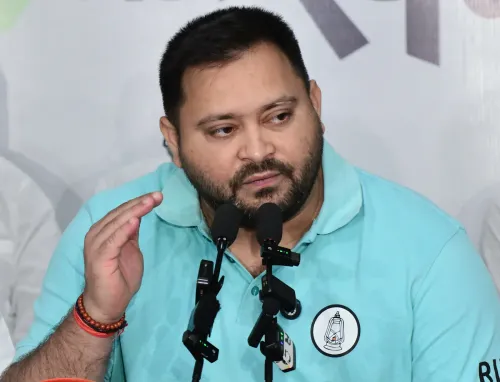
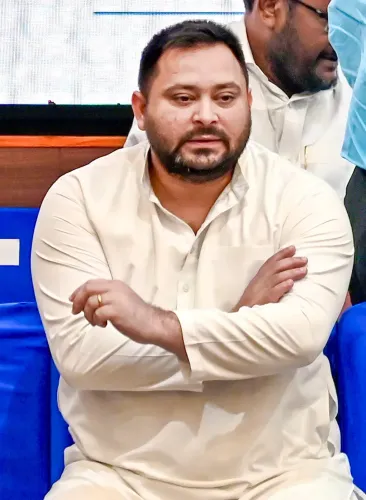
RJD leader Tejashwi Yadav on Wednesday, June 10, 2026 sharply questioned the financial health of Bihar, alleging that the state cabinet had approved a withdrawal of Rs 3,662 crore from the Bihar Contingency Fund to pay social security pensions for May, June, and July 2026 — a move he described as a sign of impending fiscal emergency.
Context
In a detailed post on X, Tejashwi Yadav posed pointed questions to the state government: 'क्या बिहार दिवालिया होने के कगार पर है?' ('Is Bihar on the verge of bankruptcy?'). He argued that deploying the Contingency Fund — a constitutional reserve meant for unforeseen crises and natural disasters — for routine pension payments signals that the state treasury is under severe stress.
Yadav, who serves as Leader of the Opposition in the Bihar Legislative Assembly, stated that employees' salaries and pension payments have not been processed for four to five months, and that contractors have not received dues for over a year. He has been raising this issue, he said, for the past six months.
Policy Backdrop
Under Article 267 of the Constitution, states maintain a Contingency Fund to meet urgent, unforeseen expenditure pending legislative authorisation. Historically, Bihar has drawn on this fund during floods and natural disasters — not for recurring welfare obligations like social security pensions, which are ordinarily met through regular budgetary provisions.
Social security pensions in Bihar were expanded through successive annual budgets from the early 2010s onwards, covering elderly, widowed, and disabled beneficiaries. The alleged routing of three months' pension outgo through the Contingency Fund would mark a significant departure from established fiscal practice, according to Yadav's post.
He also alleged that the same cabinet meeting discontinued the long-running Bihar State Crop Assistance Scheme (Bihar Rajya Fasal Sahayata Yojana), which provides relief to farmers for crop losses, citing a lack of funds. Additionally, he claimed that the Student Credit Card Scheme has stalled and scholarship disbursements to students have been suspended.
Stakeholders and Impact
The groups most directly affected, if the allegations are accurate, include pensioners dependent on monthly social security transfers, state government employees awaiting salary arrears, contractors with pending dues from projects sanctioned as far back as 2023–24, farmers who relied on the crop assistance scheme, and students under the credit card and scholarship programmes.
Yadav also pointed to heavy power cuts as an additional sign of fiscal strain, and noted that work orders approved in 2023–24 have yet to see ground-level commencement, while announcements made in 2025 and 2026 remain unimplemented. He called on the Chief Minister to address the people of Bihar directly on the state's financial condition rather than focusing on 'unnecessary issues.'
What's Next
Opposition pressure is likely to intensify in the Bihar Legislative Assembly, with demands for a detailed statement on contingency fund withdrawals, salary arrears, and the discontinuation of welfare schemes. Scrutiny from constitutional audit bodies on the use of the Contingency Fund for recurring expenditure could follow, particularly if supplementary demands or revised estimates are tabled in the next session.
The broader debate touches on a pattern seen across Indian states: opposition parties citing contingency fund usage for routine payments as evidence of cash-flow distress, often linking it to central transfer delays, GST compensation shortfalls, and coalition-driven spending trade-offs between welfare and capital outlay. How the Bihar government responds — and whether it presents an alternative fiscal account — will define the next phase of this political and policy confrontation.
Point of View
Framing a procedural cabinet decision — contingency fund usage — as a constitutional and moral indictment of the ruling dispensation's fiscal stewardship. By listing multiple simultaneous failures — unpaid salaries, stalled schemes, power cuts — he constructs a cumulative case for systemic breakdown rather than isolated cash-flow stress. The move fits a broader opposition playbook in Indian states where fiscal opacity creates space for political narratives to fill the information vacuum. The Bihar government's silence or counter-narrative in the coming days will be as telling as the original allegation.
NationPress
26 Oct 2026
Frequently Asked Questions
Why is Bihar using its Contingency Fund to pay pensions?
According to RJD leader Tejashwi Yadav, the Bihar cabinet approved a Rs 3,662 crore withdrawal from the Bihar Contingency Fund to pay social security pensions for May, June, and July 2026, which he attributes to the state treasury running dry. The Contingency Fund is constitutionally intended for unforeseen emergencies, not routine welfare payments.
What is the Bihar Contingency Fund?
The Bihar Contingency Fund is a constitutional reserve maintained under Article 267 of the Indian Constitution. It is meant to meet urgent, unforeseen expenditure — such as natural disaster relief — when the legislature is not in session, with amounts to be recouped through subsequent budgetary appropriations.
Has the Bihar State Crop Assistance Scheme been discontinued?
Tejashwi Yadav has alleged that the Bihar State Crop Assistance Scheme (Bihar Rajya Fasal Sahayata Yojana), which provided relief to farmers for crop losses, was discontinued at a recent cabinet meeting due to a shortage of funds. The Bihar government has not publicly confirmed or denied this claim as of the time of Yadav's post.
Are Bihar government employees not getting their salaries?
Tejashwi Yadav has claimed that state government employees in Bihar have not received salary and pension payments for four to five months, and that contractors have not been paid for over a year. These claims have not been independently verified and the state government has not responded to them publicly in available records.
What is the Student Credit Card Scheme in Bihar?
The Bihar Student Credit Card Scheme is a state government initiative that provides educational loans at low interest to students pursuing higher education. Tejashwi Yadav has alleged the scheme has been effectively stalled due to the state's financial difficulties, along with suspension of scholarship disbursements.