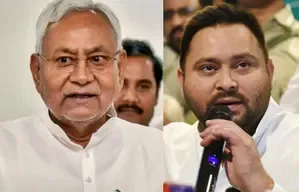
Tejashwi Yadav flags India's heat, pollution crisis, asks why environment isn't a poll issue
Synopsis
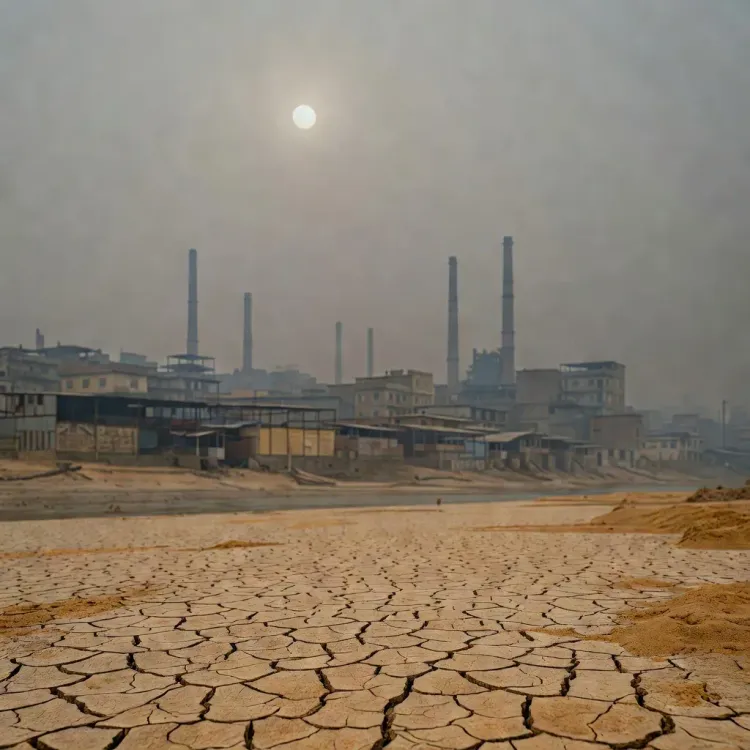
RJD leader Tejashwi Yadav cited global data placing 97 of the world's 100 hottest locations and 14 of the top 15 most polluted cities in India, questioning why climate and air-quality crises remain absent from Indian electoral politics and urging youth to demand accountability.
Key Takeaways
Tejashwi Yadav cited global weather-tracking data claiming 97 of the world's 100 hottest locations are in India .
He noted that 14 of the top 15 most polluted cities globally are Indian, framing it as a political failure.
Yadav questioned whether the absence of caste or religious dimensions in environmental issues explains the lack of political mobilisation around them.
He called for 'meaningful, positive, and wide-ranging debate' on environmental issues beyond inflation and unemployment.
The post directly addressed young voters , urging them to question governments on climate and pollution alongside economic concerns.
India's National Clean Air Programme (2019) and Paris Agreement commitments (updated 2022) exist on paper but implementation gaps remain a documented concern.
RJD leader Tejashwi Yadav on Saturday, 23 May 2026, raised sharp questions about the absence of environmental concerns in Indian electoral politics, citing global data that placed 97 of the world's 100 hottest locations and 14 of the top 15 most polluted cities inside India. The former Deputy Chief Minister of Bihar called for a meaningful national debate on climate change, air pollution, and biodiversity, urging young voters to hold governments accountable beyond inflation and unemployment.
Context
Yadav's post, written in Hindi, opens with a stark statistical framing: 'वैश्विक मौसम ट्रैकिंग के आंकड़ों के मुताबिक दुनिया की सबसे 100 गर्म जगहों में से 97 जगह अकेले भारत में दर्ज की गईं है' ('According to global weather-tracking data, 97 of the world's 100 hottest locations have been recorded in India alone'). He follows this with the observation that 14 of the 15 most polluted cities globally are Indian. These figures, drawn from global tracking platforms, are cited by Yadav to underscore the urgency of the crisis.
Yadav then poses a pointed rhetorical question: since climate change and pollution are not directly linked to any particular caste or religion, is that why they fail to generate social and political mobilisation in India? He argues that the absence of seriousness toward environmental issues in politics is 'deeply concerning' (चिंतनीय).
Policy Backdrop
India has a layered architecture of environmental commitments on paper. The National Clean Air Programme (NCAP), launched in 2019, set city-specific reduction targets for PM2.5 and PM10 across 131 non-attainment cities, but implementation has been uneven across states. The National Action Plan on Climate Change (2008) outlined eight national missions spanning solar energy, water, and sustainable agriculture, yet parliamentary debate on their outcomes has remained sparse.
Under its updated Nationally Determined Contributions (2022) to the Paris Agreement, India committed to sourcing 50 per cent of cumulative electric power from non-fossil fuels by 2030. Simultaneously, domestic coal capacity has continued to expand, reflecting the tension between international pledges and energy-security priorities. The International Solar Alliance (2015) positioned India as a global climate leader, yet ground-level air-quality and heat-island data tell a more complicated story.
Stakeholders and Impact
The communities most exposed to the crisis Yadav describes are urban residents in rapidly growing cities, agricultural workers facing extreme heat events, and low-income populations with limited access to cooling or healthcare. Young voters — the demographic Yadav directly addresses — are increasingly affected by pollution-linked respiratory illness, water stress, and climate-driven economic disruption, yet these concerns have rarely translated into dedicated electoral platforms.
Successive Central Pollution Control Board reports have documented measurable rises in particulate levels and urban heat-island effects, correlating with rapid industrial expansion and unplanned urbanisation. Yadav's intervention is notable because it comes from a leader whose political base in Bihar — a state highly vulnerable to floods, droughts, and extreme heat — has direct material stakes in climate outcomes.
What's Next
Yadav's post stops short of announcing a legislative initiative, framing his intervention as a call for public discourse rather than a specific policy proposal. However, opposition parties across states are expected to test environmental accountability as a campaign theme ahead of upcoming assembly sessions in 2026-27, where private-member resolutions on air-quality budgets may be introduced. The next revision of city-level clean-air action plans under NCAP guidelines will be a key test of whether political pressure translates into administrative action.
If environmental concerns begin to intersect with livelihood issues — crop loss from heat stress, healthcare costs from pollution — they could acquire the cross-caste, cross-community salience that Yadav argues they currently lack. His challenge to young voters to question an 'unchecked government' (बेलगाम सरकार) on these issues signals an attempt to expand the opposition's issue agenda beyond its traditional social-justice and employment planks.
Point of View
Testing whether environmental distress can be reframed as a governance accountability issue rather than a technocratic one. His rhetorical question — linking the absence of caste and religious markers in climate change to its political invisibility — is a sharp structural critique of how Indian electoral incentives are organised. The intervention arrives as extreme heat events increasingly disrupt agricultural livelihoods in states like Bihar, creating a potential bridge between environmental and economic grievances. Whether this translates into sustained legislative action or remains a social-media provocation will depend on whether opposition parties can build cross-party coalitions around air-quality and heat-stress data ahead of the next budget cycle.
NationPress
6 Oct 2026
Frequently Asked Questions
What did Tejashwi Yadav say about India's pollution and heat crisis?
Tejashwi Yadav cited global tracking data claiming 97 of the world's 100 hottest locations and 14 of the top 15 most polluted cities are in India, and questioned why these issues do not generate political debate or electoral mobilisation.
Why does Tejashwi Yadav say environment is not a political issue in India?
Yadav argued that because climate change and pollution are not directly tied to caste or religion — the dominant fault lines of Indian politics — they fail to generate the social and political mobilisation needed to become mainstream electoral issues.
What is India's National Clean Air Programme?
The National Clean Air Programme (NCAP) is a central government initiative launched in 2019 to reduce PM2.5 and PM10 pollution levels across 131 cities classified as non-attainment cities, though implementation has varied significantly across states.
What are India's commitments under the Paris Agreement?
Under its updated Nationally Determined Contributions submitted in 2022, India committed to sourcing 50 per cent of its cumulative electric power from non-fossil fuel sources by 2030 and to reducing the emission intensity of its GDP.
Is Bihar affected by climate change and extreme heat?
Yes. Bihar is among the Indian states most vulnerable to climate-related disruptions, including annual flooding from Himalayan rivers, drought in southern districts, and rising heat stress that affects agricultural output and public health.