Tejashwi Yadav marks Mandal Diwas, vows to push OBC backlog agenda
Synopsis
On Mandal Diwas, 7 August 2026, RJD leader Tejashwi Yadav pledged to fight socio-economic inequality, fill OBC backlog vacancies, and implement pending Mandal Commission recommendations — framing the 36-year-old anniversary as a call to renewed resolve for marginalised communities.
Key Takeaways
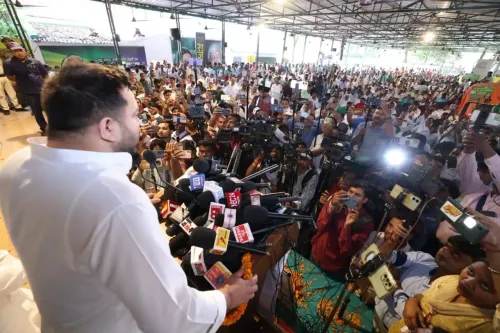
RJD leader Tejashwi Yadav marked Mandal Diwas on 7 August 2026 with a social-media post calling for unity among the oppressed, poor and marginalised.
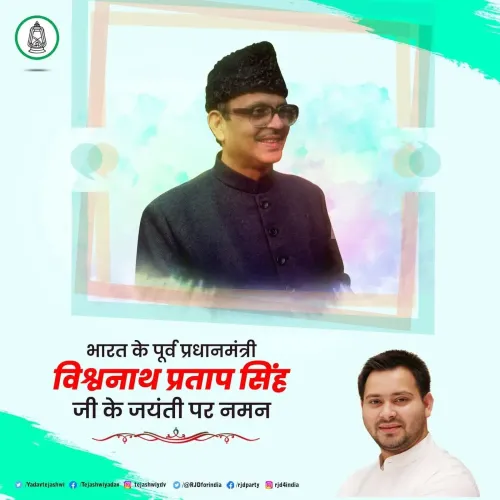
The day commemorates V.P.
Singh's 1990 announcement implementing the Mandal Commission's recommendation of 27% OBC reservation in central government jobs and education.
Yadav identified three specific fights: ending socio-economic inequality, filling backlog vacancies in reserved-category posts, and implementing remaining Mandal Commission recommendations .
The Supreme Court's Indra Sawhney (1992) ruling upheld OBC reservations but capped total quotas at 50% and excluded the creamy layer, leaving implementation gaps that persist today.
The message carries electoral weight, with Bihar assembly elections approaching and RJD relying on OBC, Muslim and marginalised-community support as its core base.
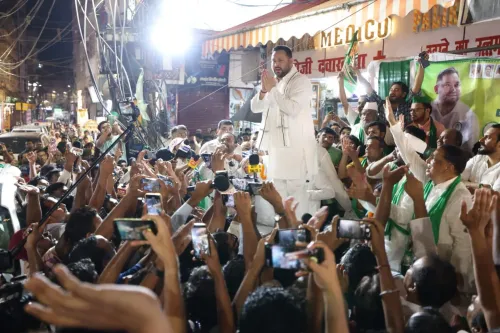
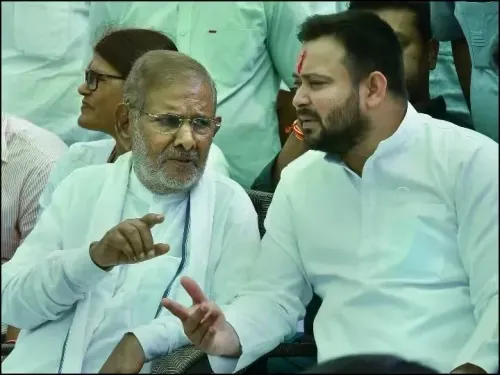
Thirty-six years after V.P. Singh shook Indian politics from its foundations, the anniversary of that decision still draws battle lines. On Friday, 7 August 2026, RJD leader and Leader of the Opposition in the Bihar Legislative Assembly Tejashwi Yadav used Mandal Diwas to restate his party's unfinished agenda — and to remind the country that the social-justice movement has milestones yet to reach.
Posting in Hindi, Yadav greeted citizens on what he called 'nyay, samanta aur saman pratinidhitwa ka utsahpurn din' — 'an enthusiastic day of justice, equality and equal representation'. He described the occasion as one of renewed resolve, urging the oppressed, the poor and the marginalised to hold firm in ideological unity.
What Mandal Diwas commemorates — and why it still stings
On 7 August 1990, Prime Minister V.P. Singh announced the implementation of the Mandal Commission's recommendations, reserving 27 per cent of central government jobs and educational seats for Other Backward Classes (OBCs). The decision — drawn from the commission's 1980 report under chairman B.P. Mandal — detonated a political earthquake. Protests erupted, careers were built and broken on the fault line, and caste became the explicit grammar of electoral competition in states like Bihar. The Supreme Court upheld OBC reservations in the landmark Indra Sawhney v. Union of India (1992) ruling, while capping total quotas at 50 per cent and excluding the 'creamy layer'. But implementation gaps — particularly backlog vacancies in reserved categories — have persisted across successive governments, keeping the issue politically live.RJD's three-point demand: backlog, equality, full implementation
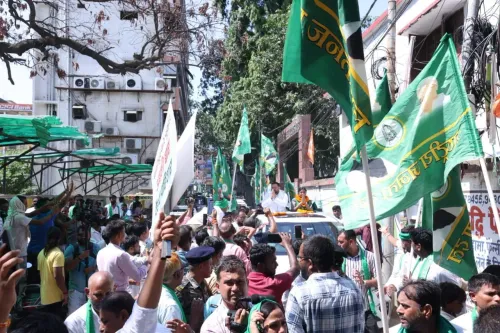
Yadav's post was not ceremonial. He listed three concrete commitments his party would continue to fight for: closing socio-economic inequality, filling backlog vacancies in reserved quota posts, and implementing the remaining recommendations of the Mandal Commission that successive governments have left pending. For the Rashtriya Janata Dal — founded by Lalu Prasad Yadav in 1997 and built on a coalition of OBCs, Muslims and marginalised communities — the Mandal framework is not nostalgia. It is the party's operating system. In Bihar, where Mandal-era politics has dominated electoral competition since the early 1990s, RJD has repeatedly leveraged the backlog-vacancy issue to draw a contrast with both national and rival state parties. With the next Bihar assembly elections on the horizon, Yadav's Mandal Diwas message doubles as a mobilisation signal to the party's core base: the fight for fuller implementation is the campaign. The Mandal Commission's report is over four decades old. The reservations it inspired are law. Yet the backlog vacancies remain, the remaining recommendations sit unfulfilled, and every 7 August, a new generation of OBC aspirants is reminded of both how far the movement has come — and how much further it has to go.Point of View
Unmet demands — backlog vacancies, socio-economic inequality, pending Mandal recommendations — RJD signals that social justice remains a programmatic commitment rather than inherited symbolism. The timing matters: with Bihar elections on the horizon, Yadav is consolidating OBC and marginalised-community voters before the campaign season formally opens. More broadly, the post reflects the enduring tension in Indian federal politics between the constitutional promise of representative equality and the administrative reality of unfilled reserved posts — a gap that has fuelled OBC political identity for three decades and shows no sign of closing.
NationPress
21 Sept 2026
Frequently Asked Questions
What is Mandal Diwas and why is it celebrated on 7 August?
Mandal Diwas marks 7 August 1990, the day Prime Minister V.P. Singh announced implementation of the Mandal Commission's recommendation of 27% reservation for OBCs in central government jobs and education. It is observed annually to reaffirm the social-justice movement's goals.
What are backlog vacancies in OBC reservation?
Backlog vacancies are reserved-category posts that were not filled in previous recruitment cycles — either because eligible candidates were unavailable or the process lapsed — and are carried forward to future recruitments. Critics argue that governments have allowed large numbers of such vacancies to accumulate unfilled.
What did the Mandal Commission recommend?
The Mandal Commission, chaired by B.P. Mandal and constituted in 1979, submitted its report in 1980 recommending 27% reservation for Other Backward Classes in central government services and educational institutions, along with other socio-economic measures for OBC uplift.
What is Tejashwi Yadav's position in Bihar politics?
Tejashwi Yadav is the Leader of the Opposition in the Bihar Legislative Assembly and a senior leader of the Rashtriya Janata Dal (RJD), the party founded by his father Lalu Prasad Yadav. He previously served as Deputy Chief Minister of Bihar.
What did the Supreme Court say about OBC reservations?
In the landmark Indra Sawhney v. Union of India case (1992), the Supreme Court upheld OBC reservations but ruled that total reservations across all categories cannot exceed 50% and that the 'creamy layer' — economically advanced OBCs — must be excluded from the benefit.