Telangana CM Revanth Reddy orders revenue crackdown, chasing cell for tax leakages
Synopsis
Telangana CM Revanth Reddy has ordered a dedicated revenue chasing cell, demanded zero tolerance on tax leakages across commercial taxes, excise, and mining, and separately pushed for AI-driven traffic signal integration across Hyderabad — signalling a twin-track push on fiscal discipline and smart-city ambition in a single day.
Key Takeaways
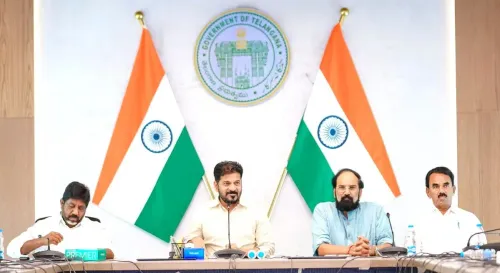
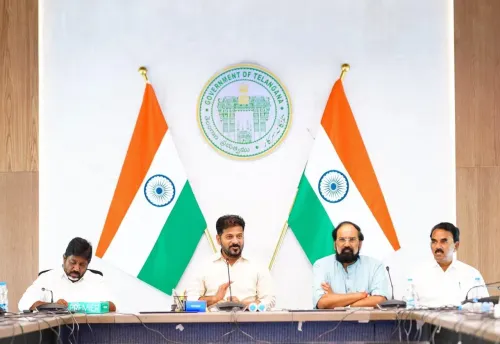
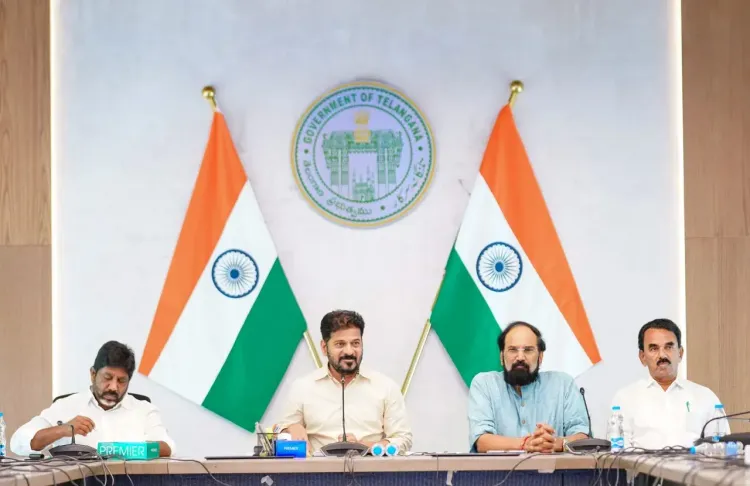
Revanth Reddy chaired a high-level revenue review at MCR HRD Institute, Hyderabad on 1 July 2025 .
He ordered a dedicated chasing cell to drive revenue mobilisation and plug leakages in commercial taxes, excise, and mining .
HMDA and TGIIC were identified as priority revenue sources requiring special focus.
Officials were told budgets must reflect ground reality — not imaginary projections — and that land acquisition is the top project priority.
In a separate meeting, Revanth Reddy proposed AI-integrated traffic signal management across Hyderabad, including a pilot project on smart urban infrastructure.
The 'Cognitive Cities' concept — covering real-time traffic, water leak detection, power management, and emergency corridor clearance — was presented by two technology firms.
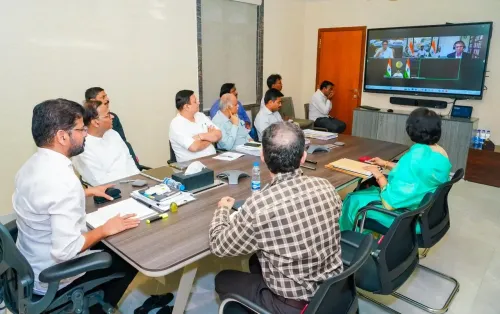
Telangana Chief Minister A. Revanth Reddy on Wednesday, 1 July directed state department heads to sharpen their focus on revenue mobilisation to meet targets set under the state budget, warning that negligence in fund mobilisation would not be tolerated. The directives were issued at a high-level review meeting held at MCR HRD Institute in Hyderabad.
Key Directives on Revenue Mobilisation
According to the Chief Minister's Office (CMO), Revanth Reddy ordered the complete plugging of leakages across commercial taxes, excise, mining, and allied departments. He called for the creation of a dedicated chasing cell to actively track and drive revenue collection across all wings of the state government.
The Chief Minister singled out Hyderabad Metropolitan Development Authority (HMDA) and Telangana Industrial Infrastructure Corporation (TGIIC) as priority sources for revenue mobilisation, directing officials to give these bodies special attention. He also instructed that departmental budgets be drawn up in alignment with pending projects and actual ground realities — not on imaginary projections.
Land Acquisition and Capacity Building
Revanth Reddy told officials that land acquisition must be treated as the top priority in connection with ongoing and upcoming infrastructure projects. He stressed that each department must improve its internal capacity on a departmental basis to perform at the expected level, and assured them that the government stands ready to extend all required support.
AI-Driven Traffic Integration for Hyderabad
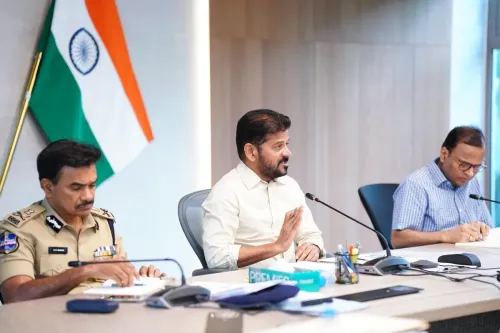
In a separate meeting on the same day, Chief Minister Revanth Reddy proposed the integration of traffic signals across Hyderabad using advanced technology, including artificial intelligence (AI), to ensure smoother traffic management — particularly during the monsoon season when congestion worsens.
Representatives from two technology companies briefed the Chief Minister on a Hyderabad traffic pilot project, outlining how technology could provide immediate solutions to urban mobility challenges. They presented a vision for 'Next Generation Intelligent Infrastructure' built on 'Physical Intelligence' — combining sensors and robotics to create safer, more efficient urban transportation systems.
The Cognitive Cities Vision
The meeting spotlighted the concept of 'Cognitive Cities' — urban environments capable of self-regulating functions such as adjusting traffic signals based on real-time congestion data, detecting and pre-empting water pipe leaks, managing power supply according to demand, and automatically clearing corridors for ambulances and fire tenders during emergencies.
Both organisations underscored the potential of emerging technologies to address the needs of rapidly expanding cities by boosting government operational efficiency, improving citizen services, and enabling data-driven infrastructure planning. The push aligns with Hyderabad's broader ambitions as a smart-city hub, and signals that the Revanth Reddy administration is looking beyond conventional governance tools to technology-led urban management.
With the state budget targets now firmly in focus, the coming weeks will reveal whether the newly proposed chasing cell and departmental restructuring can translate political intent into measurable revenue gains.
Point of View
And the leakages in commercial taxes, excise, and mining are significant enough to warrant a dedicated chasing cell — an unusual institutional fix that signals systemic gaps rather than isolated misses. The instruction to base budgets on 'reality, not imagination' is pointed; it suggests past budgeting has been aspirational, which complicates fiscal credibility. Meanwhile, the AI traffic integration push is politically useful optics for a government keen to brand Hyderabad as a next-generation city, but the distance between a pilot project briefing and city-wide deployment is vast. Whether either initiative — the revenue cell or the smart-city push — produces measurable outcomes before the next budget cycle is the real question.
NationPress
1 Jul 2026
Frequently Asked Questions
What is the revenue chasing cell proposed by Telangana CM Revanth Reddy?
It is a dedicated cell directed by Chief Minister Revanth Reddy on 1 July 2025 to actively track and drive revenue collection across Telangana state departments, with a specific focus on curbing leakages in commercial taxes, excise, and mining. The cell is intended to help the state meet its budget revenue targets.
Which departments and bodies were flagged for priority revenue focus?
Chief Minister Revanth Reddy specifically directed officials to focus on revenue mobilisation from the Hyderabad Metropolitan Development Authority (HMDA) and the Telangana Industrial Infrastructure Corporation (TGIIC), in addition to tightening collections across commercial taxes, excise, and mining departments.
What did Revanth Reddy say about departmental budgeting?
He instructed that budgets must be prepared department-wise in line with pending projects and actual ground realities, explicitly stating that budgeting should not be based on imaginary figures. He also said land acquisition must be treated as the top priority for project-linked departments.
What is the Hyderabad AI traffic signal integration plan?
Chief Minister Revanth Reddy proposed integrating all traffic signals across Hyderabad using AI to regulate traffic flow, especially during the monsoon season. Two technology firms briefed him on a pilot project and presented a vision for smart urban infrastructure, including the concept of 'Cognitive Cities' capable of real-time self-management.
What are 'Cognitive Cities' as discussed in the Hyderabad meeting?
'Cognitive Cities' are urban environments that use sensors, AI, and robotics to self-regulate functions such as adjusting traffic signals based on live congestion data, detecting water leaks in advance, managing power supply by demand, and clearing emergency corridors for ambulances and fire tenders automatically.