Textiles Minister Giriraj Singh Sets Out 2031 Market Goal
Synopsis
Textiles Minister Giriraj Singh says India aims for a $350 billion textile market by 2031, linking diversification in Kanchipuram silk and export promotion to a wider global push. His post cites ₹10,600 crore in incentives but does not detail their allocation.
Key Takeaways
Giriraj Singh said India aims to reach a $350 billion textile market by 2031.
He called for product diversification and export promotion in Kanchipuram silk.
The minister cited ₹10,600 crore in incentives without specifying their allocation.
The textiles PLI scheme, notified in 2021, has an outlay of approximately ₹10,683 crore and targets man-made fibre and apparel segments.
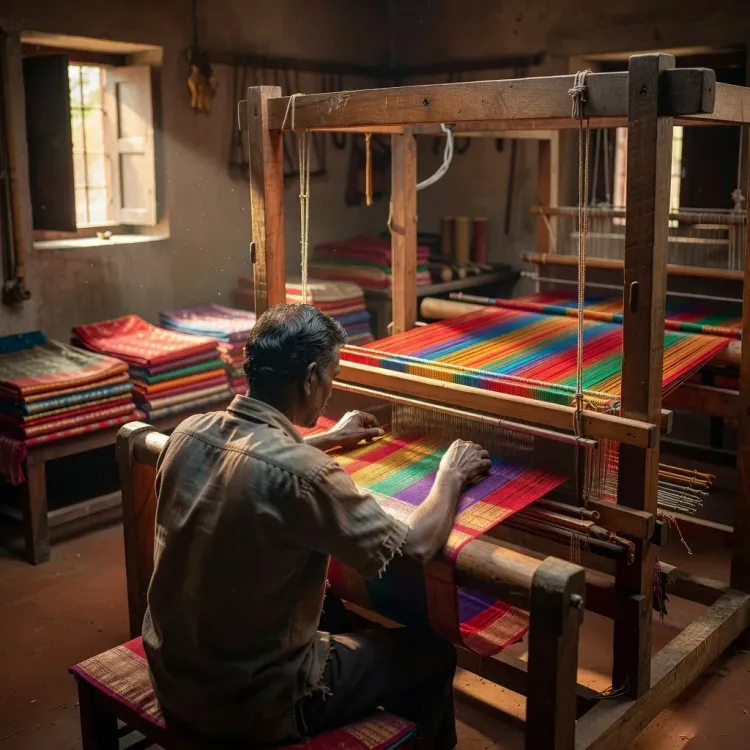
Kanchipuram in Tamil Nadu is a handloom centre known for GI-tagged silk sarees.
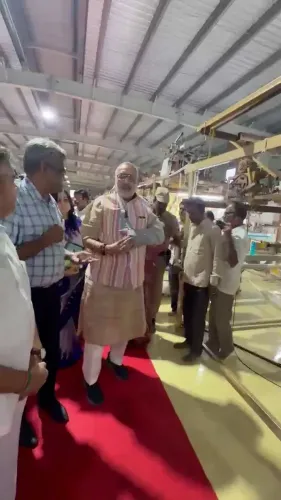
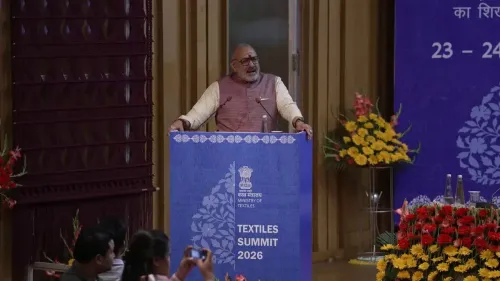
Union Textiles Minister Giriraj Singh has put a big number on the future of Indian textiles, saying the country aims to grow its textile market to $350 billion by 2031. In an X post on 25 November 2026, he paired that ambition with a call for product diversification and stronger exports in Kanchipuram silk.
Kanchipuram silk and a $350 billion ambition
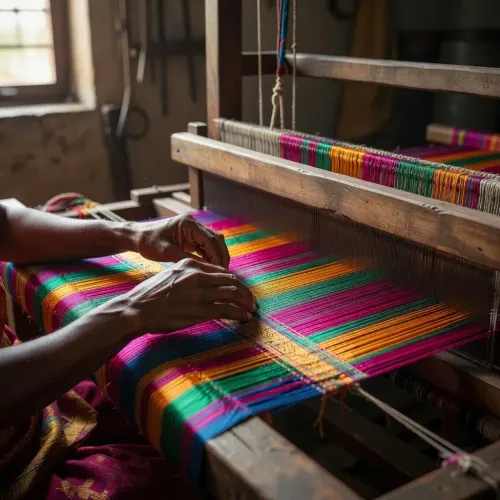
Singh wrote that the aim was to take India's textile market to $350 billion by 2031. He added that product diversity in Kanchipuram silk, export promotion and ₹10,600 crore in incentives would give India's textile and silk industries a new global identity.
His post did not specify how the incentive amount would be allocated or whether it was intended specifically for the silk cluster. The market figure is a goal stated by the minister, not a verified forecast.
Kanchipuram, in Tamil Nadu, is a major handloom centre known for its GI-tagged silk sarees. For its weavers and exporters, the detail behind any diversification and export measures will matter as much as the headline ambition.
Where the textiles PLI scheme fits
The government notified a production-linked incentive scheme for textiles in 2021, with an outlay of approximately ₹10,683 crore, to support manufacturing and exports in man-made fibre and apparel segments. Singh's post did not identify the ₹10,600 crore figure as that scheme or explain a link to Kanchipuram silk.
The wider push brings traditional silk and modern textile manufacturing into the same export conversation, as Indian producers compete in global markets that include Bangladesh and Vietnam. The next test is the detail: how incentives are allocated, and whether export figures show the growth the minister envisions.
Point of View
So its relationship to the incentive figure cited in the post should not be assumed. Allocation details and export data will be important in assessing how the stated ambition translates into outcomes.
NationPress
25 Nov 2026
Frequently Asked Questions
What textile market target did Giriraj Singh announce?
Giriraj Singh said India aims to reach a $350 billion textile market by 2031. The figure is a goal stated by the minister, not a verified forecast.
What did Giriraj Singh say about Kanchipuram silk?
He called for product diversification and export promotion in Kanchipuram silk. He also cited ₹10,600 crore in incentives without specifying how the amount would be allocated.
Where is Kanchipuram silk made?
Kanchipuram silk sarees are woven in Kanchipuram, Tamil Nadu. The traditional product has a geographical indication tag.
What is the textile PLI scheme outlay?
The textiles production-linked incentive scheme has an outlay of approximately ₹10,683 crore. Notified in 2021, it targets manufacturing and exports in man-made fibre and apparel segments.
Did the minister announce ₹10,600 crore solely for Kanchipuram silk?
His post did not say the ₹10,600 crore was allocated solely to Kanchipuram silk. It did not explain how the incentive amount would be distributed.