Tobacco-Free Youth Campaign 4.0 launched: 60-day drive targets colleges nationwide
Synopsis
India's Tobacco-Free Youth Campaign is in its fourth edition — and this time it is going to college. With over 5.8 lakh institutions and 73,000 villages already declared tobacco-free under previous editions, TFYC 4.0 shifts its 60-day focus to universities and colleges, where early-adulthood nicotine initiation poses the sharpest long-term public health risk.
Key Takeaways
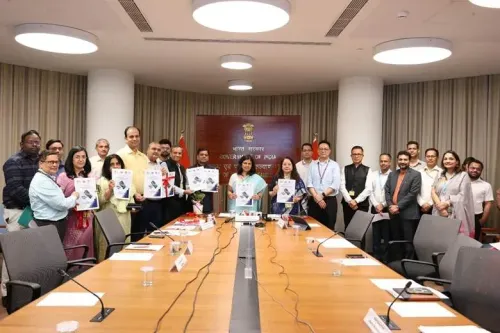
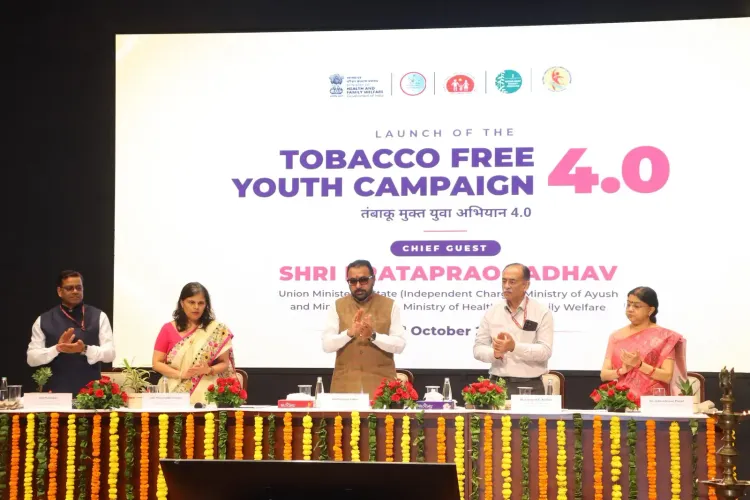
TFYC 4.0 was launched on 28 October 2026 in New Delhi by MoS Prataprao Jadhav .
The campaign runs for 60 days across the country, with universities and colleges as its primary new focus.
Previous three editions declared over 5.8 lakh educational institutions and more than 73,000 villages tobacco-free.
TFYC 3.0 alone saw 2,57,807 institutions and 33,850 villages achieve tobacco-free status.
Tobacco smoke contains more than 7,000 chemicals , including multiple carcinogens, according to the Minister.
The campaign adopts a whole-of-government approach spanning health, education, law enforcement, and local governance.
Union Minister of State for AYUSH and Health & Family Welfare Prataprao Jadhav on 28 October 2026 launched the fourth edition of the Tobacco-Free Youth Campaign (TFYC 4.0) in New Delhi, calling for a nationwide movement to shield young Indians from tobacco use and nicotine addiction. The 60-day pan-India campaign marks the most expansive edition yet, with universities and colleges forming its primary focus.
What TFYC 4.0 Aims to Achieve
The campaign's core objectives include preventing tobacco initiation among young people, encouraging cessation, strengthening enforcement of existing tobacco control laws, and fostering tobacco-free environments across the country. Adopting a whole-of-government approach, TFYC 4.0 will coordinate action across health, education, youth development, local governance, law enforcement, and communication sectors.
The campaign's central message — 'Say No to Tobacco' — is designed to spark a youth-led national movement supported by every section of society, in alignment with the vision of a healthy and addiction-free Viksit Bharat.
Scale of Previous Editions
The first three editions of the campaign have collectively delivered substantial results. Over 5.8 lakh educational institutions and more than 73,000 villages have been declared tobacco-free since TFYC was first launched on 31 May 2023.
The second edition, launched in September 2024, saw 1,67,762 educational institutions and 27,534 villages achieve tobacco-free status through intensified awareness drives, enforcement actions, and community engagement. TFYC 3.0, launched in October 2025, added 2,57,807 educational institutions and 33,850 villages to the tobacco-free count, consolidating the campaign's reach.
What the Minister Said
Addressing the launch gathering, Jadhav urged young Indians to reject tobacco and all addictive substances, stressing that their health is central to India's aspirations of becoming a developed nation. He noted that tobacco smoke contains more than 7,000 chemicals, including numerous toxic and cancer-causing substances capable of severely damaging multiple organs.
'India's youth are its greatest strength,' the Minister said, adding that their energy, talent, creativity, and determination will shape the country's future. He underscored that protecting the younger generation from tobacco is both a public health imperative and a national responsibility.
Jadhav also called on the campaign to evolve beyond a government programme into a genuine mass movement driven by active youth participation and leadership.
Why Universities and Colleges Are the New Focus
While earlier editions concentrated heavily on schools and rural villages, TFYC 4.0 pivots toward higher education institutions — a segment where tobacco initiation rates are a documented concern. This comes amid broader public health data showing that early adulthood is a critical window for nicotine dependency to take hold, making campus-level intervention strategically significant.
Notably, the cumulative surge in tobacco-free institution declarations — from under two lakh in the second edition to over two and a half lakh in the third — suggests the campaign's community-enforcement model is gaining ground. TFYC 4.0 seeks to sustain that trajectory into tertiary education, where peer influence and product availability are both high.
What Happens Next
The 60-day campaign will run across all states and union territories. Progress will be tracked through institution-level declarations, enforcement data, and community participation metrics. With universities and colleges in focus, higher education regulators and student bodies are expected to play a visible role in implementation this edition.
Point of View
And the numbers bear that out. But campus-level tobacco control faces a structurally harder challenge: young adults are legally autonomous, product access is less regulated than in school zones, and enforcement mechanisms are weaker. The campaign's whole-of-government framing sounds ambitious, but without measurable outcome targets for higher education institutions specifically — not just declarations of 'tobacco-free' status — TFYC 4.0 risks repeating the pattern of impressive input numbers masking uncertain health outcomes. The real test is whether the fourth edition moves the needle on actual initiation rates, not just institution-count tallies.
NationPress
28 Oct 2026
Frequently Asked Questions
What is the Tobacco-Free Youth Campaign 4.0 (TFYC 4.0)?
TFYC 4.0 is the fourth edition of a pan-India government campaign to prevent tobacco use and nicotine addiction among young people, launched on 28 October 2026 in New Delhi. It runs for 60 days and focuses particularly on universities and colleges, adopting a whole-of-government approach across health, education, law enforcement, and local governance sectors.
Who launched TFYC 4.0 and what did they say?
Union Minister of State for AYUSH and Health & Family Welfare Prataprao Jadhav launched the campaign and called on India's youth to reject tobacco and addictive substances. He stressed that protecting young people from tobacco is a national responsibility and that the campaign must evolve into a mass movement led by young people themselves.
What has the Tobacco-Free Youth Campaign achieved so far?
The first three editions collectively resulted in over 5.8 lakh educational institutions and more than 73,000 villages being declared tobacco-free. TFYC 3.0 alone, launched in October 2025, saw 2,57,807 institutions and 33,850 villages achieve tobacco-free status.
Why are colleges and universities the focus of TFYC 4.0?
Earlier editions concentrated on schools and villages; TFYC 4.0 expands the initiative to higher education, where early-adulthood is a critical window for nicotine dependency. Peer influence and product availability in college environments make campus-level intervention a public health priority.
How does the campaign plan to protect youth from tobacco?
TFYC 4.0 aims to prevent tobacco initiation, promote cessation, and strengthen enforcement of existing tobacco control laws. It will coordinate across multiple government sectors and use the 'Say No to Tobacco' message to mobilise youth, institutions, and communities nationwide over its 60-day duration.