Raj Thackeray Critiques Central Government on Delimitation and Women's Reservation Legislation
Synopsis
In a bold statement, Raj Thackeray of MNS criticizes the Central government's approach to constitutional amendments, raising important questions about the implications of the Women's Reservation Bill and delimitation of Lok Sabha constituencies.
Key Takeaways
Raj Thackeray criticizes the Central government's constitutional amendments.
Supports the Women's Reservation Bill while questioning its timing.
Raises concerns about delimitation based on population.
Highlights fiscal inequalities affecting Southern states.
Warns of potential political repercussions and demands for autonomy.
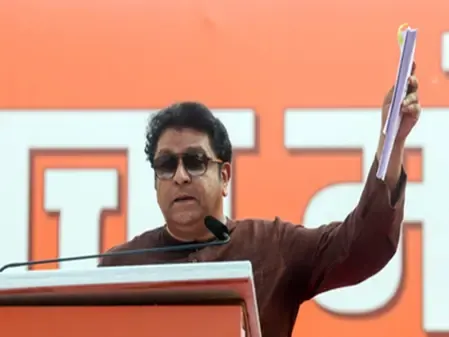
Mumbai, April 17 (NationPress) The Chief of the Maharashtra Navnirman Sena (MNS), Raj Thackeray, on Friday fiercely criticized the Central government, alleging that it is leveraging constitutional amendments to maintain a "perpetual grip on power".
In a detailed two-page statement, Thackeray emphasized that the MNS does not oppose the Women's Reservation Bill, highlighting Maharashtra's role as a forerunner in local body reservations for women.
However, he raised pointed concerns about the timing and the "unexpected urgency" surrounding the notification of the Act while discussions are still in progress.
Thackeray expressed strong disapproval regarding the proposed delimitation of Lok Sabha constituencies based on population data.
He pointed out that Articles 81 and 82 of the Constitution would disproportionately penalize states like Maharashtra, Goa, and various Southern states that have successfully implemented population control measures.
"States that have responsibly managed their populations through education and healthcare will be unfairly punished... while states that allowed unchecked population growth will see an increase in their Parliamentary representation," the MNS Chief stated, questioning, "What kind of strange justice is this?"
Raj Thackeray further accused the restructuring of constituencies as a precursor to a forced "Hindi-isation" of non-Hindi speaking states.
He raised alarms over migration from three to four Northern states, asserting that these groups are forming "vote banks" in states such as Maharashtra, Gujarat, and Karnataka.
He cautioned that elected officials from these regions lack true loyalty to their adopted states, focusing instead on their native areas, a trend he believes will extend to South India.
Thackeray also underscored the growing fiscal divide between contributing states and those reliant on Central aid.
He provided a comparative analysis of tax returns, stating, "Not only will we be deprived of our fair share of tax revenue, but now the collective voice of all five Southern states, including Maharashtra and Goa, is poised to diminish in Parliament," characterizing the situation as "intolerable".
He accused the Bharatiya Janata Party (BJP) of luring MLAs and creating rifts within political families over the past decade, warning that the move to "exit the nation" via delimitation could lead to severe repercussions.
He suggested that these actions would incite demands for autonomy across various states, potentially impacting the country's internal security and defense.
He urged leaders in states like Gujarat to remain vigilant, cautioning that "no one remains safe and secure in the trenches forever".
Point of View
Particularly regarding how population control policies impact parliamentary representation. Thackeray's comments also signal a growing unease among regional leaders about the centralization of power.
NationPress
24 Oct 2026
Frequently Asked Questions
What is Raj Thackeray's stance on the Women's Reservation Bill?
Raj Thackeray supports the Women's Reservation Bill, noting Maharashtra's pioneering role in local body reservations for women.
What concerns did Thackeray raise regarding delimitation?
He criticized the proposed delimitation based on population figures, claiming it would disadvantage states like Maharashtra that have implemented effective population control measures.
What did Thackeray imply about the restructuring of constituencies?
He suggested that the restructuring might lead to a forced 'Hindi-isation' of non-Hindi speaking states.
What fiscal issues did Thackeray highlight?
He pointed out the growing fiscal gap between contributing states and those reliant on Central aid, warning that Southern states' voices in Parliament would diminish.
What warning did Thackeray give to political leaders?
He urged leaders in states like Gujarat to remain vigilant against complacency, suggesting that political dynamics could lead to demands for autonomy.