Anurag Thakur: Tourism to be bedrock of Viksit Bharat by 2047
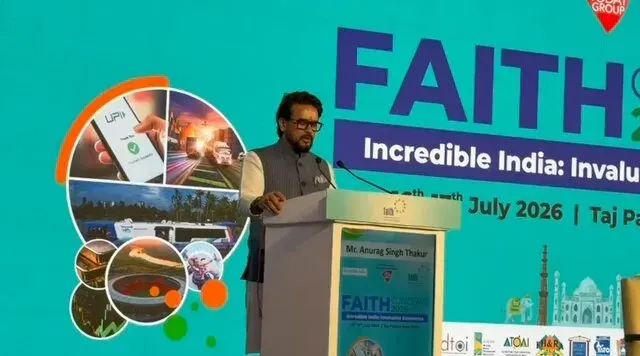
Synopsis
BJP MP Anurag Thakur has projected India's tourism sector will contribute 10% of GDP and generate over 100 million jobs by 2047, citing a $3 trillion ecosystem vision backed by expanding highways, airports, railways and cruise infrastructure under the Viksit Bharat framework.
Key Takeaways
BJP MP Anurag Thakur projected on 19 July 2026 that India's tourism sector will contribute 10% of GDP by 2047 .
The sector is expected to generate over 100 million jobs , positioning tourism as one of India's largest employment engines.
Thakur described a target $3 trillion tourism ecosystem spanning adventure, medical, heritage and MICE segments.
Infrastructure expansion — highways, airports, railways and cruise services — was cited as the primary driver of the world's fastest-growing domestic tourism markets.
The vision aligns with the government's Viksit Bharat 2047 framework, which links sectoral targets to overall GDP and employment goals.
Policy watchpoints include a revised National Tourism Policy , Union Budget tourism outlays and Swadesh Darshan 2.0 project sanctions.
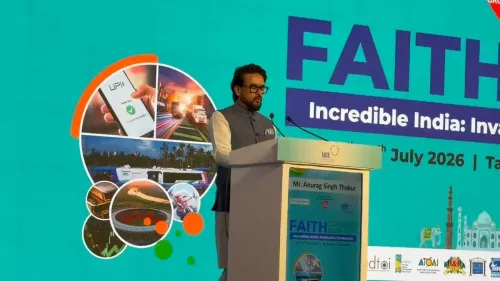
BJP MP Anurag Thakur on Sunday, 19 July 2026, outlined an ambitious vision for India's tourism sector, projecting it to contribute 10% of GDP and generate over 100 million jobs by 2047, speaking from New Delhi. The former Union Minister framed tourism — spanning heritage, adventure, medical and MICE segments — as a cornerstone of the Viksit Bharat development agenda, underpinned by rapid infrastructure expansion across highways, airports, railways and emerging cruise services.
Context
Thakur's post arrives as India's domestic tourism market is widely regarded as one of the fastest-growing in the world, accelerated by post-2020 shifts in travel behaviour and sustained public investment in connectivity. He stated that 'foreigners come to India expecting color, chaos, and spirituality, but what surprises them most is the sheer economic force behind Incredible India' — a pointed reframing of the country's tourism identity from a cultural draw to an economic powerhouse. The remarks align with the government's long-running Incredible India campaign, which has served as the primary international marketing vehicle for Indian tourism since 2002.
The MP described a '$3 trillion tourism ecosystem' as the target, powered by infrastructure that he said is already reshaping how both domestic and international travellers experience the country. While these figures represent forward-looking projections, they signal the scale of ambition that is now being publicly articulated by ruling-party legislators in alignment with the Viksit Bharat 2047 framework.
Policy Backdrop
India's tourism policy architecture has evolved significantly over two decades. The National Tourism Policy 2002 established the first comprehensive framework for private-sector participation, while the Swadesh Darshan and PRASAD schemes, introduced in 2014-15, developed thematic tourism circuits and pilgrimage destinations. The UDAN regional connectivity scheme, launched in 2016, has been instrumental in opening up Tier-2 and Tier-3 cities to domestic air travel, directly expanding the tourism catchment.
Swadesh Darshan 2.0 has since refocused the scheme on sustainable and responsible tourism, while the Ministry of Tourism has increasingly positioned medical tourism and MICE (Meetings, Incentives, Conferences and Exhibitions) as high-value foreign-exchange earners. The expansion of cruise infrastructure, referenced by Thakur, is a newer frontier that policymakers have been actively promoting through port development initiatives.
Stakeholders and Impact
The tourism sector's growth trajectory has direct implications for a wide ecosystem — hospitality chains, aviation, road and rail infrastructure developers, small and medium enterprises in handicrafts and local services, and state governments that derive significant revenue from tourist footfalls. If the 100 million jobs projection is realised by 2047, tourism would rank among India's largest employment generators, with an outsized impact on rural and semi-urban economies that host heritage sites, pilgrimage circuits and adventure destinations.
International visitor sentiment, as Thakur noted, is shifting: the infrastructure story — from expressways to Vande Bharat trains to modernised airports — is increasingly part of the pitch to foreign travellers, complementing the traditional appeal of culture and spirituality. This dual narrative is central to how India is being positioned in competitive global tourism markets.
What's Next
The immediate policy watchpoints include the finalisation of a revised National Tourism Policy, tourism-specific allocations in the next Union Budget, and project sanctions under Swadesh Darshan 2.0. State governments are expected to play a critical role in translating central targets into ground-level infrastructure and hospitality capacity. As the 2047 deadline draws closer in political discourse, tourism is likely to feature more prominently in both electoral messaging and legislative priorities, with Thakur's statement signalling that the ruling party intends to own this narrative as a pillar of the Viksit Bharat promise.
Point of View
Jobs-linked metric to campaign on. The enumeration of infrastructure — highways, airports, railways, cruise services — is significant because it ties the tourism pitch directly to the government's flagship capital expenditure story, making the two mutually reinforcing. By invoking MICE and medical tourism alongside heritage and adventure, the statement signals an intent to move up the value chain and attract higher-spending visitors, reducing dependence on volume-based domestic tourism alone. Whether the $3 trillion ecosystem and 100 million jobs targets find their way into official policy documents will be the real test of whether this is a political vision statement or a binding sectoral commitment.
NationPress
18 Oct 2026
Frequently Asked Questions
What is India's tourism GDP target for 2047?
BJP MP Anurag Thakur has projected that India's tourism sector will contribute 10% of GDP by 2047 , as part of the broader Viksit Bharat development vision.
How many jobs is India's tourism sector expected to create by 2047?
Thakur projected that the tourism sector will create upwards of 100 million jobs by 2047 , making it one of India's largest employment generators.
What is the $3 trillion tourism ecosystem Anurag Thakur mentioned?
Thakur described a $3 trillion tourism ecosystem encompassing adventure, medical, heritage and MICE tourism segments, powered by world-class infrastructure including highways, airports, railways and cruise services.
What is the Incredible India campaign?
The Incredible India campaign is the Government of India's primary international tourism marketing initiative, launched in 2002 to promote the country's heritage, spirituality and diverse attractions to global visitors.
What schemes support India's tourism infrastructure development?
Key schemes include Swadesh Darshan and PRASAD , launched in 2014-15 for thematic circuits and pilgrimage sites, and the UDAN regional connectivity scheme from 2016, which expanded airport access to support domestic tourism growth.