Anurag Thakur speaks on education's role in Viksit Bharat@2047
Synopsis
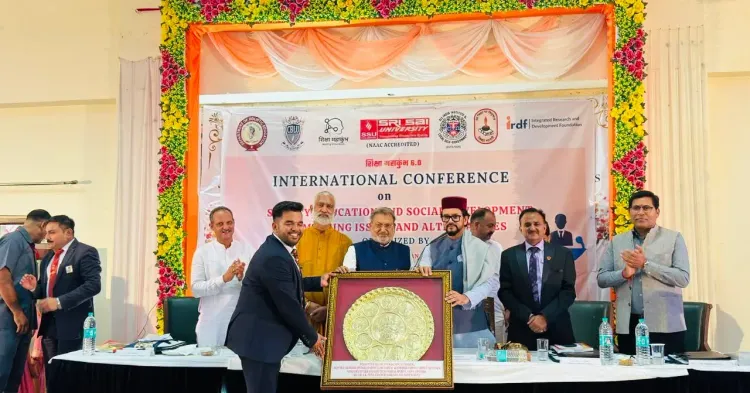
BJP MP Anurag Thakur spoke at an international conference at Sri Sai University, Palampur on September 27, 2026, laying out education's transformative role in realising India's Viksit Bharat@2047 vision, linking NEP 2020 reforms to the country's long-term development ambitions.
Key Takeaways
Anurag Thakur , BJP Lok Sabha MP from Hamirpur, addressed an international conference at Sri Sai University, Palampur on September 27, 2026 .
The conference theme was 'Society, Education and Social Development: Emerging Issues and Alternatives.' Thakur focused on education's transformative role in shaping the Viksit Bharat@2047 vision — India's goal to become a developed nation by the centenary of independence.
The engagement reflects a post- NEP 2020 pattern of BJP representatives addressing academic audiences on national development goals.
Prime Minister Modi has repeatedly cited education as central to Viksit Bharat@2047 since the vision was articulated around 2022 .
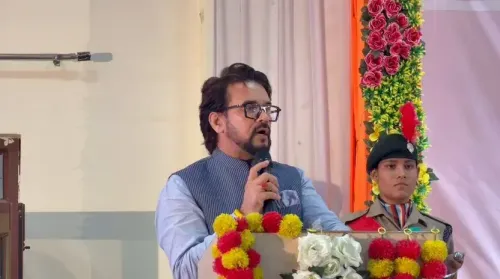
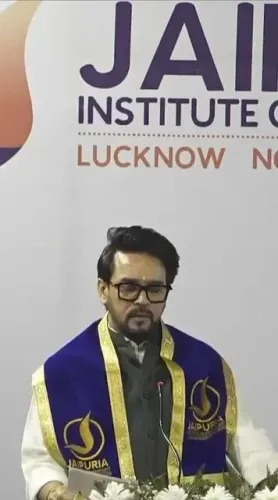
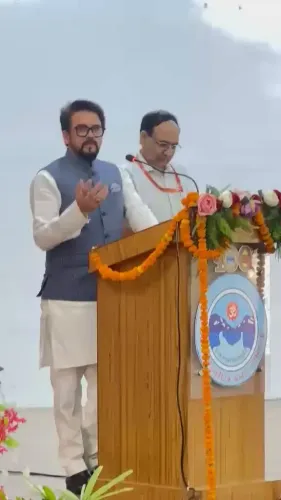
At a university podium in the hills of Himachal Pradesh, BJP MP Anurag Thakur made the case that India's road to becoming a developed nation by 2047 runs squarely through its classrooms. Speaking at Sri Sai University, Palampur, on Sunday, September 27, 2026, Thakur addressed an international conference centred on the theme 'Samaj, Shiksha aur Samajik Vikas: Ubharte Mudde aur Vikalp' — 'Society, Education and Social Development: Emerging Issues and Alternatives.'
Thakur shared his perspective on 'the transformative role of education in shaping Viksit Bharat@2047,' as he described it in his post. The conference, an international gathering hosted by the private university in Palampur — a town in the Kangra district of Himachal Pradesh — brought together academics and policymakers to deliberate on education's contribution to long-term social development goals.
Viksit Bharat@2047 and the NEP 2020 connection
The Viksit Bharat@2047 vision, which the Government of India articulated around 2022, lays out an ambition to transform India into a fully developed nation by the centenary of its independence. Prime Minister Narendra Modi has consistently positioned education as a foundational pillar of that mission, a theme that has gained institutional momentum since the rollout of the National Education Policy 2020.
NEP 2020 reoriented India's education framework toward holistic development, skill integration, and alignment with national economic and social progress targets. Academic conferences of this kind — where elected representatives, universities, and researchers converge — have become a recognisable feature of the post-NEP landscape, translating broad policy intent into state-level discourse.
Palampur on the policy map
Thakur's constituency of Hamirpur lies not far from Palampur in the Himachal hills. His presence at Sri Sai University underscores a pattern among BJP MPs of engaging directly with higher-education institutions to amplify the Viksit Bharat narrative at the grassroots level. For a state like Himachal Pradesh — whose economy depends heavily on its educated youth entering national and global markets — the stakes of this conversation are concrete, not merely rhetorical.
Whether the deliberations in Palampur feed into any formal policy recommendations, the next test will come in parliamentary discussions on NEP implementation progress and in further state-level conferences connecting education reform to India's 2047 development horizon.
Point of View
Giving the vision institutional legitimacy beyond political rallies. The choice of an education-focused forum is significant: NEP 2020 remains one of the ruling party's most consequential domestic reforms, and sustaining intellectual engagement around it helps pre-empt criticism about implementation gaps. For Himachal Pradesh — a state with a relatively high literacy rate but limited industrial base — framing education as the engine of 2047 development carries particular political resonance ahead of future state-level electoral cycles.
NationPress
27 Sept 2026
Frequently Asked Questions
What did Anurag Thakur say at Sri Sai University Palampur?
Anurag Thakur spoke about education's transformative role in shaping Viksit Bharat@2047 at an international conference on 'Society, Education and Social Development: Emerging Issues and Alternatives' held at Sri Sai University, Palampur on September 27, 2026.
What is Sri Sai University Palampur?
Sri Sai University is a private university located in Palampur, Himachal Pradesh, offering undergraduate and postgraduate programmes across various disciplines.
What is Viksit Bharat@2047?
Viksit Bharat@2047 is the Government of India's vision to transform the country into a fully developed nation by 2047 — the centenary of independence — with education, infrastructure, and economic growth as core pillars.
How does NEP 2020 relate to Viksit Bharat?
The National Education Policy 2020 restructured India's education system around holistic development and skill-building, and is widely cited by the government as a foundational reform driving the Viksit Bharat@2047 development agenda.
Which constituency is Anurag Thakur MP from?
Anurag Thakur is the BJP Lok Sabha MP from Hamirpur constituency in Himachal Pradesh, and is a former Union Minister of Information and Broadcasting and Youth Affairs and Sports.