Anurag Thakur Hails DAV as World's Unique Education Network
Synopsis
BJP MP Anurag Thakur, speaking at Hoshiarpur on 14 June 2026, hailed the DAV network as the world's only educational institution to expand massively since its 1886 founding without altering its core Arya Samaj philosophy — drawing attention to its model amid NEP 2020 implementation.
Key Takeaways
BJP MP Anurag Thakur praised DAV at an event in Hoshiarpur, Punjab on 14 June 2026 .
He called DAV the world's only institution to have scaled to its current size without changing its founding philosophy.
The DAV College Managing Committee is rooted in the Arya Samaj movement; the first DAV school opened in Lahore in 1886 .
DAV serves millions of students across hundreds of schools and colleges in India, operating as a private unaided network.
The remarks come amid ongoing state-level rollout of NEP 2020 , which encourages value-based education — a model DAV has followed for over a century.
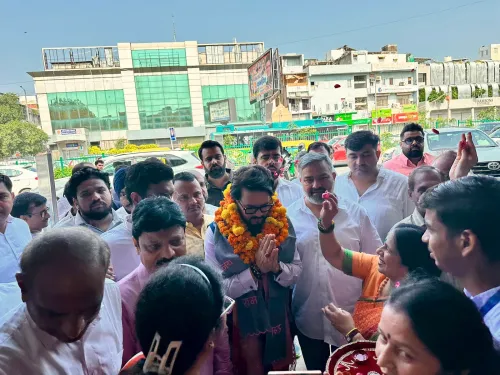
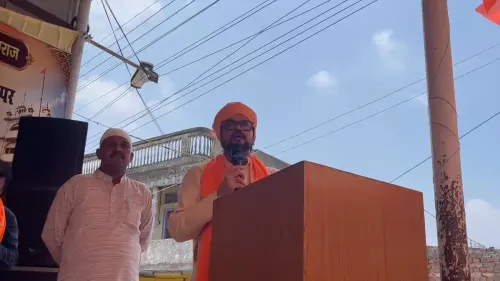
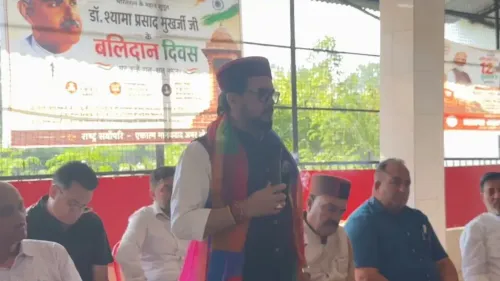
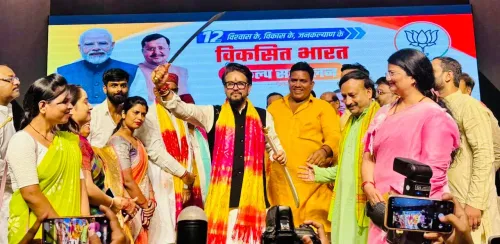
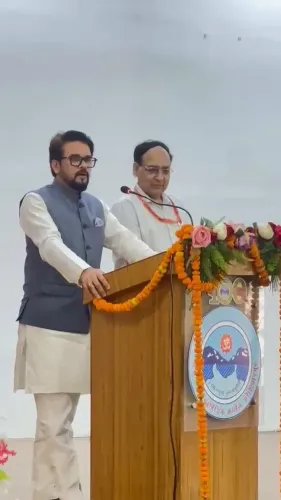
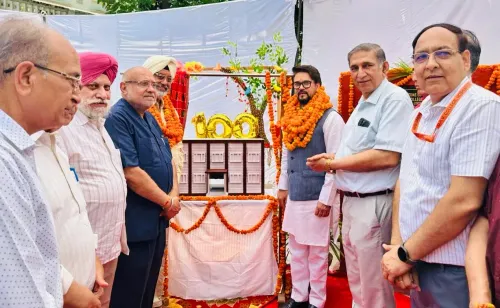
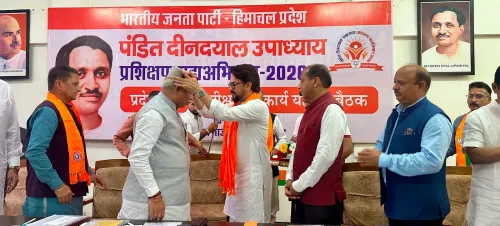
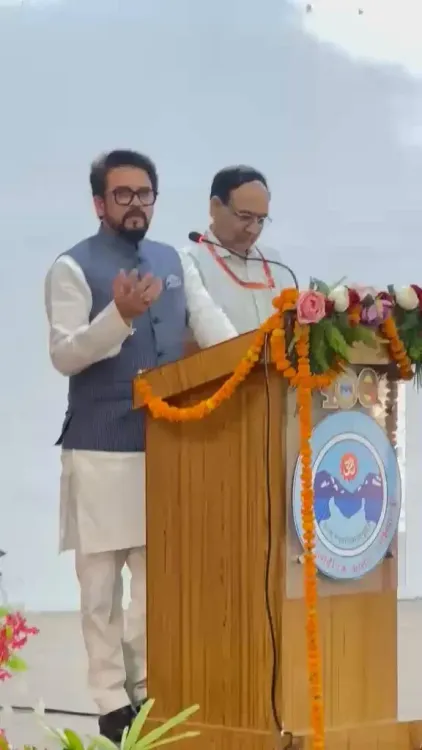
BJP MP Anurag Thakur on Sunday, 14 June 2026, praised the DAV institution network as the world's only educational organisation that has scaled to its present size without altering its founding philosophy, making the remarks at an event in Hoshiarpur, Punjab.
Context
Thakur posted in Hindi, stating: 'DAV vishwa ka ekmaatra aisa sansthan hai jisne apni sthapna se aaj tak bina mool bhavna mein koi parivartan kiye itni badi sankhya mein shiksha ka sanchalan kar rahi hai' — ('DAV is the only institution in the world that has, from its founding to this day, managed education at such a large scale without any change in its core philosophy.')
The post, accompanied by a video, was geotagged to Hoshiarpur, a district in Punjab that borders Thakur's home state of Himachal Pradesh and hosts several DAV schools and colleges.
Policy Backdrop
The DAV College Managing Committee traces its roots to the Arya Samaj movement founded by Swami Dayanand Saraswati in 1875. The first DAV school opened in Lahore in 1886, conceived to impart English-medium modern education alongside Vedic values — a dual mandate the network has maintained across more than a century.
India's private unaided school sector expanded sharply after the 1991 economic liberalisation, yet few large chains have retained a consistent ideological foundation at comparable scale. Successive National Education Policies, including NEP 2020, have explicitly encouraged value-based education integrated with the formal curriculum — a model DAV has practised since its inception.
Stakeholders and Impact
The DAV network today serves millions of students across India through hundreds of schools and colleges, making it one of the largest private unaided educational chains in the country. Its management model — combining a central committee with local institutional autonomy — has allowed it to expand geographically while preserving its Arya Samaj philosophical core.
For students and parents in regions such as Hoshiarpur and the broader Punjab-Himachal belt, DAV institutions represent an affordable private-school alternative with a long track record. Thakur's public endorsement, delivered in Hindi, signals continued political recognition of the network's social role in northern India.
What's Next
State-level implementation of NEP 2020 provisions governing private unaided schools will be a key variable for large chains like DAV, particularly around curriculum alignment, fee regulation, and infrastructure norms. Any new regulatory framework affecting unaided private institutions could significantly reshape how networks of DAV's scale operate across states.
Thakur's remarks add to a broader political conversation about the role of value-based private education in India's schooling landscape — a debate likely to intensify as NEP 2020 rules take effect at the state level over the coming academic cycles.
Point of View
Lending political weight to the unaided private sector at a moment when states are negotiating implementation rules. For a BJP leader from Himachal Pradesh appearing in neighbouring Punjab, the optics also carry regional resonance — DAV institutions are deeply embedded in the social fabric of both states. The framing of DAV as uniquely 'unchanged' is a deliberate contrast to debates about commercialisation in private education, signalling that ideologically grounded institutions deserve policy accommodation. Watch for whether such endorsements translate into regulatory relief or preferential treatment for large unaided chains under state NEP frameworks.
NationPress
15 Sept 2026
Frequently Asked Questions
What did Anurag Thakur say about DAV institutions?
Anurag Thakur said DAV is the world's only institution that has managed education at such a large scale since its founding without any change in its core philosophy, speaking at an event in Hoshiarpur on 14 June 2026.
What is the DAV institution and who runs it?
DAV institutions are a network of schools and colleges run by the DAV College Managing Committee, rooted in the Arya Samaj principles of combining modern education with Vedic values. The first DAV school was established in Lahore in 1886.
What is the connection between DAV and Arya Samaj?
DAV institutions were founded by leaders of the Arya Samaj, the Hindu reform movement established by Swami Dayanand Saraswati in 1875. The name DAV stands for Dayanand Anglo-Vedic, reflecting this dual heritage of Vedic values and modern English education.
Why is Hoshiarpur significant for DAV?
Hoshiarpur is a district in Punjab that hosts multiple DAV schools and colleges and borders Himachal Pradesh, the home state of BJP MP Anurag Thakur, making it a natural venue for engagements involving both the DAV network and the region's political leadership.
How does NEP 2020 affect institutions like DAV?
NEP 2020 encourages value-based education alongside the formal curriculum, a model DAV has followed for over a century. However, state-level implementation rules on curriculum alignment, fee regulation, and infrastructure norms could significantly affect how large unaided private chains like DAV operate.